
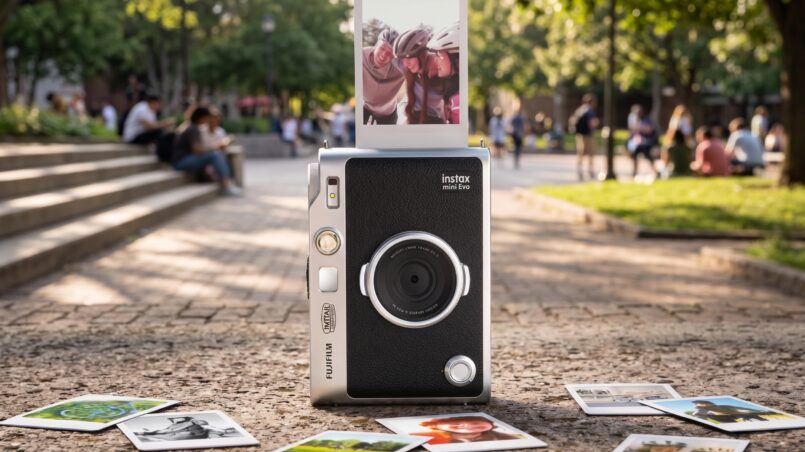
The Fujifilm Instax Mini Evo 2 brings a notable redesign to Fujifilm’s popular hybrid instant camera lineup. It combines digital photography with instant printing, allowing users to capture images, preview them, apply creative effects, and print selected shots on Instax Mini film. The 2026 model adds a larger touchscreen, an upgraded sensor, face-detection autofocus, and a limited video feature. The new camera costs $289.95 in the United States and €269.99 in Europe. Fujifilm announced it on October 27, 2026, with availability expected toward the end of November. While the new screen and sensor make the camera more appealing, its video feature is not conventional recording. Instead...
Category - Reviews

The iPad mini OLED is the most significant update Apple has made to its smallest tablet in years. The 2026 model introduces an 8.5-inch OLED display, a thinner and lighter body, IP67 water and dust resistance, and the A20 Pro processor. Yet the tablet comes with an unusual detail: the 128GB and 256GB models receive a trimmed version of the chip, while the 512GB configuration gets the full version. The difference is not a completely different processor. All models use the A20 Pro, but the lower-storage versions have one fewer CPU efficiency core and one 16-core Neural Engine instead of two. The GPU remains the same across the lineup. Apple has not publicly explained why it made this...

The OLED MacBook Pro is finally here, bringing touchscreen technology to Apple’s professional laptop lineup for the first time. Announced on October 28, 2026, the redesigned MacBook Pro introduces a tandem OLED display, Dynamic Island, touch input, and a lighter chassis. However, Apple has paired these major changes with its existing M5 Pro and M5 Max processors instead of the newer M6 chip. The new laptop starts at $2,899 for the 14-inch model, while the 16-inch version begins at $3,399. Pre-orders opened on October 28, and shipping started on November 6, 2026. The MacBook Pro OLED touchscreen represents a significant change in Apple’s laptop strategy, especially after Steve...

The Sigma 50-120mm f2.8 is the telephoto zoom APS-C photographers have been waiting for. Weighing just 390g on Sony E and Fujifilm X mounts, it combines a constant f/2.8 aperture with a $799 launch price. Alongside Sigma’s existing 10-18mm f/2.8 and 18-50mm f/2.8 zooms, it completes a compact three-lens system covering ultra-wide to telephoto photography. Sony, Fujifilm, and Canon crop-sensor shooters now have another option for building a fast zoom kit without carrying the weight of a traditional full-frame telephoto. But how does this new Sigma lens fit into a real camera setup? This Sigma 50-120mm f2.8 review explores its specifications, autofocus, stabilization, mount options...
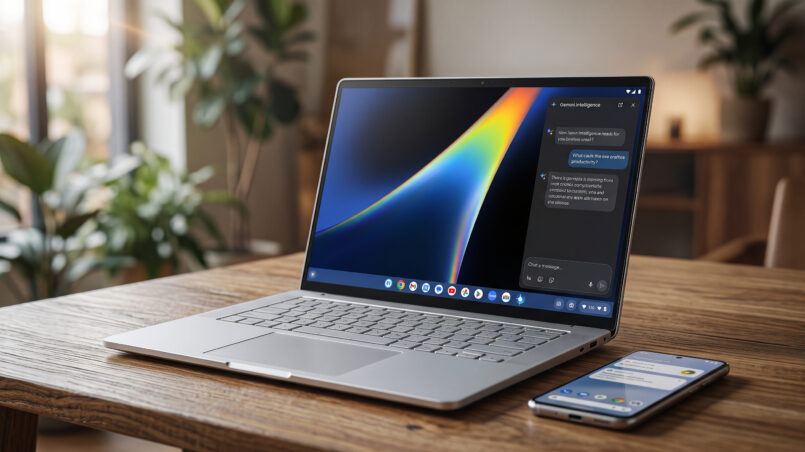
Googlebook is Google’s most serious attempt yet to compete with Apple and Microsoft at the ecosystem level. Built in partnership with Acer, ASUS, HP, Dell, and Lenovo, the first Googlebook laptops combine premium hardware, Android-based software, and Gemini AI features. Starting at $899, these machines promise a new kind of Google Android laptop with touchscreen displays, at least 16GB of RAM, and dedicated AI hardware. However, the real story is not simply the specifications. Googlebook OS brings Android apps and phone integration to a desktop-style laptop environment, but it also introduces limitations compared with Windows and macOS. For buyers considering a Googlebook Laptop Review...

ultra-wide perspectives to its full-frame E-mount lineup. Sony has finally filled one of the strangest gaps in its E-mount lineup with the FE 8-14mm F3.5 Fisheye G, its first native fisheye zoom for full-frame Alpha cameras. The lens marks a significant return to a category Sony had largely left untouched for two decades. The last Sony-branded fisheye option was the 16mm f/2.8 lens for A-mount, introduced in 2006 as a Minolta design. For photographers interested in fisheye photography, the new lens offers a more flexible approach than a fixed-focal-length optic. It can capture a complete circular fisheye image at 8mm or produce a diagonal fisheye perspective that fills the frame at...
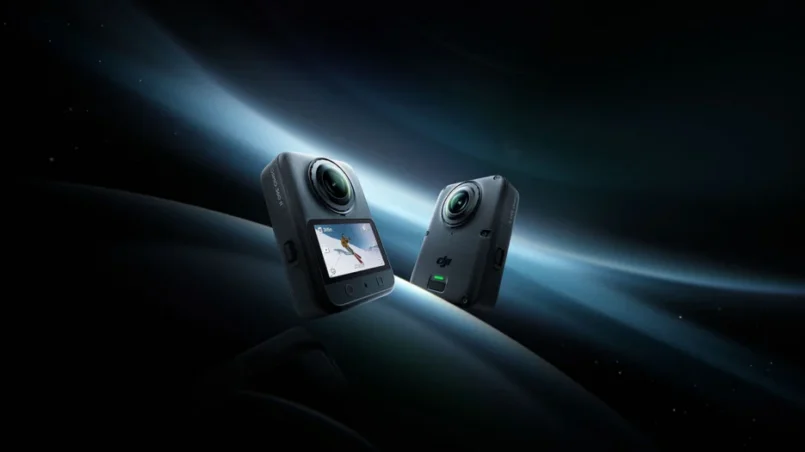
DJI’s square-sensor, lens-swapping sequel undercuts Insta360 on price, while its flagship rival focuses on image processing, battery life, and a more mature editing experience. The DJI Osmo 360 II vs Insta360 X6 comparison highlights two premium 360 cameras with different strengths. Both target creators who want immersive footage, flexible reframing, and high-resolution video, but their specifications and workflows may appeal to different users. DJI’s Osmo 360 II was announced globally on September 3, 2026, after going on sale in China on August 13. UK and European retail followed on September 15. It features dual 1/1.1-inch square CMOS sensors, native 8K/60fps 360-degree video, and...
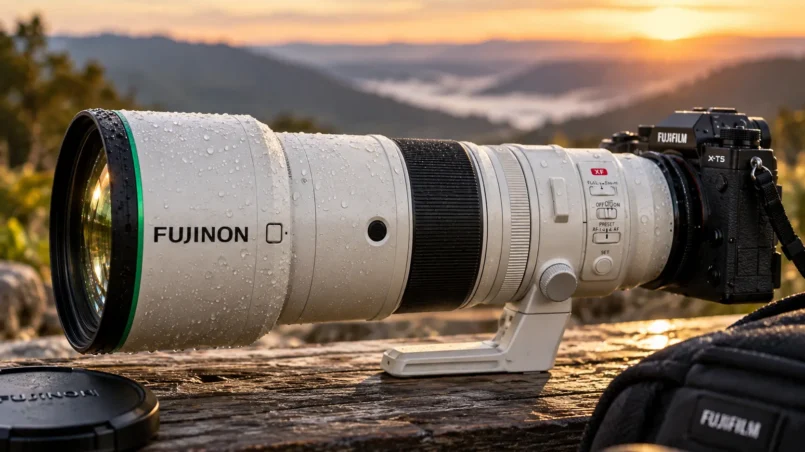
The Fujifilm 400mm lens category gets a new long-range option with the Fujinon XF 400mm F4.5 R LM OIS WR. Designed as a professional Fujifilm telephoto lens for the X-mount system, this 400mm prime delivers a 609mm full-frame equivalent field of view on Fujifilm APS-C cameras. Its combination of F4.5 aperture, 5.5-stop optical image stabilization, linear autofocus, weather-resistant construction, and teleconverter compatibility makes it particularly relevant to wildlife photography, bird photography, sports, and other distant-subject applications. For photographers building a Fujifilm X mount system around long-range shooting, the XF 400mm F4.5 R LM OIS WR is a specialized prime...
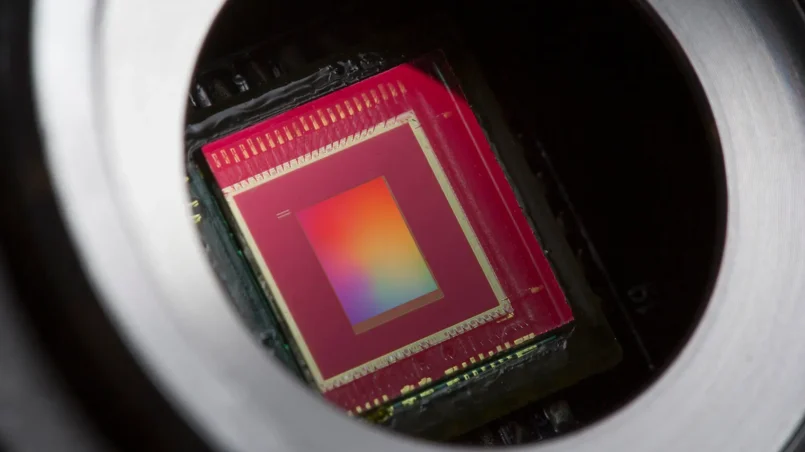
Finding the best cameras for photography in 2026 is less straightforward than simply choosing the camera with the biggest sensor or highest megapixel count. Different photographers need very different things. A travel shooter may prioritize portability, while a professional photographer may need resolution, autofocus, or a full-frame system. For others, a smartphone or compact camera may be the most practical choice. This year’s camera landscape covers everything from advanced smartphones and pocket-sized gimbal cameras to APS-C, full-frame, and medium-format systems. Rather than treating one camera as perfect for everyone, this guide looks at six devices that stand out for very...

I bought the Fujifilm X100VI in July 2026, expecting it to become a fun everyday companion to my Canon EOS R6. After a year and more than 17,000 photographs, it has become much more important than I originally expected. It has changed how often I take my camera out and, more importantly, how much I enjoy photography. Some cameras are tools. Others become part of your daily routine. The Fujifilm X100VI belongs firmly in the second category. This is not a quick review based on a weekend with a loaner camera. It is a long-term look at daily shooting, real-world image quality, film simulation recipes, and the small details that only become obvious after extensive use. The 40.2-megapixel...

Two extra CPU cores, two additional GPU cores, a dual Neural Engine, and Apple’s first 2nm Mac processor. On paper, the M6 Mac Mini looks like the upgrade that M1 and M2 owners have been waiting for. It promises stronger performance, faster AI processing, improved graphics, and more modern connectivity. But there is one major problem: the starting price has climbed to $899. Apple introduced two new desktop chips in August 2026. The M6 arrived inside the redesigned Mac Mini lineup, while the M5 Ultra powered the new Mac Studio. Both products target different buyers, budgets, and workloads. Combining them into one review would make little sense. This article focuses on the M6 Mac...

The Google Pixel 11 series keeps Google’s familiar four-phone strategy while putting more emphasis on AI than on major hardware changes. The lineup includes the Pixel 11, Pixel 11 Pro, Pixel 11 Pro XL, and Pixel 11 Pro Fold. Google’s pitch centers on Magic Capture, Camera Looks, Creator Suite, HiLight notifications, and a more capable Gemini experience. There is plenty to discuss. Magic Capture can help users save photos they might otherwise miss, while on-device Gemini Nano powers features such as call screening, scam detection, and Recorder tools. The new Tensor G6 also brings a performance improvement over the previous generation. But the pricing has moved up. The...
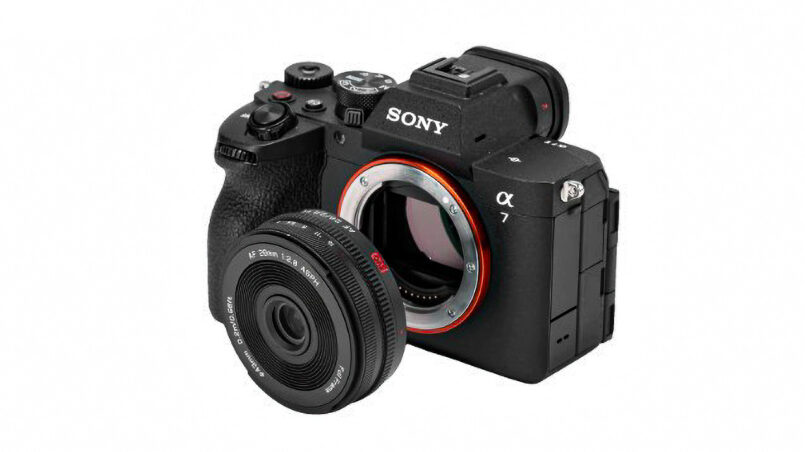
There is a particular kind of freedom that comes with using a pancake lens. A camera that normally feels like a piece of equipment you need to plan around suddenly becomes something you can carry every day. It slips into a small bag, feels less intimidating on the street, and gives you fewer reasons to leave it at home. That is the idea behind the Viltrox 26mm f/2.8 EVO. Announced on July 15, 2026, the Viltrox AF 26mm f/2.8 EVO is a compact, full-frame autofocus prime lens designed for Sony E-mount and Nikon Z-mount cameras. It launched at $299, with a slim profile, a metal body, dedicated aperture and focus rings, and a magnetic front cap. The Sony E version weighs approximately 130g...
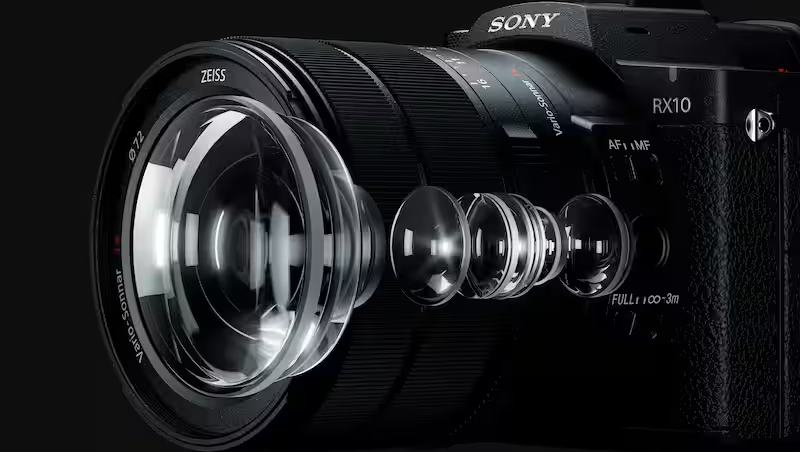
The Sony RX10 V arrived on July 9, 2026, nearly nine years after the RX10 IV introduced the previous generation. Since then, smartphone cameras have become more computationally advanced, mirrorless cameras have expanded their autofocus and video capabilities, and the market for interchangeable-lens systems has become increasingly competitive. Sony’s latest bridge camera keeps the familiar 20.1MP 1-inch-type stacked Exmor RS CMOS sensor and ZEISS Vario-Sonnar T* 24-600mm-equivalent f/2.4-4 lens combination. The major upgrades come from its newer BIONZ XR processor, AI-powered subject recognition, faster continuous shooting, improved video capabilities, updated controls, and a...

Sirui announced three new IronStar focal lengths at NAB 2026: a 75mm T1.9, a 100mm T2.8 Macro, and a 135mm T2.8. They join the existing 35mm, 45mm, and 60mm T1.9 primes to complete a full six-lens anamorphic system. All three maintain the 1.5x constant squeeze ratio, share an identical 95mm front diameter, and keep the same gear positions as the rest of the set. Shipping started June 22, 2026, at $999 per lens, or $2,999 for the three-lens kit. The Three New Lenses, Individually One correction worth flagging here: Sirui’s official store labels all three as T1.9, but multiple independent sources including Newsshooter and PetaPixel confirm that the 100mm and 135mm are both T2.8...

The Sony 100 400mm telephoto zoom range has become more compelling with the introduction of the FE 100-400mm F4.5 GM OSS on May 13, 2026, alongside the Alpha 7R VI. This updated Sony G Master telephoto lens brings three major changes compared with the earlier FE 100-400mm F4.5-5.6 GM OSS: a constant f/4.5 maximum aperture, an internal zoom mechanism, and compatibility with Sony’s 1.4x and 2x teleconverters. These upgrades target photographers who need reliable autofocus, consistent exposure, and flexible reach for wildlife, birds, motorsports, and other fast-moving subjects. The US launch price was approximately $4,299, a substantial increase over the older model’s stated...

The RX 9070 GRE is AMD’s attempt to bring RDNA 4 graphics to gamers who want strong 1440p performance without paying for a higher-tier GPU. Built around the Navi 48 graphics processor, the Radeon RX 9070 GRE combines modern ray-tracing hardware, AI accelerators, and AMD’s FSR 4 upscaling technology in a more restricted configuration than the standard RX 9070. Originally launched in China in May 2025, the card expanded into the global market in June 2026 with a stated $549 MSRP. Its positioning sounds appealing: a graphics card designed for high-quality 1440p gaming, modern rendering features, and a price below the standard RX 9070. The problem is that the reductions go...

ProRes RAW changes how creators can capture and edit footage on a compatible iPhone. Instead of recording only a processed video image, ProRes RAW preserves raw sensor data for important image-processing decisions to be made during post-production. For filmmakers, documentary creators, and people who want greater control over their footage, this can offer a more flexible alternative to conventional iPhone video recording. The iPhone 17 Pro workflow described in this article combines ProRes RAW recording with an external SSD and compatible camera applications. It is designed for users who value grading flexibility, highlight recovery, and control over how an image is developed in editing...
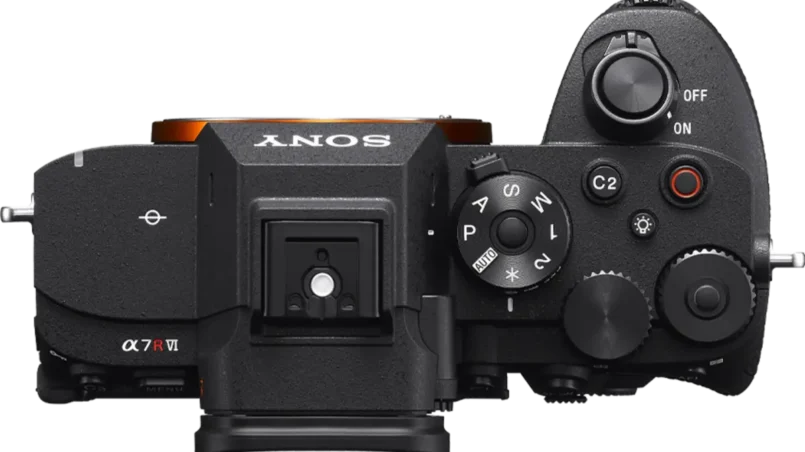
The Sony a7R VI is a major step forward for photographers who want high resolution without giving up shooting speed. Its 66.8-megapixel fully stacked sensor, continuous shooting at up to 30 frames per second, and advanced video capabilities make it a compelling option in Sony’s full-frame mirrorless lineup. With a listed price of $4,499, it also costs $2,000 less than the Sony Alpha 1 II. However, similar headline specifications do not make these cameras interchangeable. The Sony a7R VI prioritizes resolution and versatility, while the Alpha 1 II retains important advantages for demanding professional workflows, including sustained burst shooting, faster electronic shutter speeds...