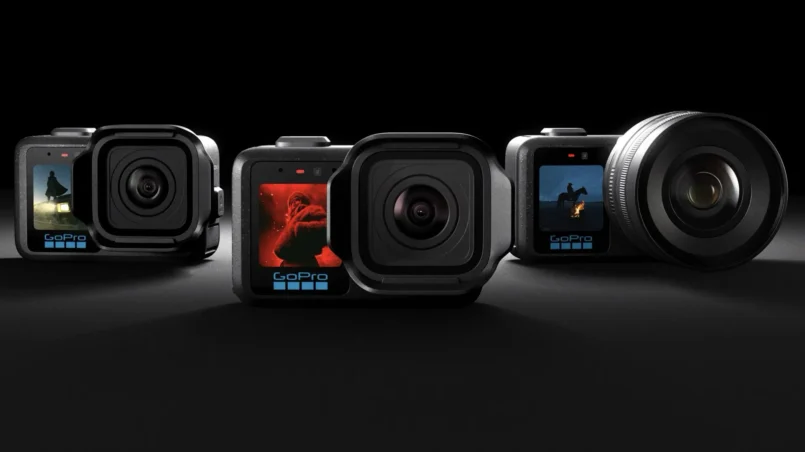
The GoPro Mission 1 Pro represents a significant change for a company that helped define the action camera market. After facing growing competition from DJI and Insta360, GoPro is targeting filmmakers and serious content creators with a new camera series built around a 50MP 1-inch sensor, the GP3 processor, and high-resolution video recording. The standard Mission 1 Pro delivers an ambitious set of features, but the interchangeable-lens GoPro Mission 1 Pro ILS is the model that raises the most interesting questions.
The Mission 1 series began reaching retailers globally on May 28, 2026. GoPro subsequently announced the Mission 1 Pro ILS in August, with preorders opening that month and retail availability scheduled for September. Its starting MSRP is $699.99, with a discounted price of $599.99 for eligible GoPro subscribers.
The ILS model combines a compact camera body with a Micro Four Thirds (MFT) lens mount. That creates opportunities for filmmakers who want more control over framing, focus, and lens selection. However, manual lens operation and the camera’s weatherproof rather than fully waterproof design make it a different proposition from a traditional GoPro.
The Lineup at a Glance
The Mission 1 family shares a common foundation: a 50MP 1-inch sensor and GoPro’s GP3 processor. This combination is designed to improve image quality, low-light performance, recording efficiency, and thermal management compared with earlier action-camera designs.
A larger sensor can capture more light than a smaller sensor under comparable conditions, potentially improving detail and reducing visible noise in challenging lighting. Actual results still depend on exposure, lens choice, processing, and recording settings. The GP3 processor is designed to support demanding video modes while managing power consumption and heat.
Here is how the three core models compare based on the supplied specifications and GoPro’s published product information.
| GoPro Mission 1 $499 MSRP · $399 for subscribers 50MP 1″ sensor · GP3 8K/30fps · 4K/120fps Open Gate 1080p/240fps · 50MP RAW Waterproof to 20m (66ft) HyperSmooth Stabilisation | GoPro Mission 1 Pro $699.99 MSRP · $599 for subscribers 50MP 1″ sensor · GP3 8K/60fps · 4K/240fps · 1080p/960fps 8K/30fps + 4K/120fps Open Gate Waterproof to 20m (66ft) Fixed lens · Full HyperSmooth | GoPro Mission 1 Pro ILS $699.99 MSRP · $599 for subscribers Same 50MP sensor + GP3 as Pro MFT interchangeable lens mount HyperSmooth with rectilinear primes Weatherproof only, not waterproof Manual focus only, no electronic pins Q3 2026 |
Subscriber prices are subject to GoPro’s eligibility and purchase terms. For the latest specifications, refer to the official GoPro Mission 1 series announcement and the Mission 1 Pro ILS technical specifications.
The standard Mission 1 is intended for creators who want the new sensor and high-resolution recording without needing every advanced video mode. The Mission 1 Pro raises the frame-rate ceiling, while the ILS introduces the flexibility of interchangeable lenses.
For readers comparing different camera systems, our best cameras of 2026 guide provides broader context on the options available across different photography and video categories.
The ILS: Brilliant Idea, or is it?
The GoPro Mission 1 Pro ILS is arguably the most unusual camera in the lineup. Instead of using a fixed lens, it accepts compatible Micro Four Thirds lenses, giving creators greater control over focal length, perspective, and the visual character of their footage.
This design could be useful for filmmakers who need different perspectives without carrying a large cinema camera. A wide lens could capture an immersive point-of-view shot, while a telephoto lens could isolate a distant subject. A compatible macro lens could help record intricate details that would be difficult to capture with a conventional fixed-lens action camera.
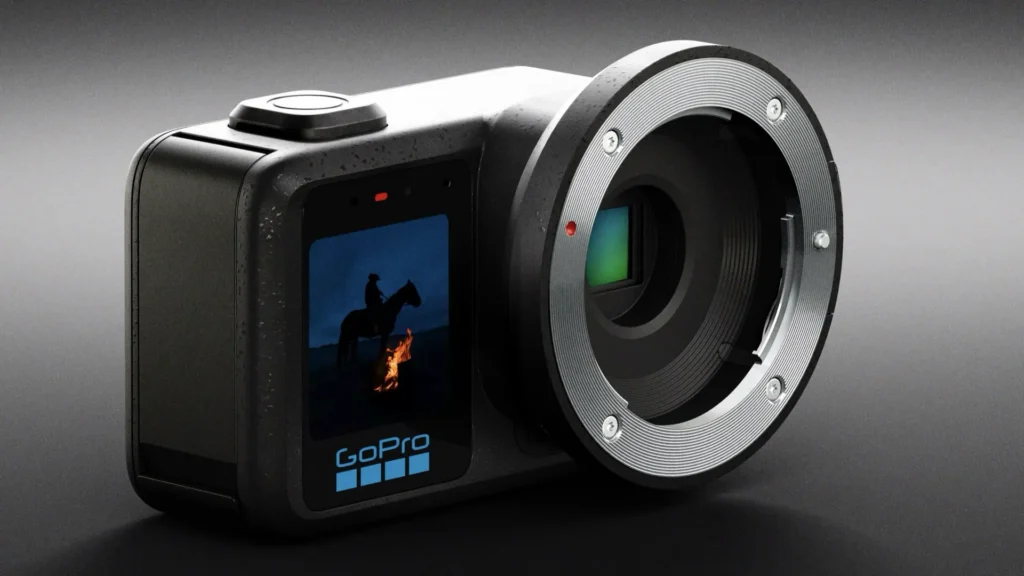
The interchangeable mount also opens the door to adapters for certain vintage and cinema lenses. Compatibility depends on the lens and adapter, so buyers should confirm support before investing in additional glass.
The camera retains the same 50MP sensor and GP3 processor as the Mission 1 Pro. That means the primary attraction is not a different sensor or a faster processor. It is the ability to change lenses while keeping a compact, rugged camera body.
The Manual-Focus Trade-Off
The biggest compromise is the lens-control experience. GoPro describes the ILS as compatible with manual-focus and manual-aperture MFT lenses. It does not provide the conventional electronic lens-control experience that many users expect from a modern mirrorless camera.
In practice, filmmakers may need to adjust focus directly on the lens and set aperture manually where the lens supports it. This can be perfectly workable for planned shots, controlled productions, and creators who already understand manual focus.
It becomes more challenging when the subject is moving unpredictably. A mountain biker approaching the camera, a fast-moving vehicle, or an athlete changing direction can be difficult to keep in focus without autofocus assistance.
GoPro has introduced focus-assistance tools for the ILS, but these do not make manual focusing identical to continuous autofocus. Users should evaluate the workflow before choosing this model for fast-paced shooting.
GoPro built its reputation on cameras that work with minimal setup. The ILS asks creators to think more carefully about focal length, aperture, and focus before and during recording.
Weatherproofing Is Not the Same as Waterproofing
Another important distinction is durability. The standard Mission 1 and Mission 1 Pro are specified as waterproof to 20 meters (66 feet), while the ILS is weatherproof rather than fully waterproof.
That difference matters because the interchangeable mount introduces a different set of practical considerations. The camera may be suitable for certain outdoor environments, but users should not assume it can be submerged like the fixed-lens models.
For surfing, underwater filming, and activities involving repeated immersion, the standard Mission 1 Pro may be the more straightforward choice. For filmmaking in controlled conditions, vehicle rigs, and outdoor production where lens flexibility matters more than underwater capability, the ILS could be more appealing.
What the GoPro Mission 1 Pro Specs Mean for Image Quality
The 50MP 1-inch sensor is one of the defining features of the Mission 1 family. Compared with the smaller sensors traditionally associated with compact action cameras, a 1-inch sensor offers the potential for improved light gathering, greater flexibility in challenging lighting, and more detailed still images.
However, megapixels alone do not determine image quality. Lens performance, exposure, noise reduction, sharpening, dynamic range, and video compression all influence the final result.
The Mission 1 Pro supports 8K video at up to 60 frames per second, along with 4K at up to 240fps and 1080p burst slow motion at up to 960fps. It also supports Open Gate recording, which uses a larger portion of the sensor to give editors more flexibility when reframing footage for different aspect ratios.
For creators publishing across YouTube, Instagram, TikTok, and other platforms, Open Gate recording can be especially useful. Instead of committing entirely to a single crop during capture, editors can retain more of the original frame and make framing decisions later.
The camera also supports professional-oriented color options, including 10-bit recording, GP-Log2, and HLG HDR. These features can provide greater flexibility during color grading, although the final results depend on the recording mode and editing workflow.
For a different perspective on professional camera technology, see our Sony A7R VI vs. Alpha 1 II comparison. The cameras serve different purposes, but comparing their design priorities helps illustrate why sensor performance, lens choice, and intended use matter more than a single headline specification.
GoPro Mission 1 Pro Price and Value
The GoPro Mission 1 Pro has an MSRP of $699.99, while eligible GoPro subscribers can purchase it for $599.99 through GoPro’s stated subscriber pricing. The Mission 1 Pro ILS shares the same MSRP and subscriber price.
That pricing makes the decision between the fixed-lens Pro and the ILS less about the initial camera-body cost and more about how each model fits the intended workflow.
The fixed-lens Mission 1 Pro is likely to be more convenient for people who want a camera that is ready to record with minimal adjustment. Its waterproof construction and integrated lens make it better suited to the traditional action-camera approach.
The ILS is potentially better value for creators who already own compatible MFT lenses or who need interchangeable optics for specialized shots. However, the total cost can increase when additional lenses, adapters, or rigging accessories are required.
Before buying, check the official Mission 1 Pro ILS announcement and availability details. Pricing, subscriber eligibility, and included accessories may vary by market or purchase bundle.
Who Should Buy the GoPro Mission 1 Pro ILS?
The ILS is not necessarily the best GoPro for every user. Its strengths become more valuable when the person behind the camera wants creative control rather than a purely automatic recording experience.
It is worth considering for:
- Independent filmmakers: The MFT mount provides more lens choices for controlled productions and creative framing.
- Action-sports filmmakers: A compact body can be useful for mounting in tight spaces, provided the environment is suitable for its weatherproof design.
- Documentary creators: Different lenses can support wide environmental shots, close-up details, and more selective compositions.
- Existing MFT lens owners: Compatible lenses may make the ILS more attractive without requiring a completely new lens collection.
The fixed-lens Mission 1 Pro is the more straightforward choice for users who prioritize simplicity, waterproofing, and rapid setup. If autofocus is essential to your work, carefully consider whether the ILS’s manual lens workflow is appropriate.
For more camera and lens coverage, explore the Circuit Verdict cameras category and our review of the Sony 400mm F4.5 GM and 600mm F6.3 GM lenses.
Frequently Asked Questions
What is the GoPro Mission 1 Pro price?
The GoPro Mission 1 Pro has an MSRP of $699.99, with a stated $599.99 price for eligible GoPro subscribers. The Mission 1 Pro ILS has the same listed pricing.
When was the GoPro Mission 1 Pro ILS released?
GoPro announced the Mission 1 Pro ILS on August 26, 2026, opened preorders that day, and announced retail availability for September 2026.
Does the GoPro Mission 1 Pro record 8K video?
Yes. The Mission 1 Pro supports 8K recording at up to 60fps. It also supports 4K at up to 240fps and 1080p burst slow motion at up to 960fps.
What lenses work with the GoPro Mission 1 Pro ILS?
The ILS is designed for compatible Micro Four Thirds lenses, including supported manual-focus and manual-aperture options. Certain other lenses may work through adapters, but compatibility should be confirmed for each lens and adapter combination.
Is the GoPro Mission 1 Pro ILS waterproof?
No. GoPro describes the ILS as weatherproof rather than waterproof. The standard Mission 1 Pro is specified as waterproof to 20 meters (66 feet), making it the more appropriate option for users who need that level of water protection.
Is the Mission 1 Pro ILS better than the standard Mission 1 Pro?
Neither is universally better. The ILS offers interchangeable lenses and more creative control, while the fixed-lens Mission 1 Pro is simpler to operate and offers the specified waterproof design. The right choice depends on your shooting environment and workflow.
Conclusion
The GoPro Mission 1 Pro is an ambitious step forward for creators who want high-resolution video in a compact camera. Its 50MP 1-inch sensor, GP3 processor, 8K recording, and professional color options make it a compelling proposition on paper.
The Mission 1 Pro ILS takes a more specialized approach. Its Micro Four Thirds mount creates new possibilities for filmmakers who want interchangeable lenses in a small body, but manual focusing and the lack of full waterproofing make it less convenient for some traditional action-camera uses.
For creators who value lens flexibility and already understand manual focus, the ILS could be a distinctive production tool. For everyone else, the fixed-lens Mission 1 Pro remains the simpler choice.
Ultimately, the GoPro Mission 1 Pro lineup is most interesting because it gives creators two different ways to work: a straightforward rugged camera and a more flexible interchangeable-lens option. The best model is the one that fits your actual shooting needs, not simply the one with the most ambitious specifications.