Finding the best cameras for photography in 2026 is less straightforward than simply choosing the camera with the biggest sensor or highest megapixel count. Different photographers need very different things. A travel shooter may prioritize portability, while a professional photographer may need resolution, autofocus, or a full-frame system. For others, a smartphone or compact camera may be the most practical choice.
This year’s camera landscape covers everything from advanced smartphones and pocket-sized gimbal cameras to APS-C, full-frame, and medium-format systems. Rather than treating one camera as perfect for everyone, this guide looks at six devices that stand out for very different types of photography and creative work.
Oppo Find X9 Ultra — Best Smartphone Camera
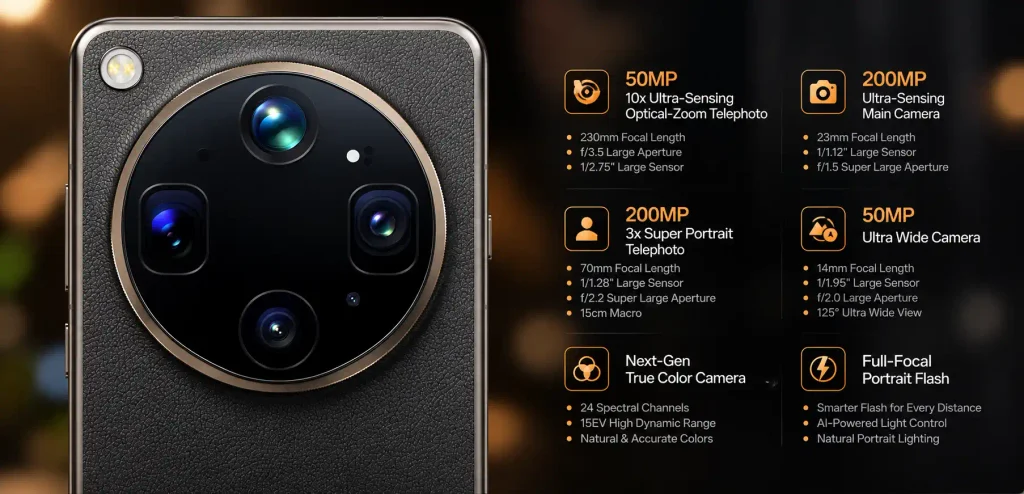
Oppo Find X9 Ultra’s sophisticated camera system has become a major highlight of 2026. Photo: Oppo
The Oppo Find X9 Ultra takes the idea of a best digital camera alternative in a smartphone to an extreme. Its camera system combines two 200-megapixel sensors, with one handling the main wide lens and another supporting a 3x periscope telephoto.
The system also includes a 50-megapixel ultrawide and another 50-megapixel periscope capable of reaching a claimed 10x optical zoom. That gives the phone four cameras designed for distinctly different shooting situations.
Hasselblad color tuning is another part of the package. The goal is to deliver more refined color and image rendering without relying entirely on computational processing.
There are limitations. The phone is not officially sold in the United States, while its large camera housing adds noticeable thickness. The source article also notes occasional focus hunting and noise in backlit or low-light situations.
For photographers who want a device that can handle everyday photography without carrying a dedicated camera, the Find X9 Ultra represents how far smartphone imaging has progressed.
Official source: OPPO
DJI Osmo Pocket 4P — Best Camera for Travel and Vlogging
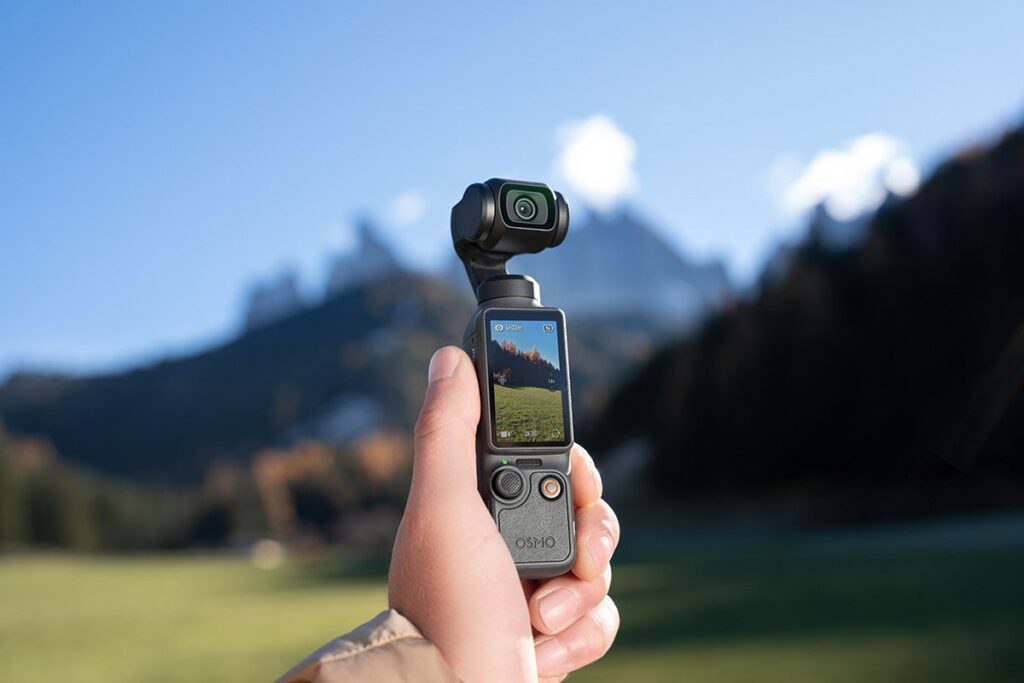
DJI didn’t just refresh the Osmo Pocket line this year. It split the line in two. The Pocket 4P adds a second lens, a 60mm-equivalent f/1.8 telephoto. That sits next to the familiar 20mm f/2.0 wide. Together they give instant 3x optical reach in a body that still fits in a coat pocket. The bigger claim is 17 stops of dynamic range from the primary lens, shot in 10-bit D-Log 2. That’s a number that would impress on a full-frame cinema camera, let alone something this small. Add ActiveTrack 8.0 and a 3-axis mechanical gimbal. It’s easy to see why reviewers are calling this DJI’s best pocket camera yet. The drawbacks are mostly about access and polish. It launched without US availability, with import authorization still pending. The full dynamic range claim only applies to one of the two lenses. And switching between lenses mid-shoot isn’t as seamless as DJI would like you to believe. As a travel companion, it’s still hard to beat.
Fujifilm X100VI — Best Everyday Carry Camera
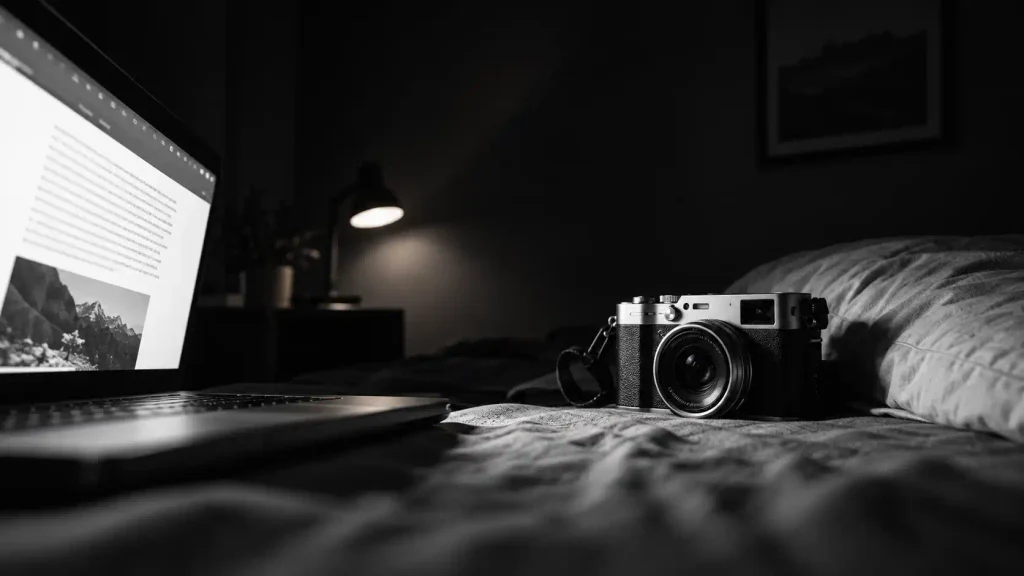
Fujifilm X100VI will keep it’s “The Best EDC” title for a long time coming. Photo: Mahmud Jami
The Fujifilm X100VI combines an APS-C sensor with a compact fixed-lens design. Photo: Mahmud Jami
The Fujifilm X100VI approaches photography from a completely different direction. Rather than trying to replace a professional interchangeable-lens system, it focuses on making photography simple, portable, and enjoyable.
Its 40-megapixel APS-C sensor provides plenty of resolution, while the fixed 23mm f/2 lens gives the camera a straightforward shooting experience. The camera also features 6-stop stabilization and a built-in 4-stop ND filter.
This combination makes it particularly interesting for everyday photography, street shooting, travel, and photographers who prefer a compact setup.
Its limitations are equally clear. The fixed lens means you cannot change focal lengths, while the camera remains expensive compared with many other compact options. Supply has also been constrained since launch.
It is not designed to replace a dedicated video-focused system, either. But for photographers who want an everyday camera that encourages them to shoot more often, the X100VI remains a distinctive option.Official source: Fujifilm
Sony Alpha 7R VI — Best for High-Resolution Photography
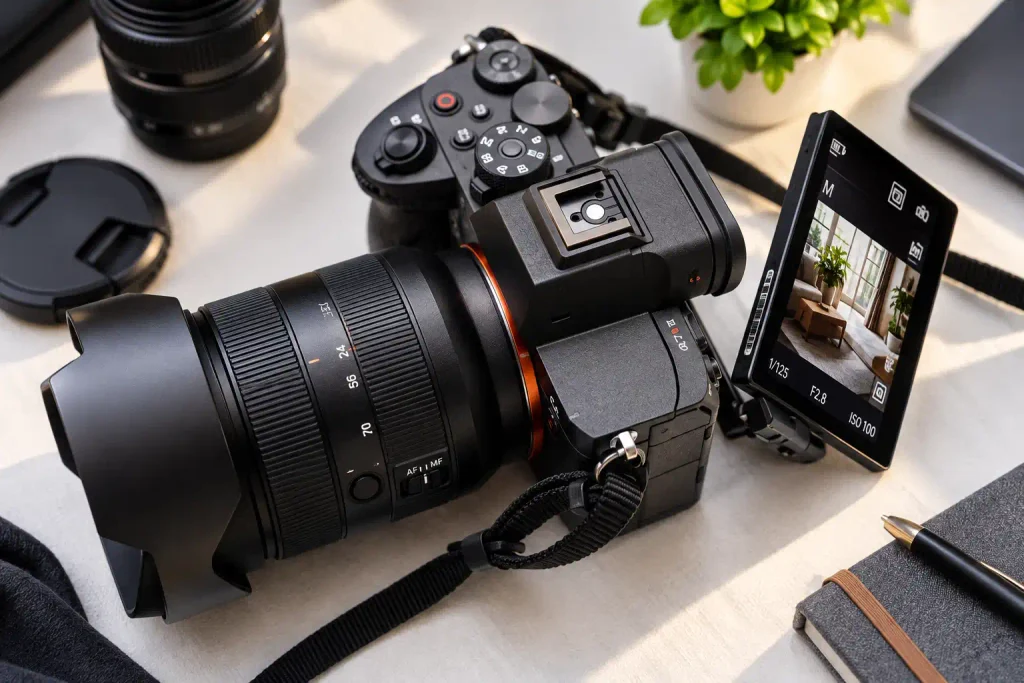
Photographers working with large prints, detailed commercial images, or aggressive crops often have different requirements from everyday shooters. This is where a high-resolution full-frame system becomes particularly relevant.
The Sony Alpha 7R VI featured in the source article uses a 66.8-megapixel stacked sensor. Its stacked readout is designed to improve performance while supporting 30fps blackout-free bursts.
The camera is also described as offering up to 16 stops of dynamic range, along with pixel-shift composite shooting capable of producing images approaching 266 megapixels for suitable landscape and studio applications.
Video capability is part of the package too, with 8K recording and 4K at 120fps.
At approximately $4,499.99, it sits firmly in the professional category. The high resolution also means that photographers who do not need large prints or significant cropping may not take full advantage of the sensor.
For photographers specifically looking for a best professional camera focused on resolution, however, the feature set makes it a highly specialized option.
Official source: Sony Electronics
Sony FX5 — Best for Filmmaking
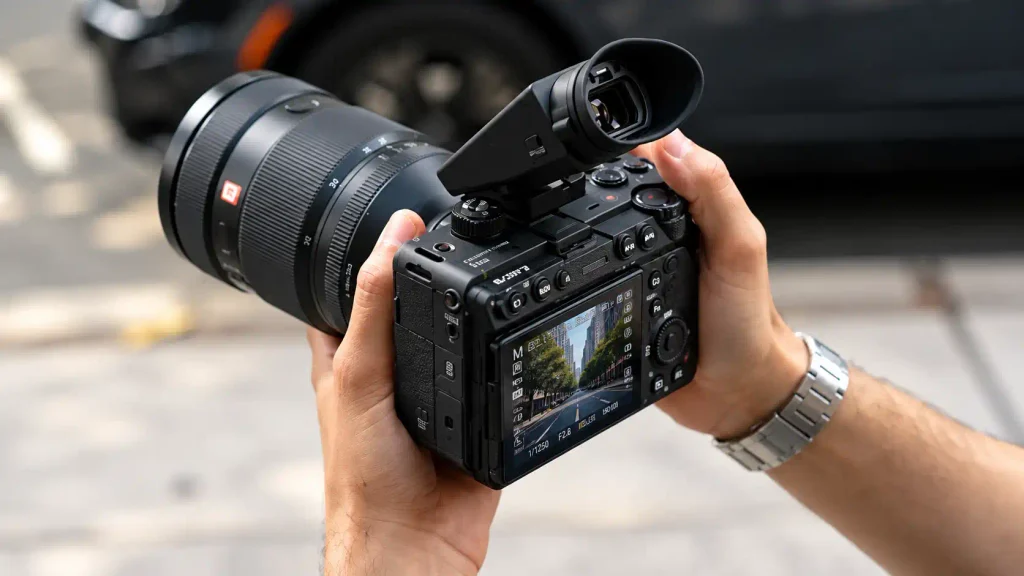
Photography is only part of the modern camera market. For creators whose priority is video, a filmmaking-focused camera can make more sense than a traditional stills-first body.
The Sony FX5 is positioned in the source article as a bridge between enthusiast equipment and Sony’s higher-end cinema systems. It supports open-gate recording and internal 16-bit X-OCN RAW, features previously associated with more expensive cinema cameras.
Three selectable base ISOs and strong dynamic-range performance add to its filmmaking credentials.
However, several headline capabilities are tied to a future firmware update. The source specifically notes that 120fps open-gate recording and 4K240p are locked behind an update scheduled for a year after launch.
That means buyers need to consider both the camera’s current capabilities and the timing of promised firmware features.
For photographers and creators who regularly move between stills and video, it is also worth comparing this type of filmmaking system with a best camera for photo and video before deciding on a workflow.
Hasselblad X2D II 100C — Medium-Format Option
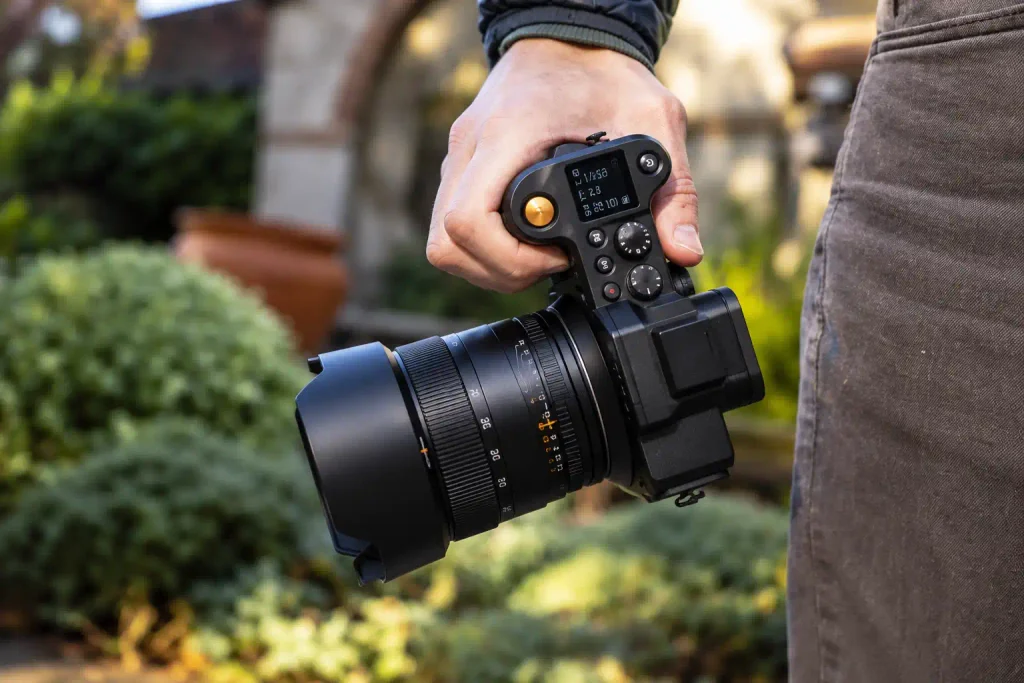
At the other end of the spectrum is the Hasselblad X2D II 100C.
Its 100-megapixel medium-format sensor and 16-bit color place image quality at the center of its design. The camera is also specified with up to 15.3 stops of dynamic range and 10 stops of in-body stabilization.
The redesigned autofocus system includes LiDAR assistance, addressing one of the weaknesses associated with the original X2D according to the source material.
There are significant trade-offs. The X2D II does not record video, and burst shooting is limited to around 3 frames per second. At approximately $7,399 body-only, it is also aimed at photographers with a specific need for high-end still-image performance.
For professional landscape, studio, commercial, and other stills-oriented work where resolution and image quality are priorities, medium format offers a fundamentally different shooting experience.
Official source: Hasselblad
Best Cameras for Different Types of Photography
There is no single specification that determines which camera is right for every photographer. Sensor size, lens selection, portability, video features, stabilization, resolution, and price can all change the decision.
| Device | Category | Starting Price |
| Oppo Find X9 Ultra | Smartphone | ~£1449 |
| DJI Osmo Pocket 4P | Travel / Vlogging | ~£529 |
| Fujifilm X100VI | Everyday Carry | ~£1699 |
| Sony Alpha 7R VI | Resolution | ~£4499 |
| Sony FX5 | Filmmaking | ~£4999 |
| Hassleblad X2D II 100C | Medium Format | ~£7399 |
These prices and category descriptions follow the original article’s supplied information.
For Travel Photography
Portability matters when you’re carrying a camera all day. A compact design can make a bigger difference than having the largest possible sensor.
The DJI Osmo Pocket 4P is designed around portability and stabilized video, while the Fujifilm X100VI provides a more traditional photography experience in a compact body.
For Wildlife Photography
Wildlife photography often benefits from reach, autofocus performance, and the ability to crop or frame distant subjects. A dedicated interchangeable-lens system can therefore offer advantages over compact fixed-lens designs.
If you’re interested in longer focal lengths for wildlife and outdoor photography, check out our Fujifilm XF 400mm F4.5 review:
Fujifilm XF 400mm F4.5 review
For Portrait Photography
Portrait photographers often place greater importance on lens choice, subject separation, and full-frame systems. A camera body is only part of the equation.
For photographers moving beyond compact cameras, our guide to the Sigma 85mm F1.2 DG Art explores a professional full-frame portrait lens:
Sigma 85mm F1.2 DG Art
For Landscape Photography
Landscape photographers can benefit from high resolution and strong dynamic range, especially when making large prints or recovering detail from challenging exposures.
The Sony Alpha 7R VI and Hasselblad X2D II 100C represent two different approaches to high-resolution still photography, with full-frame and medium-format sensor designs respectively.
The Chip Shortage and Camera Prices
Camera technology does not exist in isolation. Sensors, processors, memory, and other components all depend on broader semiconductor supply chains.
The original article points to warnings from SK Hynix and Samsung about continuing demand for memory capacity, particularly as AI data centers consume substantial semiconductor resources. It connects this wider component environment with higher costs across camera and smartphone hardware.
For buyers, that means camera pricing can be influenced by factors beyond the specifications of an individual model. Availability, component costs, regional distribution, and demand can all affect what a camera costs at a particular time.
How to Choose the Best Camera for Photography
Before buying, consider the type of work you actually do.
1. Decide what you shoot most.
Travel, wildlife, portraits, landscapes, video, and everyday photography can require very different equipment.
2. Consider portability.
A smaller camera is easier to carry regularly, while larger professional bodies can provide additional controls and capabilities.
3. Look beyond megapixels.
Resolution matters, but sensor size, lens quality, autofocus, stabilization, dynamic range, and overall workflow matter too.
4. Think about lenses.
An interchangeable-lens camera gives you room to build a system around your photography style.
5. Consider video requirements.
If you create both photos and video, recording formats, frame rates, stabilization, and audio options can become important.
6. Match the camera to your budget.
The most expensive camera is not automatically the right choice. Your actual shooting needs should determine how much equipment you need.
Frequently Asked Questions
What is the best camera for photography in 2026?
There is no single camera that fits every type of photography. The cameras in this guide are designed for different uses, including travel, everyday shooting, high-resolution photography, filmmaking, and medium-format stills.
What is the best camera for beginners?
Beginners should generally start by identifying what they want to photograph. Portability, ease of use, lens availability, and budget can be more important than buying the most advanced professional body.
Is a mirrorless camera better for professional photography?
Mirrorless cameras can provide advanced autofocus, interchangeable lenses, high-resolution sensors, and strong video capabilities. Whether one is suitable depends on the photographer’s specific workflow and requirements.
What camera is best for travel photography?
A travel camera should balance image quality, portability, battery life, and lens flexibility. Compact options such as the DJI Osmo Pocket 4P and Fujifilm X100VI take different approaches to keeping the kit portable.
What camera is best for landscape photography?
Landscape photographers often prioritize resolution, dynamic range, and lens flexibility. High-resolution full-frame and medium-format cameras can be particularly useful for photographers who make large prints or crop heavily.
Do I need a professional camera for good photos?
No. Image quality depends on the entire shooting process, including lighting, composition, lenses, technique, and post-processing. A professional body is most useful when its additional capabilities match your actual needs.
Conclusion
The best cameras for photography in 2026 come in many different forms. A smartphone can provide a powerful everyday camera, a compact gimbal device can make travel video easier, and a fixed-lens APS-C camera can encourage spontaneous photography.
At the professional end, high-resolution full-frame and medium-format systems provide capabilities designed for demanding still-image workflows, while cinema-focused cameras serve creators whose priority is filmmaking.
Instead of choosing a camera purely because its specification sheet looks impressive, consider the kind of photography you actually do. The right camera is the one whose size, features, lens options, image quality, and workflow fit that particular job.