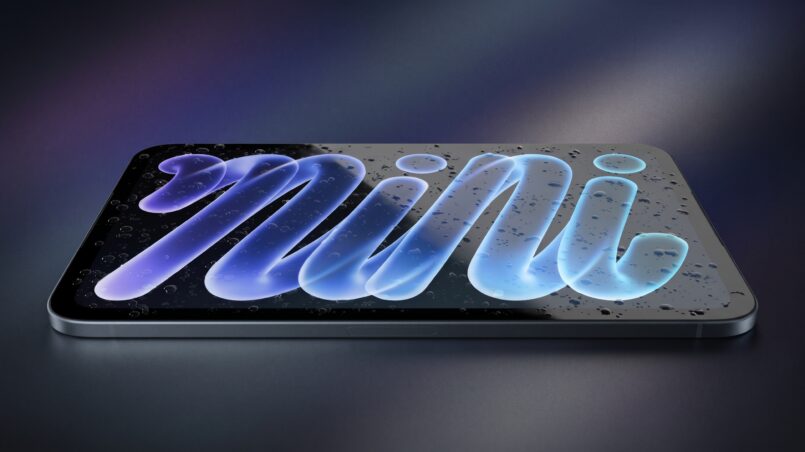
The iPad mini OLED is the most significant update Apple has made to its smallest tablet in years. The 2026 model introduces an 8.5-inch OLED display, a thinner and lighter body, IP67 water and dust resistance, and the A20 Pro processor. Yet the tablet comes with an unusual detail: the 128GB and 256GB models receive a trimmed version of the chip, while the 512GB configuration gets the full version.
The difference is not a completely different processor. All models use the A20 Pro, but the lower-storage versions have one fewer CPU efficiency core and one 16-core Neural Engine instead of two. The GPU remains the same across the lineup.
Apple has not publicly explained why it made this choice. It raises an interesting question: why does Apple use different chips in the iPad mini when storage capacity is already a major pricing factor?
This guide covers the iPad mini OLED screen and chip differences, price, release date, specifications, possible reasons behind the split, and whether the more expensive model is worth buying.
iPad Mini OLED Price and Release Date
Apple announced the new iPad mini on October 26, 2026. Pre-orders opened on October 28, with availability beginning November 6. The tablet starts at $699 for the 128GB Wi-Fi model, while the cellular version starts at $849.
Storage upgrades increase the price quickly. The 256GB Wi-Fi model costs $799, and the 512GB Wi-Fi model costs $999. The top storage tier is particularly notable because it is the only one with the full A20 Pro CPU and dual Neural Engine configuration.
The starting price is a substantial increase compared with the 2024 launch price of $499. MacRumors also reports that the previous-generation model increased to $599 in June, before the 2026 OLED version arrived.
iPad Mini OLED Pricing
| Configuration | Price |
|---|---|
| 128GB Wi-Fi | $699 |
| 128GB Wi-Fi + Cellular | $849 |
| 256GB Wi-Fi | $799 |
| 512GB Wi-Fi | $999 |
For official launch information, visit Apple’s iPad mini announcement. More pricing and availability details are available from MacRumors.
iPad Mini OLED Specs at a Glance
The 2026 iPad mini combines a compact design with a larger OLED display and the A20 Pro chip. Its most important specification difference is the processor configuration based on storage capacity.
| Spec | 128GB and 256GB | 512GB |
|---|---|---|
| Chip | A20 Pro (2nm), binned | A20 Pro (2nm), full |
| CPU | 5 cores (2 performance, 3 efficiency) | 6 cores (2 performance, 4 efficiency) |
| GPU | 7 cores with Neural Accelerators, ray tracing | |
| Neural Engine | One 16-core engine | Two 16-core engines |
| Display | 8.5-inch OLED, 2316 x 1512, 326 ppi | |
| Brightness | 600 nits standard, 1,200 nits HDR peak | |
| Refresh rate | No ProMotion listed, likely 60Hz | |
| Body | 5.4mm thin, 255g Wi-Fi, IP67 | |
| Cameras | 12MP rear, 12MP Center Stage front | |
| Connectivity | Wi-Fi 7, Bluetooth 6, USB-C, eSIM on cellular | |
| Battery | Up to 10 hours, 50% charge in 30 minutes with a 35W adapter | |
| Starting price | $699 (128GB) | $999 (Wi-Fi) |
Specifications are based on launch coverage from MacRumors, Notebookcheck, and Tech Between the Lines. RAM was not disclosed in the original article. The refresh rate is also not explicitly listed as 60Hz; that remains an inference from the lack of ProMotion details.
The iPad Mini A20 Pro Chip Split Explained
The most unusual feature of the new tablet is the processor configuration. Apple markets the 2026 iPad mini as an A20 Pro device, but the chip is not identical across every storage tier.
The 128GB and 256GB models use a five-core CPU consisting of two performance cores and three efficiency cores. They also include one 16-core Neural Engine. The 512GB model adds one efficiency core, bringing the CPU to six cores, and includes two 16-core Neural Engines.
The GPU remains a seven-core design across all models, with Neural Accelerators in each GPU core. Therefore, the lower-storage models do not receive a completely weaker graphics processor.
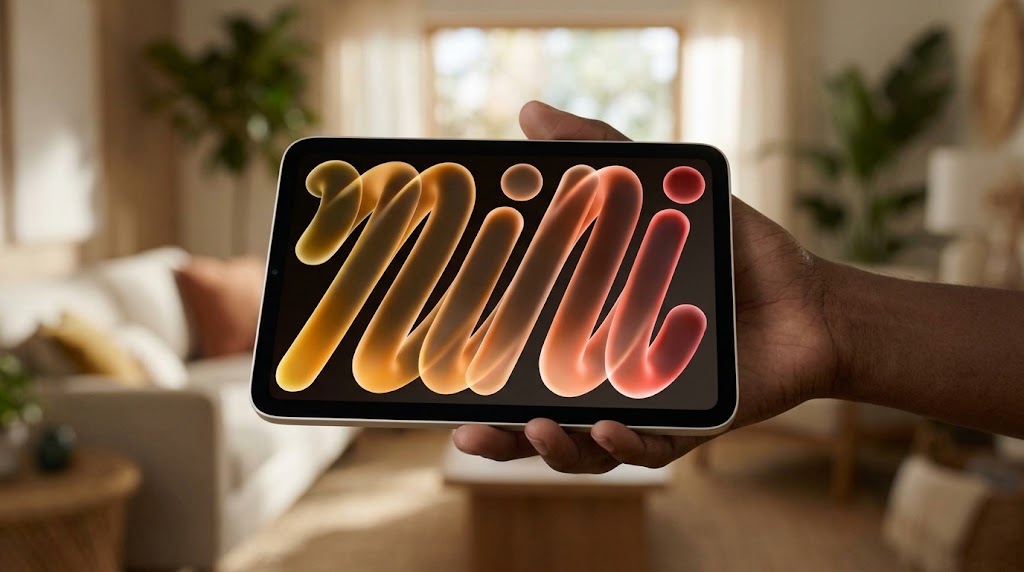
Notebookcheck describes the lower configuration as a lower-binned A20 Pro. In practical terms, this means Apple appears to be using a chip variant with fewer active components rather than giving the cheaper models an entirely different processor family.
What Does the Neural Engine Difference Mean?
The Neural Engine is designed to accelerate machine-learning and AI-related workloads. Having two 16-core Neural Engines in the 512GB model could provide more AI processing capacity than the single-engine configurations.
However, Apple has not published a direct benchmark comparing the two iPad mini chip versions. Without controlled testing, it is difficult to quantify the real-world difference.
For everyday activities such as reading, browsing, streaming video, taking notes, and switching between apps, the additional efficiency core may have little noticeable effect. The Neural Engine difference could become more relevant for demanding on-device AI tasks in the future.
The important distinction is that the iPad mini OLED chip comparison is not simply about faster and slower models. It is about whether the extra processing hardware matters for the way a buyer uses the tablet.
Why Does Apple Do This?
Apple has not explained the reason for the storage-based chip split. The following points are possible explanations and analysis, not confirmed statements from Apple.
1. Chip Yields and Manufacturing Costs
Advanced processors are expensive to manufacture. Not every chip produced on a wafer will have every component functioning perfectly. Manufacturers have long used different chip configurations to make use of dies with certain components that do not meet the highest specification.
A chip with one fewer efficiency core or Neural Engine may still be usable. Assigning it to a lower-priced product tier could help Apple use more of its manufactured chips instead of discarding them.
This is a plausible explanation for the lower-binned A20 Pro, but Apple has not confirmed that manufacturing yield is the reason for the iPad mini configuration.
2. Creating a Storage-Based Price Ladder
Apple’s storage tiers already encourage customers to spend more for additional capacity. The chip difference gives the 512GB version another selling point.
Instead of paying more only for storage, buyers receive additional CPU and AI hardware as well. This may make the $999 tier more appealing to customers who want the strongest configuration.
The downside is that buyers who want the full chip but do not need 512GB of storage have no cheaper route to that configuration.
3. Protecting the Product Lineup
Apple sells iPads at several price points, with different display sizes and capabilities. A compact tablet with a premium OLED screen and a fully enabled processor could potentially overlap with higher-priced models.
The company may use hardware segmentation to preserve distinctions between its products. This is an interpretation rather than an established reason for the A20 Pro split.
Apple has previously differentiated configurations using component changes, but the original article does not establish a direct precedent for this exact iPad mini design.
4. Preparing for Future AI Features
Apple is expanding its focus on on-device AI and Siri. A second Neural Engine could provide additional capacity for future workloads.
That does not mean the 128GB or 256GB models will become unusable, or that they will necessarily receive fewer software updates. The real impact will depend on future software requirements and how Apple optimizes its AI features.
For now, the full Neural Engine configuration is a potential advantage, not a proven requirement for everyday use.
Ultimately, Apple may be combining manufacturing flexibility with product-tier strategy. The company has not confirmed this explanation, so it should be treated as analysis rather than fact.
Does the Chip Split Matter to You?
For most users, probably not immediately. Reading, browsing, watching videos, taking notes, and ordinary multitasking should not require the additional efficiency core or second Neural Engine.
The OLED display, compact dimensions, storage capacity, and overall portability may have a greater effect on the daily experience. The iPad mini OLED screen is a major upgrade from the previous LCD panel, with deeper blacks and higher HDR brightness.
However, future AI workloads could make the Neural Engine difference more relevant. If upcoming versions of Siri or other on-device models use more processing capacity, the 512GB model may have additional headroom.
That possibility is not a guarantee. Apple has not provided comparative benchmarks or confirmed how future features will behave on each configuration.
The practical issue is the way Apple ties the full chip to storage. Buyers who need maximum processing capability must pay for 512GB even if their files and apps require less storage.
Strengths and Weaknesses
Strengths
- 8.5-inch OLED display with up to 1,200 nits HDR peak brightness
- A20 Pro chip built on a 2nm process
- Thin 5.4mm body with IP67 protection
- Wi-Fi 7 and Bluetooth 6 connectivity
- Acoustic Display speakers without traditional speaker grilles
- Apple Pencil Pro support reported
- Fast charging to 50% in 30 minutes with a 35W adapter
Weaknesses
- $699 starting price, up $200 from the 2024 launch price
- Full chip configuration tied to the 512GB tier
- No 120Hz ProMotion specification listed
- RAM capacity not disclosed in the original source
- Nano-texture glass costs extra and is limited to higher tiers
- Fast charging requires a 35W adapter rather than the 20W adapter in the box
- Siri AI remains subject to beta, language, and regional limitations
Who Should Buy the iPad Mini OLED?
Readers, commuters, students, and sketchers are likely to appreciate the new iPad mini. The OLED panel can make books, comics, photos, and video look more vibrant, while the compact body remains easy to carry.
The IP67 rating adds protection against water and dust, making the tablet more practical for travel and some outdoor use. The larger 8.5-inch display also provides more viewing space while retaining the mini form factor.
Power users face a more difficult decision. The $999 512GB model offers the full A20 Pro configuration, but that is a significant price for a small tablet. Larger iPads may offer more screen space for a similar budget, depending on configuration.
For most buyers, the 256GB model may be the sensible middle ground. It provides more storage than the base model while avoiding the extra cost of the full chip configuration.
The 512GB version makes more sense for people who genuinely need the additional storage or expect to use demanding on-device AI workflows. Buyers should not upgrade solely because the specification sheet lists a second Neural Engine.
For more CircuitVerdict technology coverage, explore our OLED MacBook Pro touchscreen and price guide, our HackiOS real iOS 16.5 on Android explainer, and the DJI Dock 4 review.
Readers interested in imaging hardware can also check our Sigma 50mm f/1.4 DG HSM Art lens coverage, Sigma fp 2 review, and Nikon Z5IIC review. For mobile-device comparisons, see our OnePlus 16 specs, price, and review.
Final Verdict: Great Tablet, Petty Positioning
The iPad mini OLED is a compelling upgrade. Its OLED screen, thin design, A20 Pro processor, improved connectivity, and IP67 protection make it one of Apple’s most capable compact tablets.
The display is arguably the most important improvement. OLED brings deeper blacks and richer contrast to a device designed for reading, media, gaming, and portable creative work.
The processor split, however, is an unnecessary complication from a buyer’s perspective. Tying the full A20 Pro configuration to 512GB storage means customers cannot choose the chip independently of capacity. That may be convenient for Apple’s product strategy, but it limits consumer flexibility.
The lower-storage models should be suitable for most everyday activities. The 512GB version is best considered by people who need the additional storage or have a specific reason to want more AI processing capacity.
The iPad mini OLED earns its appeal through portability and display quality. Whether the full chip justifies the premium remains a question for real-world benchmarks and long-term testing.
iPad Mini OLED FAQ
How much is the iPad mini OLED?
The 128GB Wi-Fi model starts at $699, while the 128GB cellular version costs $849. The 256GB Wi-Fi model is $799, and the 512GB Wi-Fi model costs $999.
When does the iPad mini OLED ship?
Pre-orders opened on October 28, 2026. General availability began November 6, 2026.
Do all iPad mini models have the same A20 Pro chip?
No. The 128GB and 256GB versions use a five-core CPU and one 16-core Neural Engine. The 512GB model uses a six-core CPU and two 16-core Neural Engines. All configurations have a seven-core GPU.
Does the iPad mini OLED have 120Hz ProMotion?
Apple’s specifications do not list ProMotion. The display therefore appears likely to remain at 60Hz, but that is an inference rather than a directly confirmed refresh-rate specification.
Is the iPad mini 8 water resistant?
The 2026 iPad mini carries an IP67 rating for water and dust resistance. Apple describes this as a new capability for the iPad mini lineup.
Should you buy the 512GB iPad mini for the extra chip power?
Only if the extra storage or processing capacity fits your needs. For reading, browsing, video, and everyday use, the lower-storage configurations should be sufficient for most people.
iPad Mini OLED Links and Reviews
- Apple: iPad mini official announcement
- MacRumors: Apple announces iPad mini with OLED display and A20 Pro
- Notebookcheck: iPad mini OLED and A20 Pro coverage
- Tech Between the Lines: New iPad mini with OLED, A20 Pro, and IP67
- iClarified: Apple unveils iPad mini with OLED display and A20 Pro
- Gadget Review: iPad mini 8 gets OLED and A20 Pro
- 9to5Mac: OLED iPad mini price and release details
For more technology news, reviews, and buying guides, visit CircuitVerdict.