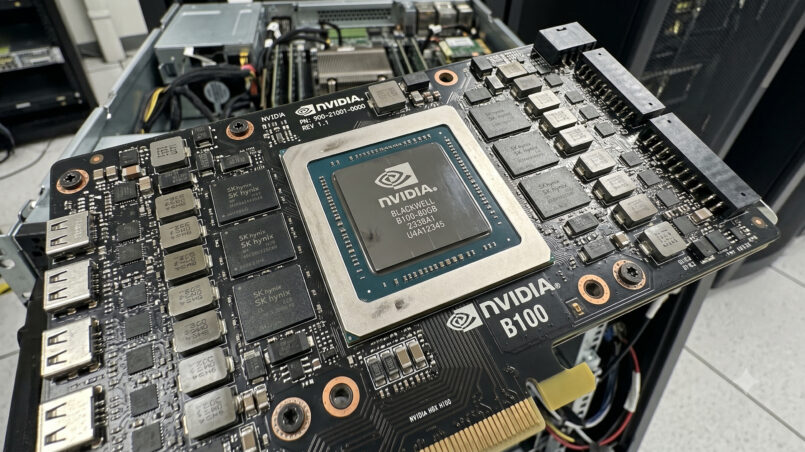
NVIDIA RTX Spark is one of the most ambitious PC hardware announcements described at Computex 2026. NVIDIA, a company long associated with discrete graphics cards and AI accelerators, is entering the Windows PC processor market with an ARM-based platform that combines a Grace CPU and Blackwell GPU in a unified superchip. The goal is to bring high-performance computing, local AI, graphics, and everyday productivity together in a compact system.
The concept is exciting, but the potential NVIDIA RTX Spark price raises an important question: who should actually buy it? With manufacturer estimates placing the entry-level N1 configuration around $1,799 and the flagship N1X around $2,899, RTX Spark appears aimed at professionals rather than budget-conscious PC buyers.
Its combination of unified memory, high internal bandwidth, and NVIDIA’s CUDA software ecosystem could make it attractive to developers, AI researchers, and creative professionals. However, real-world performance, software compatibility, battery life, and final retail pricing will determine whether RTX Spark can deliver on its promises.
What Is NVIDIA RTX Spark?
NVIDIA RTX Spark is a proposed Windows computing platform built around an ARM-based Grace CPU and a Blackwell GPU. Rather than relying on a conventional processor paired with a separate graphics card, the design combines key computing components into a unified architecture.
This approach resembles the integrated-silicon strategy used in Apple’s M-series processors. Keeping the CPU, GPU, and memory closely connected can reduce the need to move data between separate components. That is particularly useful for AI workloads, where large models require substantial memory capacity and bandwidth.
NVIDIA’s approach centers on NVLink-C2C, an interconnect that the original announcement describes as providing up to 600 GB/s of bandwidth between the processor and memory. This high-bandwidth architecture is intended to support demanding local AI workloads, graphics applications, and other data-intensive tasks.
NVIDIA RTX Spark N1 vs. N1X
The announced platform includes two configurations: the N1 and the more powerful N1X. Both are based on ARM architecture and include Blackwell GPU technology, but the N1X is positioned as the flagship option
What RTX Spark Actually Is
RTX Spark is NVIDIA’s attempt to bring the full weight of its AI and graphics platform into a unified chip architecture for consumer Windows machines.
The idea borrows from the playbook Apple refined with its M-series silicon: put the CPU, GPU, and memory on the same die, connected by extremely fast internal bandwidth, so that data never has to travel across a slow external bus. NVIDIA calls this NVLink-C2C, and it delivers up to 600 GB/s of bandwidth between the processor and memory.
That number matters because it is what allows the chip to run very large AI models locally rather than relying on cloud inference.
There are two chip variants. The N1 is the accessible configuration and the N1X is the flagship. Both are built on ARM architecture, both carry Blackwell GPU cores, and both support up to 128GB of unified LPDDR5X memory.
| RTX Spark N1 Starting from ~$1,799 ARM Grace CPU Blackwell GPU Up to 128GB LPDDR5X unified memory 600 GB/s NVLink-C2C bandwidth 1 petaflop AI performance Slim laptop with All-day battery claims | RTX Spark N1X Starting from ~$2,899 20-core ARM Grace CPU Blackwell GPU · 6,144 CUDA cores Up to 128GB LPDDR5X unified memory 600 GB/s NVLink-C2C bandwidth Full CUDA, DLSS, RTX, TensorRT stack Slim laptop or compact desktop form factor |
Device partners confirmed for launch this fall include ASUS, Dell, HP, Lenovo, Microsoft Surface, and MSI, with Acer and GIGABYTE following shortly after.
Adobe has already announced it is rebuilding Photoshop and Premiere from scratch for RTX Spark, claiming two times faster AI and graphics performance compared to current hardware. NVIDIA’s own performance targets include editing 12K video, generating 4K AI video, running 120-billion-parameter language models locally with up to one million token context, and playing AAA games at 1440p above 100 frames per second.
NVIDIA RTX Spark Specs and Key Features
The most interesting part of the NVIDIA RTX Spark specs is not simply the processor or graphics architecture. It is how the platform combines computing resources to handle demanding workloads without relying entirely on cloud services.

ARM Grace CPU and Blackwell GPU
The Grace CPU handles general computing tasks, operating-system operations, and application workloads. The Blackwell GPU is designed to accelerate graphics and parallel computing, including supported AI operations.
Combining these components could make RTX Spark useful for applications that frequently move data between CPU and GPU memory. However, the exact performance advantage will depend on software optimization, workload characteristics, and the final hardware configuration.
Up to 128GB of Unified Memory
One of the platform’s most notable features is support for up to 128GB of unified LPDDR5X memory. This capacity could be particularly valuable for AI developers working with large models that would otherwise require substantial dedicated GPU memory or multiple hardware components.
Unified memory does not guarantee that every AI model will run efficiently. Model architecture, quantization, software support, available memory, and processing speed all affect practical performance. Nevertheless, the announced capacity could make RTX Spark relevant to people who want to experiment with larger AI models locally.
NVLink-C2C and High Internal Bandwidth
NVIDIA cites up to 600 GB/s of NVLink-C2C bandwidth. The purpose is to facilitate communication between the processor and memory, helping data-intensive workloads move information efficiently.
This should not be confused with a guarantee of 600 GB/s of storage speed or internet speed. It refers to the processor-memory interconnect described in the announcement. Actual application performance will depend on several additional factors, including compute resources and software efficiency.
NVIDIA RTX Spark Price: Is It Too Expensive?
Pricing is likely to be the biggest obstacle for RTX Spark. Based on the reported manufacturer estimates, the N1 could start around $1,799, while the N1X could begin around $2,899. NVIDIA has not directly confirmed those prices in the source material.
The distinction matters because starting prices rarely tell the complete story. Premium displays, storage upgrades, memory configurations, and other hardware options can increase the cost of a finished laptop or desktop system. Buyers should wait for confirmed product listings before making a purchasing decision.
The comparison with Apple’s MacBook Pro is particularly important. The original article identifies the M4 Pro MacBook Pro as starting at $1,999 and the M4 Max configuration at $2,499. Those figures provide useful context for the pricing discussion, although configurations and prices should be checked again when comparing products at purchase time.
For more context on Apple’s changing hardware and leadership landscape, see our coverage of Apple CEO John Ternus and the transition after Tim Cook.
RTX Spark will need to demonstrate a meaningful advantage for its target audience. A higher price could be justified for professionals who save time through faster AI development or smoother CUDA-dependent workflows. For people who mainly browse the web, edit documents, or play conventional PC games, the premium may be difficult to justify.
NVIDIA RTX Spark AI and Local Model Performance
Local AI computing is one of the clearest reasons to consider this platform. NVIDIA’s announcement describes workloads such as running language models with up to 120 billion parameters locally, supporting context windows of up to one million tokens, and generating AI video. These are announced targets, not independently verified benchmark results.
The ability to run AI workloads on local hardware can offer practical benefits. Users may be able to work without a constant cloud connection, keep certain data on their own systems, and avoid some usage-based cloud costs. Local processing can also make experimentation more convenient when supported models and applications are configured correctly.
However, local AI does not automatically mean unrestricted or faster AI. Large models can consume substantial memory, and performance depends on quantization, inference software, context length, model architecture, and the amount of computing power available. Running a model successfully is also different from running it at a speed suitable for professional production.
The 128GB unified-memory configuration could provide flexibility, but buyers should look for independent tests using the specific models and tools they intend to use. Until those tests are available, NVIDIA RTX Spark AI performance should be treated as a set of promising claims rather than a proven result.
NVIDIA RTX Spark GPU and Gaming Performance
RTX Spark also has a gaming proposition because its Blackwell GPU is intended to support NVIDIA’s graphics technologies. The original announcement describes a target of playing AAA games at 1440p and above 100 frames per second.
That target needs context. Frame rates vary significantly depending on the game, graphics settings, resolution, ray tracing, upscaling, and software optimization. A performance claim for one title cannot establish how every game will run.
ARM-based Windows hardware also raises compatibility questions. Games and launchers must work correctly with the operating system, processor architecture, graphics drivers, and any required anti-cheat software. Buyers should check compatibility for their existing game library instead of assuming every Windows game will behave identically to a conventional x86 gaming PC.
For a separate look at the software and compatibility issues that can affect PC gaming, read our article on the Denuvo hypervisor bypass and PC gaming.
For most gamers, a conventional laptop with a discrete RTX GPU may offer a more straightforward choice, depending on its price and performance. RTX Spark’s strongest potential case is for users who want gaming alongside AI development and professional workloads, rather than gaming alone.
NVIDIA RTX Spark vs. Mac: Which Platform Makes More Sense?
The comparison between NVIDIA RTX Spark and Apple Silicon is about more than processor speed. It involves software, application compatibility, battery life, portability, and the tasks a buyer performs every day.
Apple’s integrated-silicon approach has an established position in creative applications and general productivity. NVIDIA’s potential advantage is access to its CUDA ecosystem, which is widely used in AI development and GPU-accelerated computing.
For developers whose workflows depend on CUDA, an NVIDIA-based system could be more practical than relying on alternative frameworks or workarounds. For users whose applications are already optimized for macOS and Apple Silicon, moving to an ARM-based Windows device may offer fewer benefits.
The wider hardware ecosystem matters, too. Camera professionals, for example, need to consider how their editing applications, codecs, plug-ins, and accessories work on a new system. Our Sony A7R VI vs. Alpha 1 II review explores camera choices that may be relevant to photographers evaluating a broader creative workflow.
Before choosing between RTX Spark and a Mac, buyers should compare independent application benchmarks, supported software, external display capabilities, battery tests, and the total cost of the configuration they need.
NVIDIA RTX Spark Desktop and Mini PC Possibilities
The RTX Spark concept is not limited to one type of device. The original announcement describes thin laptops and compact desktop systems, giving manufacturers flexibility in how they use the platform.
A laptop could appeal to developers who need a portable workstation for local AI experimentation, coding, and creative work. A compact desktop could be attractive to users who prioritize a stationary workspace and do not need to carry their system between locations.
However, buyers should distinguish between announced form factors and confirmed products. The supplied information does not establish the final dimensions, cooling designs, ports, upgrade options, or retail availability of each device. Those details will depend on the actual products released by individual manufacturers.
Device partners identified in the announcement include ASUS, Dell, HP, Lenovo, Microsoft Surface, and MSI, with Acer and GIGABYTE expected to follow. The original material also says Adobe plans to rebuild Photoshop and Premiere for RTX Spark, claiming twice the AI and graphics performance compared with current hardware. That remains a claim to verify through application-specific testing and final software releases.
For another example of how performance, platform design, and price can affect a computing purchase, read our AMD Ryzen 7 5800X3D review and AM4 upgrade guide.
The Price Problem
Here is where the conversation gets complicated. A Morgan Stanley analysis, based on conversations with PC manufacturers at Computex, put the N1X floor at $2,899 and the N1 floor at $1,799. NVIDIA has not confirmed any pricing directly. These are manufacturer estimates, which means real retail configurations with premium displays, higher storage, and added memory will almost certainly land higher still.
For context, Apple’s M4 Pro MacBook Pro begins at $1,999. The M4 Max configuration starts at $2,499. Apple has spent years building a reputation for delivering extraordinary performance per watt at those prices, and the MacBook Pro is already the default recommendation for creative professionals, developers, and anyone who needs serious portable computing. RTX Spark is entering that exact fight and doing so at a higher opening price point, without the years of ecosystem trust Apple has accumulated.
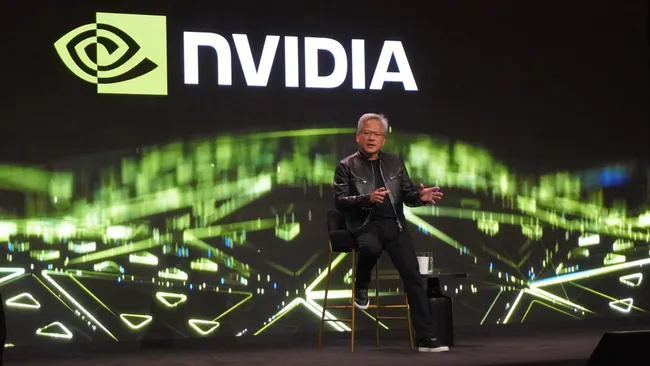
“For forty years, you launched apps. Click. Type. With RTX Spark, you ask, and the PC does the work.” That is a beautiful sentence. Whether a $3,000 laptop can make it feel true is another matter entirely.
Where RTX Spark Has a Genuine Case to Make
The criticism about price is fair, though it misses something important about who this machine is actually targeting. NVIDIA is not building the RTX Spark for the gamer who wants a portable rig at a reasonable price. That person already has options with discrete RTX 50-series laptop GPUs in more affordable chassis. RTX Spark is aimed at a specific and well-defined buyer: the developer, AI researcher, or creative professional who currently uses a MacBook Pro and feels the ceiling of Apple’s Metal ecosystem every time they need to run a CUDA-dependent workflow.
That ceiling is real. The entire AI development stack, from PyTorch to TensorRT to ComfyUI to virtually every serious machine learning tool in active development, runs natively on CUDA. Running those workloads on Apple Silicon requires workarounds, emulation layers, or simply accepting that certain tools do not perform at full capacity. RTX Spark eliminates that problem entirely. You get the full NVIDIA software stack, full Windows compatibility, a machine thin enough to carry anywhere, battery life targeting a full workday, and the ability to run a 120-billion-parameter language model locally without a cloud subscription. For someone billing by the hour on AI-adjacent work, $2,899 pays itself back faster than most consumer hardware ever does.
Will the Masses Actually Accept It?
Probably not at launch, and NVIDIA almost certainly knows this. The first wave of RTX Spark machines will sell to the segment of buyers who understand exactly what they are getting: a portable CUDA workstation with gaming capabilities, sold at workstation prices. The broader market will watch, wait for reviews, and decide whether the premium over Apple Silicon is justified for their specific needs.
The more interesting question is what the second generation looks like. NVIDIA’s first ARM-based consumer chip, priced aggressively for the cutting edge, follows a pattern the company has executed before: establish the platform, prove the performance, then bring it down market. If RTX Spark delivers on even half its promises in practice, version two becomes the product that the average professional actually considers. For now, Jensen’s mad move is exactly that: a move. The payoff comes later, and only if the hardware lives up to the keynote.
Frequently Asked Questions
What is NVIDIA RTX Spark?
NVIDIA RTX Spark is an announced ARM-based Windows computing platform combining a Grace CPU and Blackwell GPU. It is designed to support AI, graphics, and professional computing in laptop and compact desktop systems.
What is the NVIDIA RTX Spark price?
The original article cites estimated starting prices of around $1,799 for the N1 and $2,899 for the N1X. These are manufacturer estimates reported through industry discussions, not confirmed official retail prices from NVIDIA.
Does NVIDIA RTX Spark support 128GB of memory?
The announced configurations support up to 128GB of unified LPDDR5X memory. The memory available in a finished product will depend on the specific device and configuration.
Is NVIDIA RTX Spark good for AI development?
It could be a strong candidate for developers who need local AI processing and CUDA-compatible software. Its actual suitability will depend on independent benchmarks, application compatibility, model requirements, and final hardware specifications.
Is NVIDIA RTX Spark better than a MacBook Pro?
Neither platform is automatically better for everyone. RTX Spark may appeal to CUDA-dependent developers, while a MacBook Pro may be preferable for users whose applications and workflows are optimized for macOS and Apple Silicon. Compare real-world tests for your specific tasks.
Can NVIDIA RTX Spark run PC games?
The announced platform targets AAA gaming, including 1440p performance above 100 frames per second. Actual results will depend on the game, settings, drivers, and compatibility. Independent gaming benchmarks are needed to assess performance reliably.
Should you wait for NVIDIA RTX Spark?
If you need a new workstation immediately, compare currently available products rather than buying based on unverified targets. If your work depends on local AI and CUDA, waiting for final pricing and independent reviews may help you decide whether RTX Spark offers enough value.
Final Verdict: Is NVIDIA RTX Spark Worth Watching?
NVIDIA RTX Spark represents an ambitious attempt to combine CPU computing, Blackwell graphics, unified memory, and AI acceleration in a single Windows platform. Its announced support for up to 128GB of memory and its focus on NVIDIA’s software ecosystem could make it especially interesting to developers and creative professionals.
The challenge is price. At estimated starting points of $1,799 and $2,899, RTX Spark will need to prove that its performance and software advantages justify the premium over established alternatives. Compatibility, sustained performance, battery life, and final retail configurations will matter just as much as headline specifications.
For now, NVIDIA RTX Spark is a platform to watch, not a product to judge by promises alone. Independent testing and confirmed pricing will ultimately determine whether it becomes a compelling AI workstation or remains an expensive niche option.