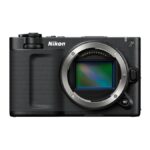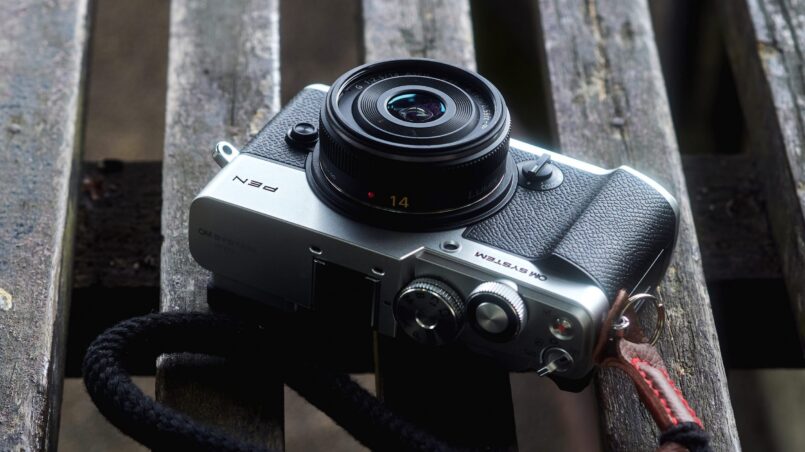
The OM System PEN brings back a much-requested feature for Micro Four Thirds photographers: a compact camera with a built-in electronic viewfinder (EVF). After a decade-long wait, OM System has revived the PEN name with a weather-sealed body, familiar imaging hardware, creative color controls, and a design aimed at everyday photography.
Chris Niccolls traveled to Japan to test the camera across the Nagano Valley and Sado Island, exploring whether this new model lives up to the PEN legacy or simply repackages the OM-5 Mark II in a more stylish body.
On paper, the formula is appealing. The PEN combines a 20.4-megapixel Live MOS sensor, in-body image stabilization, computational photography features, and a rangefinder-inspired design. Its built-in EVF also addresses a major omission that has kept some photographers from considering earlier compact PEN models.
But familiar hardware raises an important question: does the OM System PEN offer enough practical advantages to justify its price, or is its appeal primarily about portability and design?
Not Precious, But a Pocketable Design
The OM System PEN weighs approximately 500 grams according to the supplied review specifications, making portability a central part of its appeal. Its smooth exterior and simplified control layout are designed for photographers who want a dedicated camera they can carry throughout the day without dealing with a bulky body.
The design borrows elements from the classic PEN-F, including an offset electronic viewfinder and a front-mounted Profile Control switch. The result is a rangefinder-style appearance that feels different from the more conventional DSLR-inspired shape of the OM-5 Mark II.
Weather protection is another important addition. The PEN is the first PEN model to receive an official environmental rating, with IPX1 splash protection. This offers some reassurance when shooting in light rain or humid conditions, although it should not be mistaken for complete waterproofing.
The built-in EVF is the headline feature. Its 2.36-million-dot resolution is relatively basic compared with some newer viewfinders, but having one integrated into a compact camera makes a practical difference. Photographers can compose images at eye level in bright sunlight instead of relying entirely on the rear display.
The rear screen is a fully articulating LCD with approximately one million dots of resolution. It supports touch-to-focus and makes it easier to compose shots from low angles, overhead positions, or in front of the camera when recording yourself.
There is no dedicated AF joystick. Photographers who regularly move their focus point using physical controls may find this inconvenient, while touchscreen users should adapt more easily.
The central appeal is straightforward: the PEN provides a built-in EVF, a flexible screen, and a compact rangefinder-style body without requiring photographers to buy or attach a separate viewfinder.
“In a very simplistic and maybe cynical way of looking at it, the PEN is just a street-styled OM-5 II.”
Under the Hood: Familiar Silicon, New Attitude
The PEN runs the same 20.4-megapixel Live MOS sensor and TruePic IX processor found in the OM-5 Mark II, rather than the stacked sensor from the flagship OM-1 series. That keeps the price down, but it also means image quality and autofocus performance land squarely where OM System’s mid-tier lineup already sits. Subject deUnder the Hood: Familiar Silicon, New Attitude
The OM System PEN uses the same 20.4-megapixel Live MOS sensor and TruePic IX processor found in the OM-5 Mark II. Rather than introducing a stacked sensor from the flagship OM-1 series, the PEN relies on established midrange imaging hardware.
That decision keeps the camera’s positioning focused on portability and accessibility rather than headline-grabbing performance improvements. Photographers familiar with the OM-5 Mark II should recognize much of the underlying imaging approach, although the PEN’s different controls and smaller body change how the camera feels in everyday use.
Autofocus includes subject detection for people and pets. While the animal-detection capability is positioned around common subjects such as dogs and cats, the supplied field review found it surprisingly useful when photographing wildlife during the Japan trip.
In-body image stabilization is rated at up to 5.5 stops. This can help photographers capture sharper handheld images at slower shutter speeds, particularly when photographing stationary subjects in lower light. Actual results will depend on shooting technique, focal length, subject movement, and conditions.
The mechanical shutter reaches 1/4000 second, while continuous shooting tops out at 8 frames per second. Both figures place the PEN below the OM-5 Mark II in certain performance areas, reinforcing the distinction between a compact everyday camera and a more capable all-round body.
One limitation concerns longer stabilized telephoto lenses. The PEN does not offer synchronization with those lenses’ stabilization systems, which may matter to photographers who regularly shoot distant wildlife or fast-moving outdoor subjects.
For a more specialized telephoto setup, read our Fujifilm XF 400mm F4.5 lens review. It explores a different approach to long-reach photography for users who prioritize wildlife and distant subjects.
The PEN’s hardware is therefore best understood in context. It is designed around everyday carry, street photography, and travel—not maximum burst speed or demanding telephoto work.tection covers people and pets, and while animal-detection is officially pitched at family dogs and cats, it held up surprisingly well on wildlife encountered along the trip.
In-body stabilization tops out at 5.5 stops, mechanical shutter speed reaches 1/4000s, and burst shooting caps at 8fps — each figure a notch below what the OM-5 II offers with its larger grip. The IBIS also won’t sync with longer stabilized telephoto lenses, a deliberate limitation that reinforces the PEN’s role as a walkaround camera rather than a telephoto workhorse.
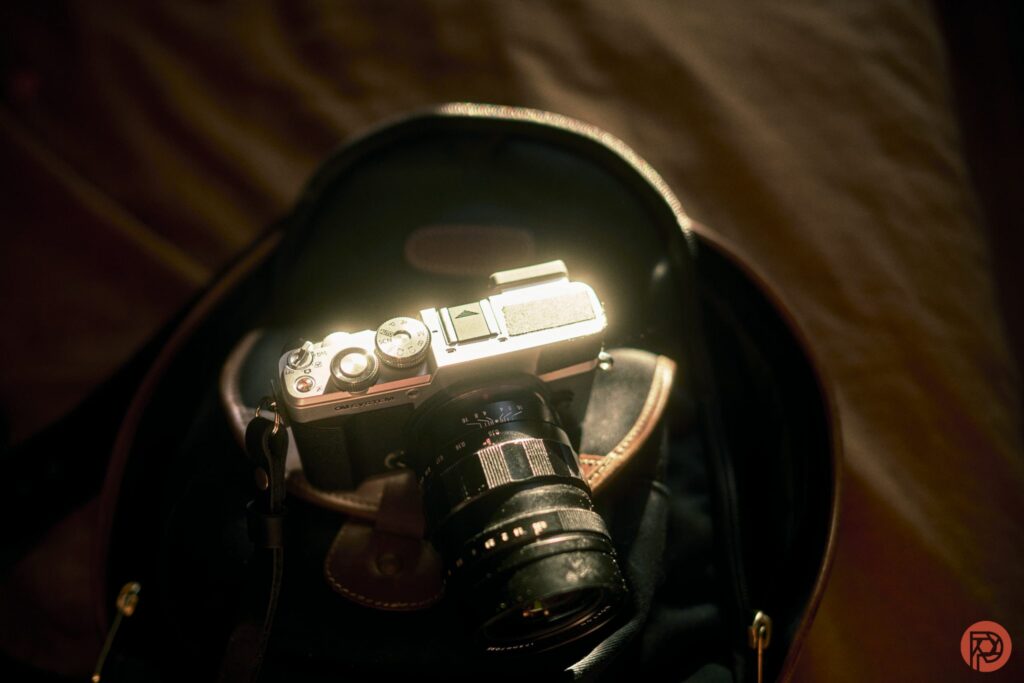
Battery Life and Everyday Reliability
One of the most welcome changes is the BLS-7 battery. The supplied review reports multiple days of shooting per charge during testing, a meaningful improvement over the older BLS-50 battery.
Battery performance varies with EVF use, screen brightness, wireless connectivity, temperature, and shooting frequency. Nevertheless, the reported endurance is encouraging for travel photographers who prefer to spend a day exploring rather than worrying about charging equipment.
Combined with the camera’s compact design, the battery makes the PEN attractive as a daily companion. It is especially appealing for photographers who want to leave a larger camera system at home but still enjoy manual controls, interchangeable lenses, and a proper viewfinder.
For the manufacturer’s current feature and specification information, visit the official OM System PEN product page.
Shooting Experience: Color Recipes and Computational Tricks
The PEN’s shooting experience places considerable emphasis on creative control. Instead of treating the camera purely as a device for capturing files that will be edited later, OM System gives photographers several ways to shape the look of an image in-camera.
A dedicated CP button provides access to computational photography features. One highlight is Live ND, which simulates a neutral-density filter effect of up to four stops. This can help photographers create long-exposure-style images without carrying a physical filter for every situation.
The feature is particularly useful when photographing moving water, flowing clouds, or other scenes where a slower shutter speed can create a sense of movement. As with any computational effect, results depend on the scene and the way the camera combines image information.
The front-mounted Profile Control switch is another distinctive feature. It allows photographers to move between standard color modes, as well as up to four customizable color profiles and four monochrome recipes.
That means a photographer can switch quickly from a punchy, saturated look to a more restrained black-and-white treatment without repeatedly navigating complicated menus. For street photographers, this direct access can make shooting more spontaneous and enjoyable.
The creative profiles also suit photographers who prefer to develop a recognizable visual style straight out of the camera. Rather than applying the same processing to every image later, they can experiment while composing and capturing the scene.
This approach does not replace editing software or guarantee better images. Its value lies in making creative decisions more immediate, particularly for photographers who enjoy the process of making a photograph as much as the final result.
The combination of the EVF, Profile Control switch, and computational features gives the PEN a personality beyond its familiar sensor and processor. Although its core imaging hardware is not a major leap forward, the shooting experience is designed to feel distinctive.
Video Performance Is the Main Compromise
Video is where the PEN struggles to match more versatile hybrid cameras. The supplied review notes that OM-Log is available, but recording is limited to 8-bit, and footage appears noticeably softer than that from competing APS-C cameras in the same general price bracket.
That makes the PEN a less compelling choice for creators who regularly record demanding video projects or need greater flexibility for color grading.
Its articulating screen can still be useful for casual clips, travel diaries, and simple creator content. However, photographers buying primarily for video should compare its recording capabilities carefully against alternatives before committing.
The PEN is clearly positioned as a stills-first camera. Its video tools are useful extras rather than the foundation of the product.
OM System PEN: Key Specifications
| Sensor | 20.4MP Live MOS, TruePic IX processor |
|---|---|
| Viewfinder | 2.36M-dot EVF, offset left-shoulder position |
| Rear screen | 1M-dot fully articulating LCD |
| Stabilization | Up to 5.5 stops IBIS |
| Burst / Shutter | 8fps · 1/4000s mechanical |
| Weather sealing | IPX1 splashproof (first PEN with a rating) |
| Battery | New BLS-7, multi-day battery life |
| Video | 8-bit only, OM-Log available |
| Weight | 500g / 17.6oz |
| Price | $999 / £849 body-only, £949 with kit lens |
The specification sheet reveals the PEN’s priorities. It combines the convenience of a built-in EVF and flexible display with stabilization and creative shooting modes, while leaving some performance headroom to larger bodies.
Before purchasing, check regional pricing and the manufacturer’s latest specifications, as configurations and availability can vary by market.
What Works
- Stylish, pocketable, genuinely fun design
- Full feature seWhat Works
- Stylish, compact design that encourages everyday carry.
- A built-in EVF in a camera aimed at casual and enthusiast photographers.
- Profile Control makes custom color and monochrome recipes easy to access.
- Live ND and other computational features add practical creative options.
- The new BLS-7 battery delivered multi-day shooting during the reported test.
- IPX1 splash protection provides some reassurance in light rain.
What Doesn’t
- The sensor and processor are carried over from the OM-5 Mark II.
- The shallow grip may be less comfortable during extended handheld sessions.
- 8-bit video and the reported softer footage limit its appeal to serious hybrid creators.
- The lack of an AF joystick makes direct focus-point adjustments less convenient.
- It does not deliver the premium materials and extensive controls associated with the PEN-F.
The Real Question: Is This a PEN-F Replacement?
No—not in the traditional sense. The PEN-F was a premium camera built around a distinctive metal body, extensive physical controls, and a more elaborate shooting experience. Its appeal came from the feeling that the camera itself was a carefully designed photographic object.
The new OM System PEN takes a different direction. It uses a simplified control layout and a more accessible positioning, aiming to appeal to people who want the PEN look without the same premium emphasis on materials and complexity.
That makes it less a direct PEN-F successor than a modern interpretation of the PEN concept. Its rangefinder-inspired design and Profile Control switch recall the older model, but the overall experience is oriented toward convenience and everyday photography.
The comparison with the OM-5 Mark II is also important. Both cameras share core imaging hardware, but the PEN prioritizes a different body design and user experience. The OM-5 Mark II remains the more capable option on paper for some demanding shooting situations, while the PEN may be more appealing to photographers who value compactness and simple creative controls.
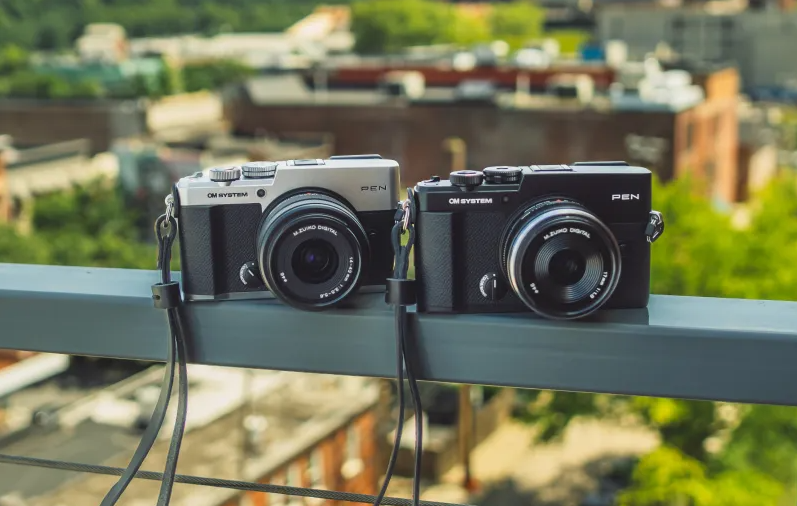
You can compare their intended uses and specifications on the official OM-5 Mark II product page.
For shoppers still weighing different camera types, our guides to the best budget point-and-shoot cameras in 2026 and the best cameras for photography in 2026 offer broader starting points. These alternatives serve different needs, so consider lens flexibility, viewfinder design, portability, and video requirements rather than choosing on appearance alone.
Should You Buy It?
The OM System PEN makes the most sense for photographers who want an interchangeable-lens camera that is compact, enjoyable to use, and equipped with a built-in electronic viewfinder. Its creative profiles, computational features, and reported battery endurance give it a clear everyday identity.
It is less convincing for buyers expecting a major performance upgrade over the OM-5 Mark II or a true return to the premium PEN-F experience. Its familiar sensor and processor, limited video capabilities, and simplified controls make the value proposition depend heavily on whether you appreciate its design and shooting style.
Before buying, consider the lenses you intend to use, whether the shallow grip suits your hands, and how often you need advanced video features or high-speed shooting. Those practical factors will matter more than the camera’s retro-inspired appearance alone.
For more camera recommendations, explore our guide to the best cameras for photography in 2026 to compare different camera types and their strengths.
The broader Micro Four Thirds System also deserves consideration: its interchangeable-lens format offers a system built around a smaller sensor size than full-frame cameras, with the potential for compact camera bodies and lenses.
Ultimately, the OM System PEN earns its place as a stylish travel and street photography companion. It may not be the PEN-F successor loyalists hoped for, but it offers a more accessible way to enjoy a compact Micro Four Thirds camera with an EVF. If carrying a camera every day matters more to you than winning a specification comparison, the PEN could be the more appealing choice.
Frequently Asked Questions
Is the OM System PEN a Micro Four Thirds camera?
Yes. The OM System PEN is a Micro Four Thirds interchangeable-lens mirrorless camera. It uses a 20.4-megapixel Live MOS sensor and is designed for everyday, travel, and street photography.
Does the OM System PEN have a built-in viewfinder?
Yes. It includes a 2.36-million-dot electronic viewfinder, allowing eye-level composition without relying entirely on the rear LCD.
Is the OM System PEN a successor to the PEN-F?
It shares the PEN-F’s rangefinder-inspired design language, but it is not a direct replacement in terms of premium materials or extensive physical controls. The new model focuses more on portability and accessibility.
How good is the OM System PEN for video?
Video is one of its weaker areas according to the supplied review. OM-Log is available, but 8-bit recording and the reported softer footage make it less attractive for demanding video production.
Is the OM System PEN good for travel photography?
It can be a strong option for travel photographers who value portability, a built-in EVF, creative color profiles, stabilization, and battery endurance. Those who need advanced video or demanding telephoto performance should compare other models too.
What is the OM System PEN’s main weakness?
Its main compromises are the familiar sensor and processor, limited video performance, lack of an AF joystick, and a grip that may not suit extended handheld use. Its value depends on how much you prioritize design and everyday usability.
Featured Photo Credit: Robin Wong