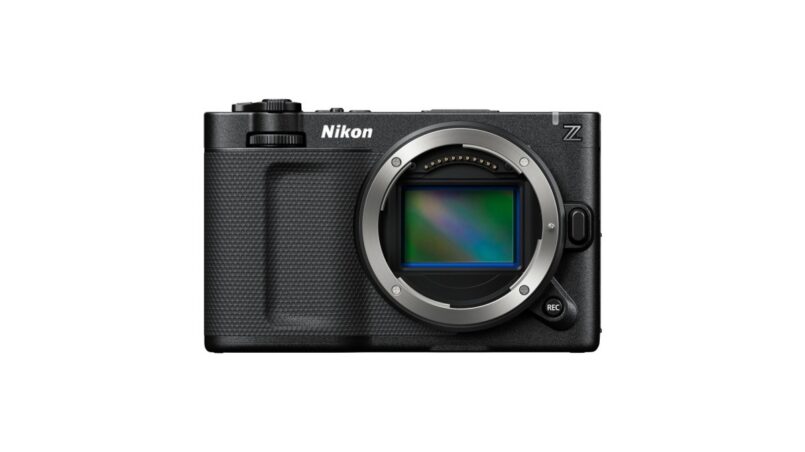
Focus peaking in R3D NE, RED color science in compressed H.265, and a 2027 open-gate roadmap. The Nikon ZR firmware update 2.0 targets several of the camera’s biggest complaints and makes its video workflow more flexible.
Nikon has confirmed that firmware version 2.00 for the ZR is scheduled for October 2026. The announcement focuses on features that filmmakers have wanted since the camera launched last year. Rather than introducing a completely new shooting system, Nikon is addressing limitations that affected the experience of using the camera.
The update brings focus peaking to R3D NE recording, adds Log3G10 and REDWideGamutRGB color options to H.265 recording, and introduces selectable High ISO Noise Reduction settings. RED is also updating its RED CONTROL and RED CONTROL PRO applications to support remote control of the ZR.
These changes matter because the ZR occupies an interesting position in the compact cinema camera market. It combines RED color science and 6K RAW recording in a relatively compact body. However, some missing features made the camera feel less complete than competing options from Blackmagic Design and Sony.
Firmware 2.0 addresses several of those weaknesses. It does not change the physical hardware, but it makes the existing camera more practical for professional video production.
What’s Actually Changing
The Nikon ZR firmware 2.0 update focuses on four main areas: manual focusing during RAW recording, RED color science in compressed video, improved noise-reduction control, and remote operation.
Each improvement addresses a specific workflow limitation rather than simply adding another menu option.
Focus Peaking During R3D NE Recording
The most important change is the addition of focus peaking during R3D NE recording.
R3D NE is RED’s proprietary RAW recording format used by the Nikon ZR. RAW recording gives filmmakers greater flexibility during post-production, but accurate focus remains essential when working with manual lenses.
Before this update, focus peaking was missing when recording in the camera’s highest-quality R3D NE mode. That created an unnecessary problem for filmmakers who preferred manual glass. Without the usual visual focus assistance, they had to rely more heavily on other monitoring methods to confirm critical focus.
This limitation was particularly frustrating for a camera positioned toward serious video production. Manual focusing is common in cinematic workflows, and focus peaking helps operators identify which areas of an image are sharp.
Firmware 2.0 closes that gap by enabling focus peaking during R3D NE recording.
The improvement may sound relatively small, but it makes the camera more practical for controlled focus work, particularly when recording with manual lenses or working with shallow depth of field.
RED Color Science Comes to H.265 Recording
Another important addition is support for Log3G10 and REDWideGamutRGB in H.265 recording.
Previously, filmmakers faced a difficult choice between recording in RED’s RAW format and using more manageable compressed video formats. RAW recording offers flexibility, but it can create larger files and demand more storage and post-production resources.
H.265 offers a more practical option for projects where storage capacity, recording time, and file management matter.
By bringing Log3G10 and REDWideGamutRGB to H.265, Nikon gives filmmakers another way to work with RED’s color science without making RAW recording their only option.
This is particularly useful for creators who want a consistent color workflow while keeping their footage easier to manage.
The addition does not make H.265 identical to R3D NE. The two recording formats serve different purposes, and filmmakers should still choose based on their image-quality requirements and post-production workflow.
However, the new option gives users more flexibility when deciding how to balance recording quality, file sizes, and editing requirements.
For more context on professional camera technology, explore our Sony A7R VI vs Alpha 1 II comparison.
Selectable High ISO Noise Reduction
Noise reduction is another area Nikon is addressing.
One complaint about the ZR has been overly aggressive noise reduction in compressed footage. Although noise reduction can help clean up high-ISO images, excessive processing can remove fine details and make footage look softer than expected.
This becomes especially noticeable in low-light scenes, where preserving texture and detail matters.
Firmware 2.0 introduces selectable High ISO Noise Reduction settings for H.265 Log recording. This gives filmmakers more control over how the camera handles noise instead of relying on a fixed processing approach.
The benefit is greater flexibility when working in different lighting conditions.
A filmmaker shooting a clean, controlled scene may prefer a different noise-reduction setting from someone recording in challenging low-light environments. Having selectable options makes it easier to choose a balance between visible noise and retained image detail.
It is not a replacement for good exposure or lighting, but it gives users more control over the camera’s compressed-video output.
Remote Control Through RED CONTROL Apps
The update also brings remote-control support through RED CONTROL and RED CONTROL PRO.
Remote operation can be useful when the camera is mounted in a difficult position, used in a small production setup, or operated as part of a larger filming environment.
Instead of needing to access the camera physically for every adjustment, users can take advantage of the supported remote-control workflow.
This can make certain production setups more convenient, particularly when the camera is positioned away from the operator.
The updated RED applications also reinforce the relationship between Nikon’s ZR hardware and RED’s cinema-focused ecosystem.
For official information about RED’s camera technology and software ecosystem, visit RED’s website.
Nikon ZR Firmware 2.0: Feature Overview
| Feature | Firmware 2.0 Update |
|---|---|
| Release window | October 2026 |
| Focus peaking | Supported during R3D NE recording |
| Color profiles | Log3G10 and REDWideGamutRGB added to H.265 |
| Noise reduction | Selectable High ISO NR settings in H.265 Log |
| Remote control | Support through RED CONTROL and RED CONTROL PRO |
| Future features | Open-gate recording and anamorphic desqueeze display planned for 2027 |
Why It Matters for the Category
The Nikon ZR launched as an interesting combination of RED color science, 6K RAW recording, and a compact camera body.
That combination gave it a strong position among filmmakers who wanted cinema-oriented capabilities without moving to a larger and more expensive production camera.
However, the camera’s original limitations weakened that appeal.
Missing focus peaking in its flagship RAW format made manual focusing less convenient. The limited color-profile choices in compressed recording also made it harder to balance RED’s color science with manageable file sizes.
These issues became more noticeable when comparing the ZR with established competitors.
Blackmagic Design’s Pocket Cinema Camera lineup has built its reputation around filmmaking features and post-production flexibility. Sony’s FX3, meanwhile, offers a compact body designed for professional video production.
You can explore the official Blackmagic Pocket Cinema Camera lineup and Sony FX3 product information to understand the different approaches these systems take.
The Nikon ZR firmware update does not automatically make the camera superior to those alternatives. Instead, it removes some of the friction that made the ZR harder to recommend.
That distinction matters. Firmware cannot change a sensor, redesign a camera body, or introduce physical hardware that was never included. But it can improve the way existing hardware works and make previously inconvenient workflows more practical.
A More Competitive Cinema Camera Workflow
Focus peaking in R3D NE is particularly important because it addresses a limitation in the camera’s premium recording mode.
Likewise, adding RED color science to H.265 gives filmmakers another recording option without requiring them to use RAW for every project.
Selectable High ISO NR settings also improve control over compressed footage.
Together, these features make the ZR more flexible across different production requirements. A filmmaker working on a demanding project can use RAW when maximum post-production flexibility matters. For other projects, H.265 with RED color options may provide a more manageable workflow.
That flexibility is an important part of competing in the compact cinema camera market.
Our best cameras of 2026 guide explores other camera options across different categories, while our camera coverage provides more reviews and industry updates.
The 2027 Open-Gate and Anamorphic Roadmap
The firmware 2.0 announcement also includes a preview of what Nikon plans to bring to the ZR in 2027.
Two features stand out: open-gate recording and anamorphic desqueeze display.
Open-gate recording is particularly interesting for filmmakers who want more flexibility when framing and delivering footage. It can provide additional image area for different aspect ratios and cropping requirements, depending on the camera’s supported recording implementation.
That flexibility can be useful when producing content for multiple platforms or working with different delivery formats.
Anamorphic desqueeze display is another important feature for filmmakers using anamorphic lenses. Anamorphic optics capture an image with a squeezed appearance, so a desqueeze preview helps the operator see the intended proportions while recording.
Without a suitable monitoring preview, judging composition and framing can become more difficult.
Nikon’s roadmap suggests that the ZR will continue receiving meaningful video-focused improvements after firmware 2.0. However, these features are planned for 2027. They should not be treated as available features in the October 2026 firmware update.
For filmmakers considering the ZR, this future support is encouraging. It indicates that Nikon intends to continue developing the camera rather than treating it as a one-time product release.
Verdict: Firmware 2.0 Is What the ZR Should Have Shipped With
The Nikon ZR firmware 2.0 update addresses several of the camera’s most frustrating limitations.
Focus peaking during R3D NE recording makes manual focusing more practical. Log3G10 and REDWideGamutRGB in H.265 give filmmakers additional recording flexibility. Selectable High ISO Noise Reduction provides more control over compressed footage, while RED CONTROL and RED CONTROL PRO add remote-operation support.
These are meaningful improvements, especially for filmmakers who already own the ZR or are considering it as a compact cinema camera.
The update does not introduce new hardware, and it does not automatically make the ZR the best option in its category. Blackmagic and Sony remain important alternatives, each with its own strengths and production workflows.
However, firmware 2.0 removes several reasons that previously made undecided buyers look elsewhere.
The 2027 roadmap is also encouraging. Open-gate recording and anamorphic desqueeze display could make the camera more versatile for professional video production.
For existing Nikon ZR owners, the update is a welcome improvement. For potential buyers, it makes the camera a more complete option than it was at launch.
Firmware 2.0 is essentially the update the ZR should have shipped with. It does not solve every possible limitation, but it gives Nikon’s compact cinema camera a stronger foundation for the future.
Frequently Asked Questions
1. When will the Nikon ZR firmware 2.0 update be released?
Nikon announced firmware version 2.00 for October 2026. The announcement identifies the planned release window but does not provide a specific installation date in the original article.
2. What does the Nikon ZR firmware update 2.0 add?
The update adds focus peaking during R3D NE recording, Log3G10 and REDWideGamutRGB color options for H.265, selectable High ISO Noise Reduction, and remote-control support through RED CONTROL and RED CONTROL PRO.
3. Does Nikon ZR firmware 2.0 support focus peaking in RAW recording?
Yes. One of the main improvements is focus peaking during R3D NE recording. This helps filmmakers using manual lenses check focus more accurately while recording in RED’s RAW format.
4. What are Log3G10 and REDWideGamutRGB?
Log3G10 and REDWideGamutRGB are part of RED’s color workflow. Firmware 2.0 brings these options to H.265 recording on the Nikon ZR, giving filmmakers more flexibility when working with compressed footage.
5. How do I download the Nikon ZR firmware update?
When the update becomes available, users should check Nikon’s official Download Center and select the ZR camera to find the appropriate firmware package and installation instructions. Always follow Nikon’s official update procedure.
6. What features are planned for the Nikon ZR in 2027?
Nikon has outlined open-gate recording and anamorphic desqueeze display as planned 2027 additions. These features are part of the future roadmap, not the October 2026 firmware 2.0 feature list.
7. Does firmware 2.0 fix all Nikon ZR problems?
No. The update addresses several important complaints involving focus peaking, compressed-video color options, noise reduction, and remote operation. It does not change the camera’s physical hardware or guarantee that every user concern will be resolved.