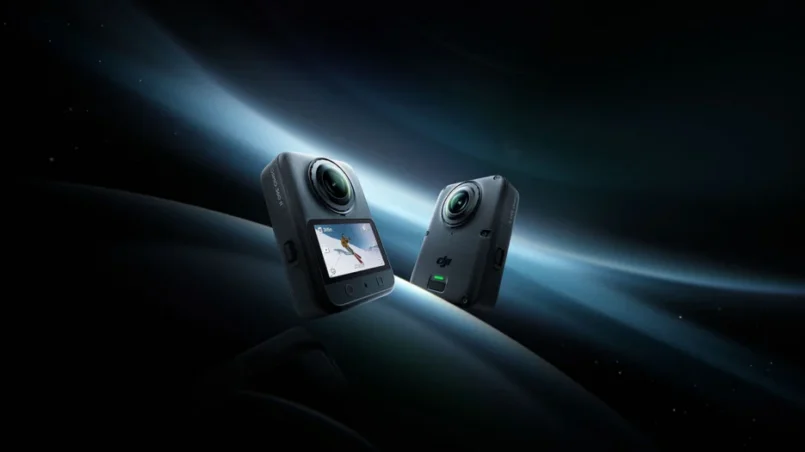
DJI’s square-sensor, lens-swapping sequel undercuts Insta360 on price, while its flagship rival focuses on image processing, battery life, and a more mature editing experience. The DJI Osmo 360 II vs Insta360 X6 comparison highlights two premium 360 cameras with different strengths. Both target creators who want immersive footage, flexible reframing, and high-resolution video, but their specifications and workflows may appeal to different users.
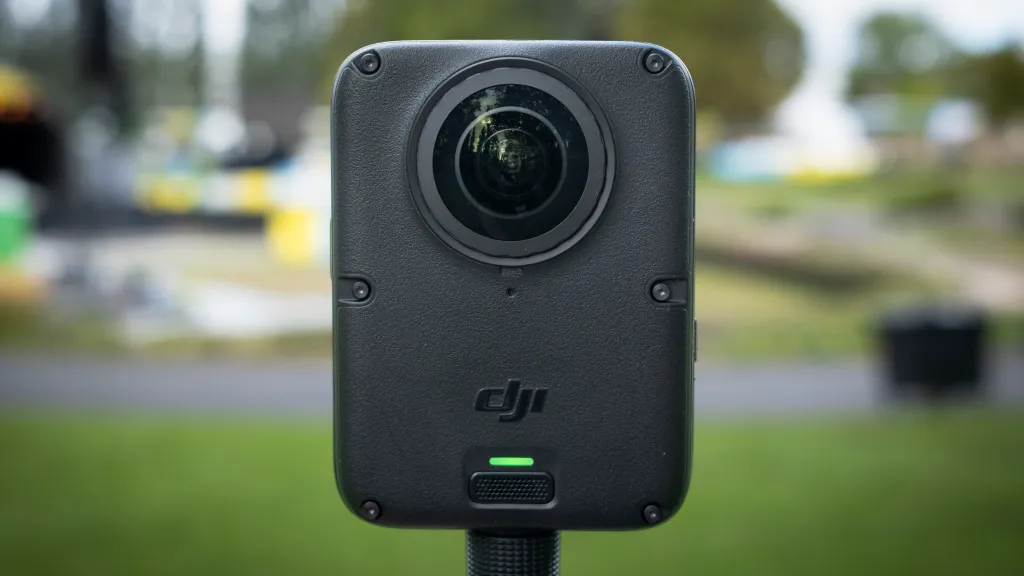
DJI’s Osmo 360 II was announced globally on September 3, 2026, after going on sale in China on August 13. UK and European retail followed on September 15. It features dual 1/1.1-inch square CMOS sensors, native 8K/60fps 360-degree video, and user-replaceable lenses—a major improvement over the original Osmo 360’s lens durability concerns.
The Insta360 X6 arrives as a direct competitor, offering native 8K recording at up to 50fps, a 10-bit color pipeline, Dolby Vision, and a powerful processing system. So, which camera is the better purchase? This detailed comparison examines specifications, video quality, battery life, price, editing tools, and real-world buying considerations.
The Headline Specs
The DJI Osmo 360 II’s square sensor design is one of its most notable engineering features. Rather than relying on a conventional rectangular sensor, DJI uses a square format to capture more of the image circle produced by its 360-degree lenses. DJI claims up to 14.5 stops of dynamic range and an ISO range of 100–51200.
The camera combines 2.4μm pixels with an f/1.9 aperture. These specifications support its high-resolution capture capabilities, including native 8K video at 60 frames per second. For creators recording fast movement, sports, or action scenes, the higher frame rate can provide more flexibility than 8K/50fps.
The user-replaceable lenses are another important improvement. A damaged lens can be a major concern for a 360 camera because the lenses protrude from the body and are exposed during everyday shooting. DJI’s swappable design makes the Osmo 360 II more practical for creators who regularly record outdoors.
Insta360’s X6 also uses dual 1/1.1-inch custom Sony sensors. Its native 8K video recording is capped at 50fps, but Insta360 emphasizes its triple-chip processing system, which the company says delivers 500% more computing power than the previous X5.
The X6’s major differentiators include native in-camera Dolby Vision and 10-bit color. These features can be useful for creators who want richer color information and more flexibility during post-production. PetaPixel’s coverage of the Insta360 X6 discusses the camera’s “shoot now, reframe in the edit” approach.
DJI Osmo 360 II vs Insta360 X6 Specifications
| Specifications | DJI Osmo 360 II | Insta360 X6 |
|---|---|---|
| Sensors | Dual 1/1.1″ square CMOS | Dual 1/1.1″ custom Sony |
| Max 360 video | 8K/60fps HDR | 8K/50fps |
| Dynamic range | 14.5 stops (claimed) | AdaptiveTone 2.0 dual-exposure |
| Color pipeline | D-Log M profile | 10-bit + native Dolby Vision |
| Photo resolution | 120MP 360° HDR | 120MP 360° / 42MP flat |
| Screen | 2.0″ touchscreen, 800 nits | 2.32″ OLED, 1200 nits |
| Battery runtime | 100 min at 8K/30fps | 140 min at 8K/30fps |
| Weight | 183g | 196g |
| Replaceable lenses | Yes, user-swappable | Yes, improved over X5 |
| On-device AI | Spotlight Follow, SuperNight 2.0 | PanoMind AI auto-editing |
| Price (Standard) | ~$460 (China) / £509 (UK) | $699.99 |
| US availability | None announced | Available now |
Specifications alone do not determine the best 360 camera. Video processing, usability, battery performance, editing software, and regional availability also affect the overall experience.
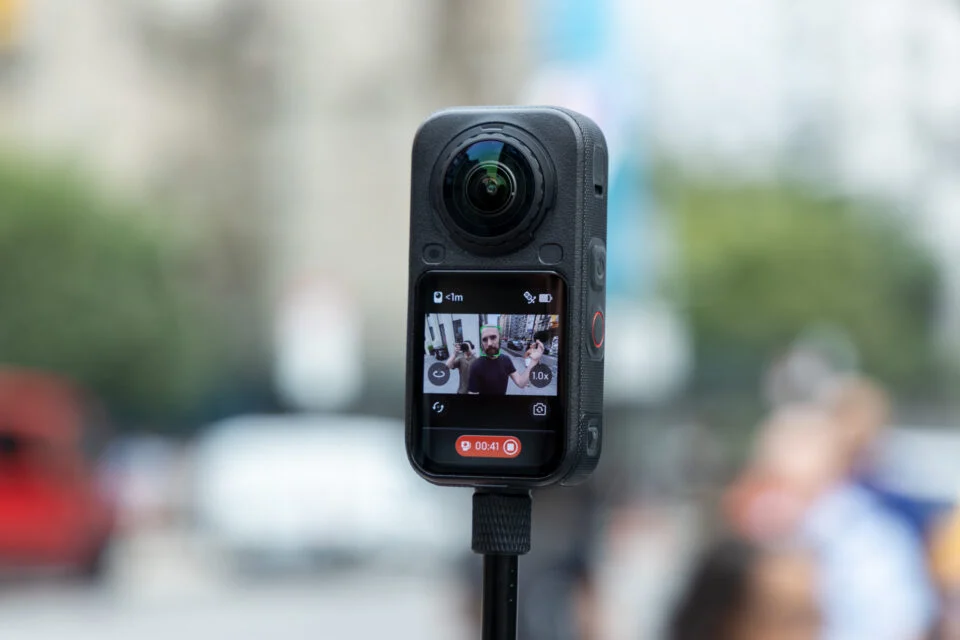
Where Each Camera Actually Wins
The DJI Osmo 360 II and Insta360 X6 do not produce a simple winner across every category. DJI leads in some hardware specifications, while Insta360 offers advantages in battery runtime, screen technology, and its color workflow.
Video Quality and Frame Rate
The Osmo 360 II’s 8K/60fps recording is a major advantage for creators who prioritize frame rate at high resolution. It can capture fast-moving scenes with more temporal detail than the X6’s 8K/50fps mode.
This advantage may matter for action sports, fast travel footage, or scenes that benefit from smoother motion. DJI’s claimed 14.5 stops of dynamic range also makes the camera attractive to creators who want to preserve detail in bright highlights and darker areas.
The Insta360 X6 takes a different approach. Its 10-bit color and native Dolby Vision support give it a stronger emphasis on color depth and HDR presentation. Those features can help when footage is edited and displayed on compatible devices.
The practical choice depends on the intended workflow. If high-frame-rate 8K recording is a priority, DJI has the specification advantage. If color processing and HDR compatibility matter more, the X6 deserves serious consideration.
Image Quality and Color Science
The image quality comparison is not limited to resolution. Sensor performance, processing, exposure, lens design, and color rendering all influence the final footage.
DJI’s D-Log M profile gives users a color-oriented recording option for post-production. The Osmo 360 II’s square sensor design and claimed dynamic range are also key selling points.
Insta360’s X6 emphasizes 10-bit color and Dolby Vision. For users who want a polished HDR workflow, these features may be more important than the difference between 8K/60fps and 8K/50fps.
For a broader look at camera choices, explore our guide to the best cameras for photography in 2026.
Battery Life
Battery life is one of the clearest specification differences between the two cameras.
DJI lists 100 minutes of runtime at 8K/30fps for the Osmo 360 II. Insta360 lists 140 minutes at the same recording resolution and frame rate for the X6.
That difference can matter during travel, outdoor adventures, or long recording sessions. A camera with longer battery life may require fewer interruptions for charging or battery swaps.
However, real-world runtime can vary depending on recording settings, temperature, screen use, wireless connections, and other conditions. The rated figures should be treated as reference points rather than guaranteed results.
For creators who regularly record for extended periods, the X6’s stated battery advantage is meaningful.
Screen Quality and Usability
The Osmo 360 II includes a 2.0-inch touchscreen rated at 800 nits. The Insta360 X6 features a larger 2.32-inch OLED display rated at 1200 nits.
A brighter screen can be useful when shooting outdoors in strong daylight. The X6’s OLED panel and larger display may also provide a more comfortable interface for reviewing settings and framing shots.
The DJI screen is still useful for basic camera operation, but the X6 has the stronger display specification.
Replaceable Lenses and Durability
Replaceable lenses are a valuable feature for both cameras. The original Osmo 360’s lens durability was a concern for some users, making DJI’s user-swappable lens design an important improvement.
The X6 also features an improved replaceable-lens system over the X5. This makes lens repairability a relevant consideration when comparing the two models.
For travel and action shooting, lens protection remains essential. A replaceable lens does not eliminate the risk of damage, but it can make a damaged lens easier to address than a camera with a permanently fixed lens assembly.
AI Features and Editing Software
The DJI Osmo 360 II includes Spotlight Follow and SuperNight 2.0. These tools focus on tracking subjects and improving low-light recording.
The Insta360 X6 features PanoMind AI auto-editing. Insta360’s editing ecosystem has also been recognized for its more mature mobile workflow and reframing tools.
Software matters because 360-degree footage often requires reframing before it can be shared as a conventional video. A strong editing app can reduce the time needed to create social media clips, travel videos, or action highlights.
The best choice depends on whether the user prefers DJI’s hardware and recording options or Insta360’s editing experience.
DJI Osmo 360 II vs Insta360 X6 Price and Availability
Price is one of the most important differences in this comparison.
The DJI Osmo 360 II is listed at approximately $460 in China and £509 in the UK for the Standard package. The Insta360 X6 Standard bundle is priced at $699.99.
That places DJI at a lower price point in the markets cited in the original comparison. Depending on local taxes, bundles, and retailer pricing, the difference can make the Osmo 360 II a compelling value option.
Availability is also important. The source material states that the Insta360 X6 is available in the United States, while DJI has not announced US availability for the Osmo 360 II.
For US buyers, official availability, warranty coverage, and support may make the X6 the more practical option. Buyers in the UK, Europe, or China should compare local prices and package contents before making a decision.
For more camera-related coverage, visit our camera reviews category.
Which Camera Is Better for Travel and Vlogging?
Both cameras can be suitable for travel creators and vloggers, but their strengths differ.
The DJI Osmo 360 II weighs 183g, compared with 196g for the Insta360 X6. That makes DJI’s camera slightly lighter. Its higher 8K frame rate and user-replaceable lenses can also be useful for action-oriented travel recording.
The X6’s longer rated battery life and brighter OLED display may be more appealing for creators who spend long periods filming or frequently adjust settings outdoors.
For vlogging, editing software is another major consideration. Reframing 360-degree footage into a standard horizontal or vertical video can be a significant part of the workflow. Users should consider how easily each camera’s software supports their preferred publishing format.
Creators who are building a broader camera kit can also read our Sony Alpha 7R VI vs Alpha 1 II comparison to explore conventional camera alternatives.
Verdict
The Insta360 X6 is the more complete camera in the original comparison, thanks to its longer battery runtime, higher-rated screen brightness, native Dolby Vision, 10-bit color, and more mature editing ecosystem.
The DJI Osmo 360 II remains a strong alternative. It offers native 8K/60fps recording, a lighter body, user-replaceable lenses, and a lower listed price in the markets discussed. Those features make it attractive to creators who prioritize value and hardware flexibility.
The answer to “Which is better, DJI Osmo 360 II or Insta360 X6?” depends on the buyer’s priorities. The X6 is a compelling choice for users who want a well-rounded camera with strong color and editing features. The Osmo 360 II makes more sense for buyers who value higher frame rates, lens repairability, and price.
Neither camera is the universal winner. Consider your location, shooting style, editing workflow, and budget before choosing.
Who Should Actually Buy the Osmo 360 II?
- First-time 360 camera buyers who do not need Dolby Vision or advanced on-device AI editing.
- Travel and action-sports creators who value the lighter 183g body and swappable lenses.
- Existing DJI Osmo or Mic ecosystem owners who want compatible accessories.
- Budget-conscious buyers in the UK, EU, or China where the Osmo 360 II is priced below the X6.
- US buyers should consider official availability and support carefully, as the source material states that no official launch has been announced.
Check out our other camera reviews to find a suitable action camera for your everyday professional kit.
Frequently Asked Questions
Is the DJI Osmo 360 II better than the Insta360 X6?
The DJI Osmo 360 II has an advantage in native 8K/60fps recording, weight, and price in the markets cited. The Insta360 X6 offers longer rated battery life, a brighter OLED screen, native Dolby Vision, and a more mature editing ecosystem.
Which camera has better battery life?
The Insta360 X6 is rated for 140 minutes at 8K/30fps, while the DJI Osmo 360 II is rated for 100 minutes at the same setting. Actual runtime may vary depending on shooting conditions.
Does the DJI Osmo 360 II have replaceable lenses?
Yes. The Osmo 360 II features user-swappable lenses, which is a notable improvement over the original Osmo 360.
Which 360 camera is better for vlogging?
Both can be suitable for vlogging. The Osmo 360 II offers a lighter body and 8K/60fps recording, while the X6 has longer rated battery life and a stronger display specification. Editing workflow should also influence the decision.
Is the Insta360 X6 available in the United States?
The original comparison states that the Insta360 X6 is available in the United States. It also states that DJI has not announced official US availability for the Osmo 360 II.
Which camera is more affordable?
The DJI Osmo 360 II is listed at approximately $460 in China and £509 in the UK, while the Insta360 X6 Standard bundle is listed at $699.99. Prices vary by region, retailer, and bundle.
Is the DJI Osmo 360 II a good 360 camera for travel?
It can be a strong travel option for users who value its 183g weight, 8K/60fps recording, and replaceable lenses. Buyers should also consider battery runtime, local availability, and editing preferences.
Feature Photo: Petapixel