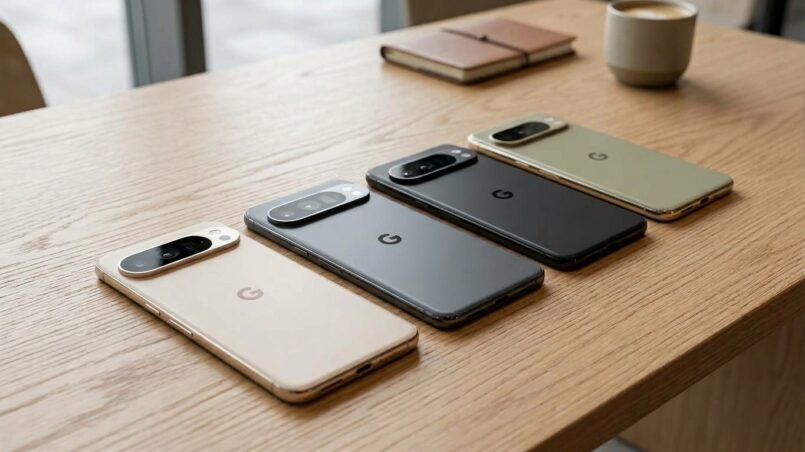
The Google Pixel 11 series keeps Google’s familiar four-phone strategy while putting more emphasis on AI than on major hardware changes. The lineup includes the Pixel 11, Pixel 11 Pro, Pixel 11 Pro XL, and Pixel 11 Pro Fold. Google’s pitch centers on Magic Capture, Camera Looks, Creator Suite, HiLight notifications, and a more capable Gemini experience.
There is plenty to discuss. Magic Capture can help users save photos they might otherwise miss, while on-device Gemini Nano powers features such as call screening, scam detection, and Recorder tools. The new Tensor G6 also brings a performance improvement over the previous generation.
But the pricing has moved up. The standard Pixel 11 starts at $899, the Pixel 11 Pro at $1,099, the Pixel 11 Pro XL at $1,299, and the Pixel 11 Pro Fold at $1,899 in the US. That makes the hardware comparison harder to ignore. Tensor G6 still trails leading Snapdragon chips in several CPU and GPU benchmarks, even as Google builds a stronger case around AI software.
The question is no longer whether Google can make useful AI features. It can. The question is whether those features justify paying more for a phone whose raw performance and hardware specifications still face strong competition.
Magic Capture Isn’t As New As The Keynote Made It Sound
Magic Capture is one of the most interesting additions to the Google Pixel 11 camera experience. Instead of relying only on the exact moment a user presses the shutter, the feature can record a short session and analyze almost 400 frames. It then selects well-timed still images and can apply light edits, such as cropping, straightening, or unblurring where supported.
The idea solves a familiar photography problem. A person blinks, a child moves, or a pet changes expression just as the shutter fires. A conventional photograph can miss the best moment by a fraction of a second. Magic Capture gives the camera more visual information to work with, helping it select a stronger frame.
Google has also designed the feature around staying present. Rather than asking users to take repeated bursts or review dozens of photographs, the camera handles much of the selection process. Google’s official Magic Capture explanation describes how the feature analyzes a moment and creates selected photographs.
However, the underlying idea is not entirely new. HONOR has offered AI Motion Sensing Capture and related automatic capture features on earlier phones. These features can recognize movement, expressions, and certain scenes to help capture a decisive moment. HONOR’s AI Image Master overview describes its motion-capture approach.
That does not make the two implementations identical. Google’s version combines frame analysis, automatic selection, and its own editing workflow. The important distinction is that Google is refining an existing smartphone photography concept rather than inventing automatic best-moment capture from scratch.
Execution matters more than originality alone. If Magic Capture consistently produces useful images without making the camera experience complicated, it could become one of the Pixel 11’s strongest everyday features. But it is better described as a polished evolution than a completely new category of photography.
The Performance Gap Hasn’t Closed
Tensor G6 is Google’s latest mobile processor, and it improves on Tensor G5. But the Pixel 11 series still faces a noticeable performance gap against flagship Snapdragon hardware.
One correction is important: Tensor G6 is reported as using a 3nm manufacturing process, not 2nm. A smaller process can improve efficiency and performance, but it does not guarantee that a chip will beat every competing processor. CPU architecture, core configuration, clock speeds, memory, cooling, and GPU design all matter.
Early Geekbench 7 results for the Pixel 11 Pro XL reported scores of around 2,293 in single-core testing and 7,108 in multi-core testing. The Galaxy S26 Ultra, using Snapdragon 8 Elite Gen 5, recorded approximately 3,082 and 10,381 in the same reported comparison. These are benchmark results, not a direct measure of every real-world task, but the difference is substantial.
| Chip | GeekBench Single Core | GeekBench Multi- core |
| Tensor G6 (Pixel 11 Pro XL) | 2293 | 7108 |
| Snapdragon 8 Elite Gen 5 (Galaxy S26 Ultra) | 3082 | 10381 |
| Tensor G5 (Pixel 10 Pro XL) | 1876 | 5102 |
The results suggest that Tensor G6 improves meaningfully over Tensor G5, but it does not close the gap with Samsung’s flagship Snapdragon configuration. Notebookcheck’s Tensor G6 benchmark coverage provides additional context for the comparison.
The GPU story also deserves attention. A phone can feel fast in everyday navigation while still falling behind in demanding games, graphics workloads, and sustained performance. Peak benchmark scores do not tell the whole story, but GPU architecture and driver support can affect long-term compatibility with newer graphics features.
Google’s priorities appear different from Qualcomm’s. Tensor is designed to support Google’s camera processing, security, and on-device AI features alongside ordinary phone tasks. That can produce a good user experience even if the chip does not lead every benchmark.
The practical question is how much performance a buyer needs. Messaging, browsing, photography, and everyday multitasking may feel smooth. Heavy gaming and demanding sustained workloads are where the gap becomes more relevant.
Pixel has never been defined by winning every benchmark. The question is whether its AI and camera experience can justify the price when competing phones offer considerably more raw performance.
“Reduced Cloud Dependency” Is True, With An Asterisk
Google’s argument for Pixel 11 is not only about faster AI. It is also about running more tasks directly on the phone. Tensor G6 includes an upgraded TPU designed to support Gemini Nano and other on-device intelligence features.
This matters for privacy, speed, and connectivity. Features such as call screening, scam detection, Recorder transcription, and some summarization tools can run locally. When processing happens on the device, those tasks do not need to send the relevant content to a cloud service in the same way a cloud-based request would.
That is a genuine advantage. Local processing can also make certain features more responsive and useful when a reliable internet connection is unavailable. Google’s Pixel 11 launch announcement explains how Tensor G6 and Gemini Nano support the new AI experience.
But the phrase “reduced cloud dependency” needs context. Not every Gemini feature works offline. More advanced agentic tasks—such as arranging a ride, ordering groceries, or contacting a business—require internet access and connected services. They may also depend on account permissions, regional availability, and subscription terms.
That creates two different AI experiences. Smaller tasks can happen locally, while more complex actions rely on Google’s cloud infrastructure. Both approaches have value, but they should not be presented as the same thing.
Memory requirements also matter. The Pixel 11 Pro models have different memory configurations from their predecessors, and Google sets hardware requirements for certain Gemini Intelligence experiences. Buyers should check the exact model’s specifications and feature eligibility rather than assume every AI tool works identically across the lineup.
The distinction is especially important when comparing the standard Pixel 11 with the Pro models. A feature may be part of the broader Pixel software story while still having different availability or performance depending on memory, region, language, and subscription.
The offline story is real for selected features. The most ambitious AI assistant experiences still rely on an internet connection and Google’s services.
Why Pay More For Less Hardware?
The Pixel 11 series raises the price of every model by $100 compared with its direct predecessor, according to the US launch pricing. The standard Pixel 11 starts at $899, the Pixel 11 Pro at $1,099, the Pixel 11 Pro XL at $1,299, and the Pixel 11 Pro Fold at $1,899.
Google can point to rising component costs, new AI features, and improvements across the camera and software experience. Those are legitimate parts of the pricing discussion. But buyers still compare the phone with alternatives at the same price.
The Galaxy S26 Ultra is a particularly relevant comparison for the Pixel 11 Pro XL. It offers stronger raw CPU benchmark performance in the cited tests, alongside Samsung’s own flagship camera system and software ecosystem. That does not automatically make it the better phone for every user. Pixel’s computational photography, clean Android interface, and Google AI integration may matter more to some buyers.
The camera comparison also needs more nuance than a megapixel count. Google’s strength has traditionally been image processing, skin tones, HDR, and computational photography. Samsung often competes through versatile camera hardware, zoom options, and a broader set of shooting controls. The best choice depends on the subjects and shooting style that matter to the buyer.
There is also the question of memory. The original article notes that some Pro configurations start with 12GB of RAM rather than the 16GB found in the previous generation. That is a specification change worth considering, particularly for buyers who expect to keep a premium phone for several years. Software memory management can help, but it does not make physical RAM irrelevant.
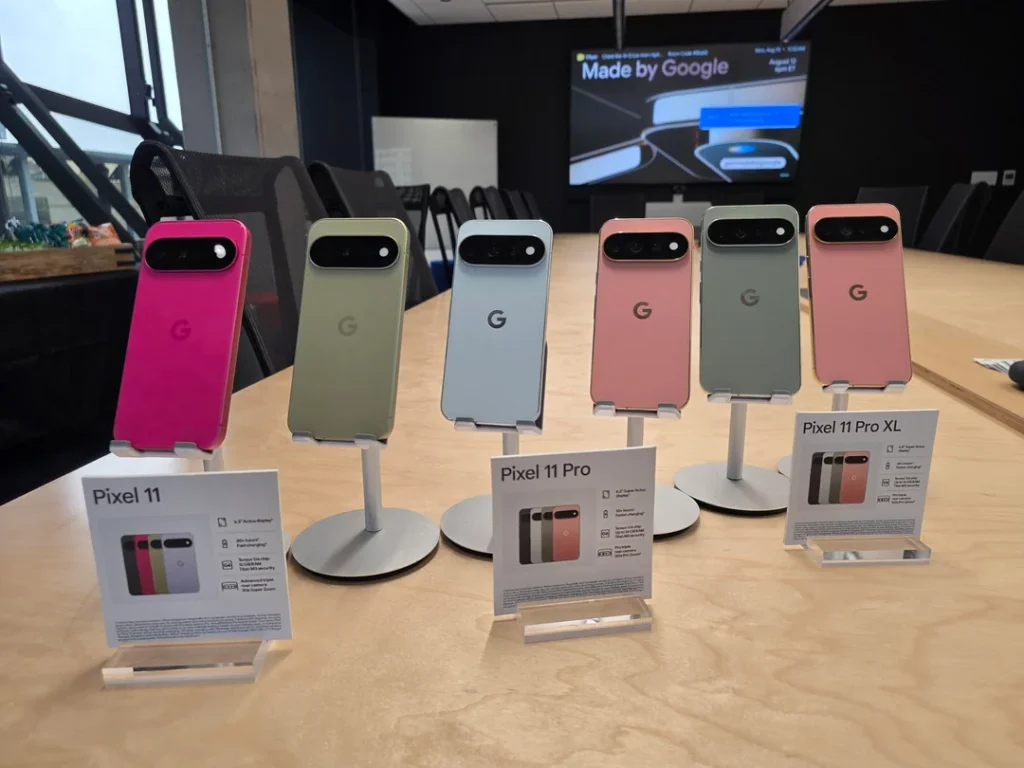
Google’s global position adds another layer. Pixel has built a stronger presence in the United States, but its availability, carrier support, resale value, and accessory ecosystem vary by market. Buyers outside Google’s strongest regions should check local warranty coverage, repair options, and official availability before paying flagship prices.
For a wider look at the competition, read our comparison of Samsung phones against OPPO, Vivo, and Xiaomi. It provides additional context for the Android market Pixel is competing in.
The Pixel 11 series is not simply a case of paying more for less. Google is adding software capabilities and improving the processor. But the price increase makes the hardware compromises harder to overlook.
Is the Pixel 11 Series Worth Buying?
The answer depends on what you value most in a phone. If you care about camera automation, Google’s software experience, long-term updates, and Gemini integration, the Pixel 11 series has a clear identity. Magic Capture is a practical feature, and local AI processing can make everyday tools more useful.
If you prioritize gaming performance, sustained GPU output, or the strongest benchmark numbers, competing flagship phones deserve serious consideration. Tensor G6 is faster than its predecessor, but it does not lead the category in raw CPU performance.
The standard Pixel 11 may suit buyers who want Google’s software and camera experience without paying Pro prices. The Pixel 11 Pro and Pro XL make more sense for users who need the advanced camera system and larger displays. The Pro Fold is a separate proposition for people who specifically want a foldable design.
The Pixel 11a is not part of the four-phone flagship lineup discussed here. Buyers considering a more affordable Google phone should wait for confirmed product details rather than assume that the “a” model will share every Pixel 11 feature.
For more smartphone updates and reviews, explore our phone coverage and latest technology reviews. You can also follow broader industry developments through our technology news section.
Frequently Asked Questions
What is the Google Pixel 11 release date?
Google announced the Pixel 11 series in August 2026. The phones went on sale on August 20, 2026, according to Google’s availability announcement.
What is the Google Pixel 11 price?
US launch prices start at $899 for the Pixel 11, $1,099 for the Pixel 11 Pro, $1,299 for the Pixel 11 Pro XL, and $1,899 for the Pixel 11 Pro Fold. Prices vary by region and retailer.
What are the main Google Pixel 11 features?
The main additions include Tensor G6, Gemini Intelligence, Magic Capture, new camera experiences, and HiLight notifications. Feature availability can vary by model, region, language, and account requirements.
Is the Google Pixel 11 faster than the Pixel 10?
Tensor G6 improves on Tensor G5 in benchmark testing. However, the Pixel 11 Pro XL still trails the Galaxy S26 Ultra in the cited Geekbench 7 comparison.
Is the Pixel 11 Pro XL better than the Galaxy S26 Ultra?
They have different strengths. The Galaxy S26 Ultra leads in the cited raw CPU benchmarks, while the Pixel 11 Pro XL emphasizes Google’s camera processing, Android software, and Gemini features. The better choice depends on your priorities.
Does Magic Capture work offline?
Google describes Magic Capture as a Pixel camera feature that analyzes captured frames to select useful still images. Do not confuse it with cloud-based Gemini actions, which require an internet connection and connected services.
Is there a Google Pixel 11a?
The four-phone flagship range consists of the Pixel 11, Pixel 11 Pro, Pixel 11 Pro XL, and Pixel 11 Pro Fold. The Pixel 11a is a separate product category and should not be treated as a confirmed member of this lineup.
Conclusion
The Google Pixel 11 series is a familiar lineup with a more ambitious AI story. Magic Capture offers a practical way to save moments, Gemini Nano supports more on-device tasks, and Tensor G6 improves on the previous generation. These are meaningful developments, even if none changes the basic shape of Google’s flagship phone strategy.
The problem is the price. At $899 for the standard model and $1,299 for the Pro XL, buyers are paying premium money while Tensor G6 continues to trail leading Snapdragon hardware in raw CPU benchmarks. The memory changes and regional availability questions add further considerations.
Google has made a stronger case for Pixel as an AI-first phone. Whether that is enough depends on how much value you place on Google’s camera processing, software, and assistant features compared with raw performance and hardware flexibility.
The Pixel 11 is not simply a disappointing hardware update, nor is it an automatic recommendation at its new price. It is a phone series built around a clear software vision. Buyers should decide whether that vision matters more to them than the performance advantages available elsewhere.
Image Credit: Reddit, Google