The Sony RX10 V arrived on July 9, 2026, nearly nine years after the RX10 IV introduced the previous generation. Since then, smartphone cameras have become more computationally advanced, mirrorless cameras have expanded their autofocus and video capabilities, and the market for interchangeable-lens systems has become increasingly competitive.
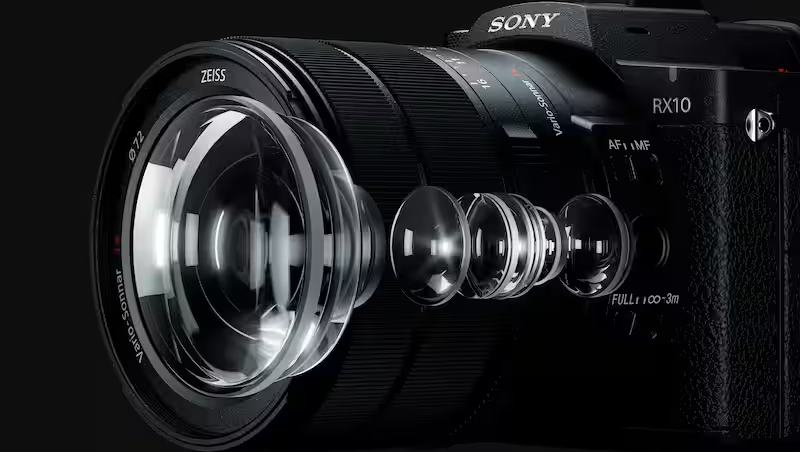
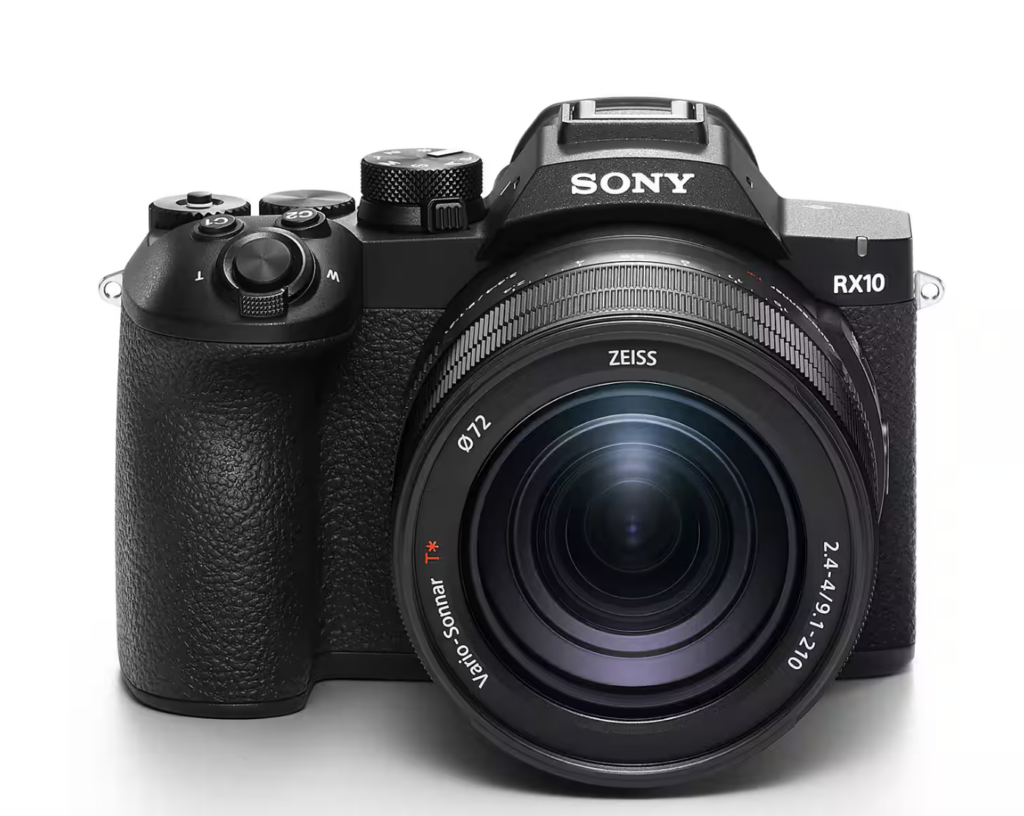
Sony’s latest bridge camera keeps the familiar 20.1MP 1-inch-type stacked Exmor RS CMOS sensor and ZEISS Vario-Sonnar T* 24-600mm-equivalent f/2.4-4 lens combination. The major upgrades come from its newer BIONZ XR processor, AI-powered subject recognition, faster continuous shooting, improved video capabilities, updated controls, and a higher-capacity battery.
The US suggested retail price is approximately $2,299.99. That makes the Sony RX10 V an expensive fixed-lens camera, even though its all-in-one design offers something that interchangeable-lens cameras cannot replicate without additional equipment: wide-angle through super-telephoto coverage in a single body.
The central question is whether the convenience and new features justify the price, particularly when APS-C and full-frame mirrorless cameras offer larger sensors and more flexibility.
What a Bridge Camera Actually Is
A bridge camera sits between a conventional point-and-shoot and an interchangeable-lens camera system. It typically has a DSLR-style grip, electronic viewfinder, manual controls, and a permanently attached zoom lens. You get a broad focal range without carrying or swapping multiple lenses.
The Sony RX10 V is a premium example of this design. Its lens covers a 24-600mm equivalent field of view, providing 25x optical zoom. At the wide end, 24mm is useful for landscapes, interiors, and group photographs. At the telephoto end, 600mm equivalent is useful for distant wildlife, birds, outdoor sports, and architectural details.
The lens also maintains a relatively bright maximum aperture for a superzoom: f/2.4 at the wide end and f/4.0 at 600mm equivalent. Optical image stabilization helps reduce camera shake, particularly when shooting handheld at longer focal lengths.
That combination is the camera’s defining advantage. With a traditional mirrorless system, reaching 600mm equivalent often requires a dedicated telephoto lens. With the RX10 V, the entire range is available without changing equipment.
Why the 1-inch sensor matters
The RX10 V uses a 1-inch-type stacked sensor, which is larger than the sensors traditionally found in many basic compact cameras but smaller than the APS-C and full-frame sensors used in more advanced mirrorless systems.
The sensor’s size affects more than megapixel count. Larger sensors generally provide more flexibility for controlling noise, dynamic range, and depth of field, although lens aperture, processing, exposure, and sensor generation also matter.
Sony’s approach is to combine a relatively large compact-camera sensor with a lens designed specifically for the camera. The result is a self-contained system that can produce detailed images across a broad focal range without the expense and weight of carrying several lenses.
The compromise is that the RX10 V cannot match every advantage of a larger-sensor camera. In dim conditions, a full-frame or APS-C body with an appropriate lens may deliver cleaner high-ISO images or more flexibility when recovering shadows and highlights. The RX10 V’s appeal is its complete package, not a claim that its sensor outperforms larger alternatives.
What Changed, and What Didn’t
The BIONZ XR processor is one of the RX10 V’s most important upgrades. It brings more advanced processing and AI-assisted subject recognition to the bridge-camera format. The camera can identify subjects such as people, animals, birds, insects, cars, trains, and airplanes, helping autofocus follow the intended target.
Sony also upgraded continuous shooting to as fast as 30 frames per second with blackout-free viewing and up to 60 AF/AE calculations per second under supported conditions. This is an improvement over the RX10 IV’s maximum burst rate of 24fps.
Video capabilities receive a significant update, too. The RX10 V supports 4K recording at up to 60p without the narrower 4K 120p crop, 10-bit recording, and 1080p slow-motion capture at up to 240fps. S-Log3 and S-Cinetone provide options for creators who want more control over the look of their footage, while LUT import supports monitoring a preferred grade during recording.
Other updates include an improved electronic viewfinder, a higher-resolution tilting rear screen, revised controls based on Sony’s Alpha series, USB-C connectivity, and a larger NP-FZ100 battery. Sony rates battery life at approximately 630 still images per charge when using the LCD under its stated testing conditions.
Sony RX10 V key specifications
| Feature | Specification |
|---|---|
| Sensor | 20.1MP 1-inch-type stacked Exmor RS CMOS |
| Lens | ZEISS Vario-Sonnar T* 24-600mm equivalent |
| Maximum aperture | f/2.4-4.0 |
| Stabilization | Optical image stabilization |
| Processor | BIONZ XR |
| Continuous shooting | Up to 30fps blackout-free |
| Autofocus | AI-powered real-time subject recognition |
| Video | Up to 4K 120p with crop |
| Color and profiles | 10-bit recording, S-Log3, S-Cinetone, LUT support |
| Electronic viewfinder | Approximately 3.68-million-dot OLED |
| Rear screen | 3-inch tilting LCD, approximately 1.62 million dots |
| Battery | NP-FZ100 |
| US suggested retail price | Approximately $2,299.99 |
For full specifications and regional availability, consult Sony’s official RX10 V announcement.
The improvements are meaningful, but they do not change the basic concept. The RX10 V still relies on a 1-inch-type sensor and a fixed lens. Buyers who need interchangeable lenses or the image-quality flexibility of a larger sensor will still have reasons to consider a mirrorless system.
Who This Camera Is Actually For
The Sony RX10 V makes the most sense for photographers who value reach and convenience above everything else. Bird photographers can move from a wider habitat view to a distant subject without swapping lenses. Wildlife travelers can pack one camera for a range of encounters. Sports enthusiasts can frame action across a field while keeping their equipment setup relatively simple.
It is also useful for travel photography. A single lens can cover hotel interiors, city streets, landscapes, portraits, and distant architectural features. That versatility can reduce the need to carry additional lenses or worry about changing them in dusty or wet environments.
Video creators may benefit from the integrated lens, optical stabilization, subject recognition, 10-bit recording, and high-frame-rate options. For documentary work, travel films, and wildlife footage, having a wide focal range immediately available can be more important than the ability to change lenses.
However, the RX10 V is not a small pocket camera. It has a substantial grip and a DSLR-like shape, so its portability advantage is relative to a larger interchangeable-lens kit rather than to a smartphone or compact point-and-shoot.
The camera is also expensive for someone who only needs occasional zoom reach. If most of your photographs are taken at wide or standard focal lengths, you may get better value from a mirrorless body and a smaller lens.
For more camera comparisons, see our best cameras of 2026 guide and browse the Circuit Verdict camera category.
The A7C II Conversation
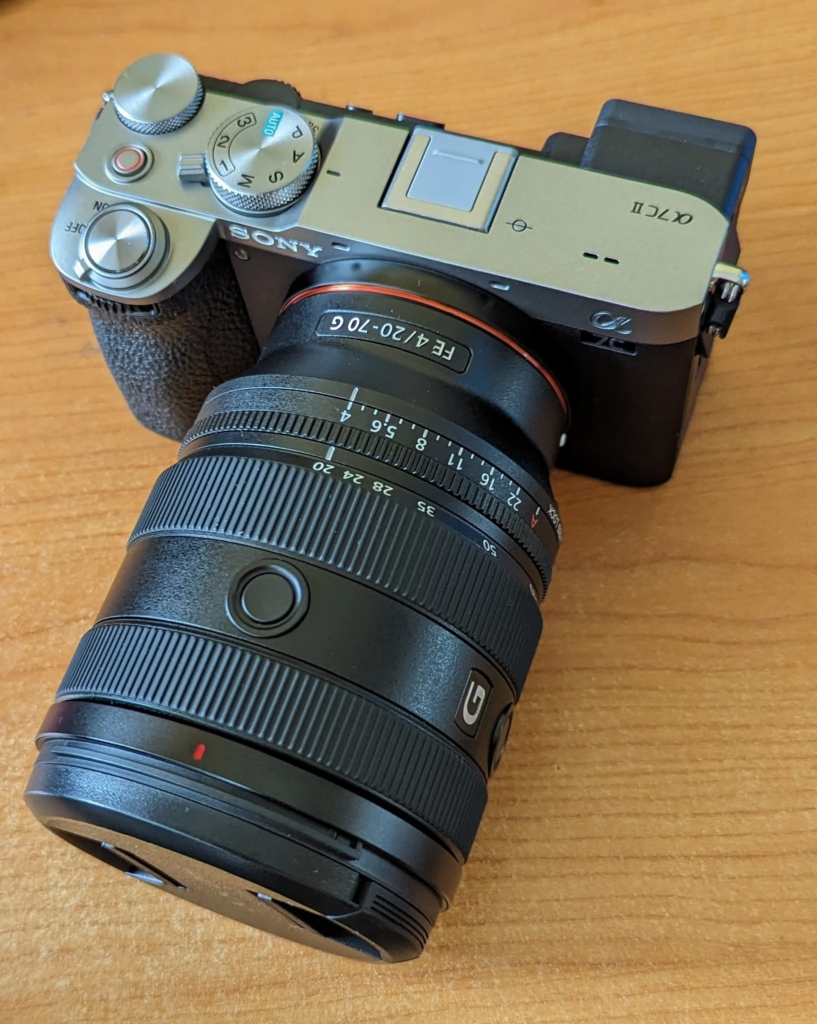
The Sony A7C II is an important comparison because it targets photographers who want a compact body but prefer a full-frame sensor and interchangeable lenses. It launched in 2023 with a 33MP full-frame sensor, advanced autofocus, and 4K video features.
The A7C II’s sensor is physically much larger than the RX10 V’s 1-inch-type sensor. That can provide advantages in dynamic range, high-ISO performance, and depth-of-field control, depending on the lens, exposure, and shooting conditions. Its fully articulating screen also suits creators who need to frame themselves while recording.
But the A7C II body does not include a lens covering 24-600mm equivalent. To match the RX10 V’s reach, buyers need to add suitable lenses, increasing total cost, weight, and the number of components they carry.
A telephoto such as Sony’s 200-600mm lens provides substantial reach, but that combination is much more specialized and expensive than a single bridge camera. A smaller telephoto zoom can reduce the cost and weight, although its focal range may not match the RX10 V at the long end.
The advantage of the A7C II is system flexibility. You can attach a wide-angle lens for landscapes, a fast prime for portraits, or a telephoto for wildlife. You can also select lenses based on optical performance, aperture, size, and budget.
The RX10 V’s advantage is that the lens is already integrated. You do not have to research compatibility, buy additional lenses, or change equipment when a subject moves from nearby to far away.
If you are deciding between these cameras, the practical question is how often you use the entire 24-600mm range. If you regularly need extreme reach but want a single setup, the RX10 V may be easier to live with. If you want to expand your photography over time, the A7C II and the broader Sony E-mount ecosystem may be a more adaptable investment.
Our Sony A7R VI vs Alpha 1 II comparison offers more context on Sony’s interchangeable-lens camera range.
The Price Problem
At approximately $2,299.99, the Sony RX10 V occupies a premium price bracket. Its cost includes the camera body, lens, viewfinder, stabilization, and all-in-one convenience. That makes a direct body-only comparison with a mirrorless camera incomplete.
However, the price still invites scrutiny. The sensor resolution and basic sensor format are familiar from the RX10 IV generation, so buyers are paying primarily for the updated processing, autofocus, video, controls, battery, and overall usability rather than a major increase in resolution.
That may be a reasonable trade for people who rely on the camera’s particular combination of features. A wildlife shooter who frequently photographs birds in flight may value AI recognition and fast blackout-free shooting. A videographer may place a high value on 10-bit 4K and 120p recording. A traveler may prefer one camera over several lenses.
For photographers who mainly want the highest possible image quality per dollar, the calculation is less straightforward. APS-C and full-frame mirrorless cameras offer larger sensors, and the lens ecosystem lets buyers choose a combination that matches their budget.
The right comparison should include the complete cost of the system, not only the price printed on the camera body. Consider the lenses you need, the weight you are willing to carry, and whether you will actually use the RX10 V’s entire zoom range.
What Reviews Say About the RX10 V
Early independent reviews broadly describe the RX10 V as a highly versatile camera whose greatest strengths are the integrated 24-600mm lens, upgraded video tools, and modern controls. They also point to the limitations of a 1-inch-type sensor and the premium asking price.
DPReview’s RX10 V review highlights the camera’s broad capabilities while noting that its appeal is strongest for photographers who genuinely need the full range. TechRadar’s review also discusses its autofocus, video features, and the fact that the sensor and lens combination remains familiar.
The more useful takeaway is that the RX10 V is not a universal upgrade for every photographer. Its strengths are highly specific: reach without lens changes, fast shooting, subject recognition, and more advanced video recording in one body.
For wildlife and travel photographers, those strengths can outweigh the limits of the sensor. For users who prioritize maximum low-light quality, shallow depth of field, or lens flexibility, a mirrorless system remains worth considering.
Frequently Asked Questions
What is the Sony RX10 V price?
Sony’s US suggested retail price is approximately $2,299.99. Actual prices can vary by retailer, promotions, and region.
What is new in the Sony RX10 V compared with the RX10 IV?
The RX10 V adds a BIONZ XR processor, AI-powered subject recognition, blackout-free shooting up to 30fps, improved video features including 4K 120p with crop, updated controls, a higher-resolution viewfinder and screen, and a larger NP-FZ100 battery.
Does the Sony RX10 V have a 24-600mm lens?
Yes. It has an integrated ZEISS Vario-Sonnar T* lens with a 24-600mm-equivalent focal range and a maximum aperture of f/2.4-4.0.
Is the Sony RX10 V good for wildlife photography?
It can be a strong option for wildlife photography because its long zoom, stabilization, and subject-recognition autofocus help cover distant subjects. Performance still depends on lighting, subject movement, and autofocus conditions.
Is the Sony RX10 V better than the A7C II?
Neither is universally better. The RX10 V provides a built-in 24-600mm-equivalent lens and all-in-one convenience. The A7C II offers a larger full-frame sensor and interchangeable lenses, but matching the RX10 V’s reach requires additional equipment.
Is the RX10 V worth buying for video?
It is worth considering if you need an integrated zoom, 10-bit video, S-Log3, LUT support, and high-frame-rate recording. Check the exact crop and recording conditions for 4K 120p before buying, especially if field of view is important to your work.
Conclusion
The Sony RX10 V is a capable premium bridge camera that modernizes the RX10 formula without changing its central idea. The 20.1MP 1-inch-type sensor and 24-600mm-equivalent f/2.4-4 lens remain familiar, while the BIONZ XR processor, AI autofocus, 30fps shooting, video upgrades, improved viewfinder, and larger battery make the overall camera more capable.
Its biggest advantage is convenience: a huge zoom range, stabilization, and advanced shooting features in one body. Its biggest drawback is the price, particularly for photographers who could benefit more from a larger sensor and interchangeable lenses.
For wildlife enthusiasts, travel shooters, and creators who need reach without changing lenses, the Sony RX10 V offers a distinctive combination. For photographers seeking the best possible low-light image quality or a system that can grow with their needs, the A7C II and other mirrorless cameras deserve a close comparison before committing to the RX10 V.