The latest Samyang lens lineup makes a strong case for Sony E-mount photographers who want professional f/2.8 zoom coverage without carrying a collection of heavy, expensive lenses. On June 25, 2026, LK Samyang introduced the AF 60-180mm F2.8 FE, completing its three-lens compact zoom series alongside the AF 14-24mm F2.8 FE and AF 24-60mm F2.8 FE.
Together, these lenses cover 14mm to 180mm while maintaining a constant f/2.8 aperture. According to LK Samyang, their combined weight is approximately 1.67kg. That makes the system attractive to wedding photographers, travel creators, event shooters, and filmmakers who value portability as much as image quality.
There is, however, a significant limitation: this particular trio was designed for Sony E-mount. Canon RF users have more third-party lens options than they once did, especially for APS-C RF-S cameras, but the available full-frame choices remain different. The comparison is not simply about which camera body is better. It is about how much freedom photographers have when building a complete lens kit.
The Lens That Completed the Set
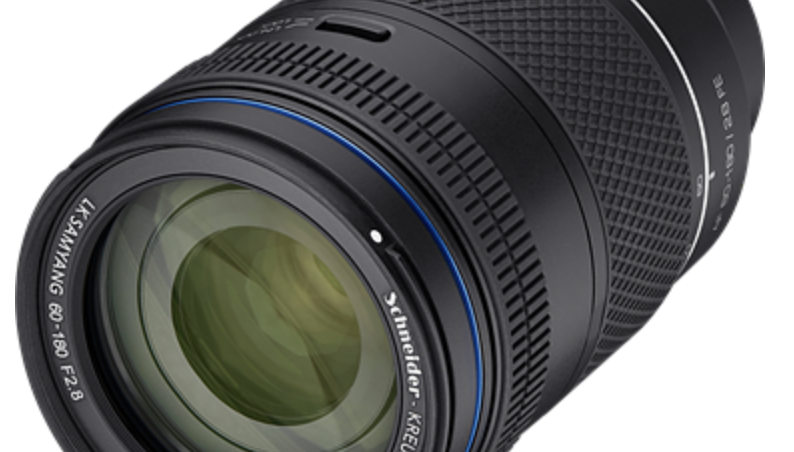
The AF 60-180mm F2.8 FE is the telephoto member of LK Samyang’s compact zoom series. Its 60-180mm focal range is designed to cover portraits, events, indoor sports, and other situations where photographers need telephoto reach without the size of a conventional professional zoom.
The lens weighs approximately 730g and maintains a constant f/2.8 maximum aperture throughout the zoom range. A constant aperture helps keep exposure settings consistent when zooming and gives photographers more flexibility in lower light than a slower lens would provide under comparable conditions.
Its maximum magnification is 0.26x, offering some close-up flexibility for details, products, and environmental portraits. The optical design uses 17 elements in 14 groups with a floating focus system intended to maintain image quality at different focusing distances.
Autofocus is handled by a Linear Stepping Motor (STM). The lens also includes an AF/MF switch, customizable focus-hold buttons, a zoom lock to prevent unwanted barrel extension, weather sealing, and a USB-C port for firmware updates. These features make it more than a bare-bones budget option.
The lens was developed in collaboration with Schneider-Kreuznach, adding an established optical partner to the project. However, brand collaboration alone does not guarantee that the lens will outperform competing designs. Sharpness, autofocus reliability, distortion, flare, and bokeh should still be judged through independent testing.
The official LK Samyang AF 60-180mm F2.8 FE announcement provides the manufacturer’s specifications and product details.
The Complete Compact Zoom Trinity for E-Mount
The three lenses are designed to work as a coordinated kit. Rather than relying on a single zoom to cover every situation, photographers can choose the lens that suits their subject while maintaining a constant f/2.8 aperture.
| Lens | Focal range | Weight | Stated approximate price |
|---|---|---|---|
| AF 14-24mm F2.8 FE | 14-24mm | 445g | $899 |
| AF 24-60mm F2.8 FE | 24-60mm | 494g | $849 |
| AF 60-180mm F2.8 FE | 60-180mm | 730g | $1,099 |
| Total | 14-180mm coverage | 1,669g | $2,847 |
Prices are approximate figures from the supplied article and may vary by retailer, country, tax, and availability.
Why the focal-range coverage matters
The 14-24mm and 24-60mm lenses overlap at 24mm, while the 24-60mm and 60-180mm lenses meet at 60mm. That gives photographers practical coverage without a major gap between the three zoom ranges.
There is no single lens that covers the entire 14-180mm range in this kit. Changing lenses remains part of the workflow, so photographers working in dusty conditions or fast-moving situations should consider how often they will need to switch. A single superzoom may be more convenient for some users, although it may not provide the same constant f/2.8 aperture across such a broad range.
The trio’s value is therefore about balancing portability, aperture, and focal-range coverage. It is especially relevant to photographers who prefer a compact kit but still want the flexibility of wide, standard, and telephoto zooms.
For a wider look at Sony camera and lens options, explore our camera coverage and Sony 400mm and 600mm GM lens review.
And Then There Is Canon
Canon RF photographers face a different third-party lens landscape. Sigma and Tamron now offer selected autofocus lenses for Canon’s RF-S APS-C system, giving compatible camera owners more choices than they had several years ago. Those APS-C lenses, however, are not the same as a complete set of third-party f/2.8 zooms designed for full-frame RF cameras.
The distinction matters because RF-S lenses are designed for APS-C bodies. They can be used on compatible RF camera systems according to Canon’s compatibility rules, but they do not provide the same full-frame image-circle coverage as lenses designed for full-frame cameras.
For full-frame Canon RF users, the question is whether they can build an affordable, lightweight kit with the focal lengths and apertures they want. Canon offers its own RF lenses, and EF lenses can be used through an adapter, but photographers may find that their options, size, and total cost differ from those available to Sony E-mount users.
Canon’s lens ecosystem should not be described as having no third-party support at all. Sigma lists officially licensed RF-mount lenses, including models in its APS-C DC lineup, and Tamron lists RF-S lenses. The more precise issue is the availability of third-party autofocus lenses specifically designed for full-frame RF cameras.
You can review the current manufacturer listings directly: Sigma’s Canon RF-mount lenses and Tamron’s Canon RF-mount lineup.
The RF Mount Reality in 2026
For photographers choosing between Sony E-mount and Canon RF, the relevant comparison is the actual lens selection available for their camera format—not just the number of third-party brands mentioned in headlines.
Sony E-mount has a broad selection of lenses from Sony, Sigma, Tamron, LK Samyang, and other manufacturers. The Samyang compact zoom trio adds another coordinated option for full-frame Sony users seeking a constant f/2.8 aperture in a relatively light kit.
Canon RF has a growing third-party selection, particularly for APS-C RF-S cameras. But the supplied Samyang trio does not offer a matching RF version in the article’s stated lineup. A Canon full-frame user cannot simply buy these FE lenses and expect native RF-mount compatibility.
Unofficial or reverse-engineered RF lenses introduce another consideration: long-term compatibility. Firmware changes can affect third-party products, and unsupported lenses may not have the same assurances as officially licensed options. Before purchasing an unofficial lens, check compatibility reports for the specific camera body and firmware version.
Canon’s official lens listings and third-party manufacturers’ product pages are the best places to confirm current availability. Lens support changes over time, so older claims about a completely closed mount should be revisited whenever new licensed products are announced.
Why This Is Canon’s Problem, Not Just a Market Quirk
A camera system is more than its sensor, autofocus, or video features. It is also the collection of lenses photographers can realistically afford and carry. If a photographer wants wide, standard, and telephoto f/2.8 zooms, the total cost and weight of the kit can influence which camera system makes sense.
The Samyang trio illustrates that point. Its approximate combined price in the supplied figures is $2,847, with a total weight of around 1.67kg. For photographers who prioritize a lightweight kit, that combination is an important alternative to consider.
Canon RF users can choose Canon’s own lenses or adapt compatible EF glass. Adapters can be useful because they allow photographers to continue using existing lenses, but they add another component and may increase the length of the setup. Whether that is a meaningful drawback depends on the lens, adapter, and shooting style.
The key issue is not that every Canon RF photographer needs a third-party f/2.8 zoom. Some will prefer Canon’s own lenses for their particular optical, autofocus, stabilization, or professional requirements. Others may be satisfied with slower zooms or prime lenses. But people who want more affordable native full-frame options have a legitimate reason to compare the breadth of each ecosystem.
Meanwhile, Sony E-mount users can weigh the Samyang trio against alternatives from Sony, Sigma, and Tamron. The existence of competing products gives buyers more ways to prioritize price, size, aperture, stabilization, and optical performance.
Meanwhile, Sony E-mount users can weigh the Samyang trio against alternatives from Sony, Sigma, and Tamron. The existence of competing products gives buyers more ways to prioritize price, size, aperture, stabilization, and optical performance.
Canon has been protecting a closed garden for eight years. The problem is that other gardens are now considerably more beautiful.
What This Means If You Are Choosing a System
The Samyang lens trio makes the strongest case for photographers who value portability and want a coordinated f/2.8 zoom kit. Wedding photographers may appreciate the ability to move from wide venue shots to standard coverage and telephoto portraits without carrying especially heavy lenses. Travel photographers may value the lower overall weight, while documentary shooters can select the range that best matches a day’s assignment.
However, the right system depends on more than the availability of these three lenses. Buyers should also compare camera ergonomics, autofocus tracking, stabilization, video features, service support, used-market availability, and the lenses they already own.
If you already use Canon RF, switching systems solely for one lens lineup may not be financially sensible. Consider the cost of replacing bodies, lenses, batteries, and accessories before making a decision. If you are buying into a system for the first time, the wider selection of native and third-party lenses deserves a place in your comparison.
For more context, read our Sony A7R VI vs Alpha 1 II comparison and browse our best cameras of 2026 guide. These resources can help you compare camera bodies alongside the lens systems that support them.
Ultimately, the question is not whether Sony is always better than Canon or whether third-party lenses are always the best value. It is whether the available equipment lets you build the right kit for your work at a cost and weight you can accept.
Frequently Asked Questions
What is the Samyang compact zoom trinity?
It is LK Samyang’s three-lens f/2.8 zoom set for Sony E-mount: the AF 14-24mm F2.8 FE, AF 24-60mm F2.8 FE, and AF 60-180mm F2.8 FE. Together, they cover 14mm to 180mm.
Is the Samyang AF 60-180mm F2.8 FE a full-frame lens?
Yes. The FE version is designed for Sony full-frame E-mount cameras. Check the exact model name and mount before purchasing, because Samyang also makes lenses for other camera systems.
How much do the three Samyang zoom lenses weigh together?
Using the stated weights of 445g, 494g, and 730g, the combined total is 1,669g, or approximately 1.67kg.
Are Samyang lenses available for Canon RF?
Samyang has produced lenses for Canon RF-related systems, including APS-C RF-S options. Availability depends on the specific lens and mount. Do not assume that an RF-S lens is a native full-frame RF lens.
Should Canon RF users switch to Sony for third-party lenses?
Not automatically. Sony E-mount offers a broad third-party selection, but switching also involves the cost of replacing camera bodies and potentially existing lenses. Compare the complete system and your actual shooting needs before deciding.
Are the Samyang lenses better than Sony G Master lenses?
They target different priorities. Samyang’s compact trio emphasizes portability and price, while Sony G Master lenses may offer different focal ranges, stabilization, handling, and optical performance. A fair comparison requires testing specific models for the work you do.
Conclusion
The Samyang lens trinity gives Sony E-mount photographers a coordinated way to cover 14-180mm with three constant f/2.8 zooms at a combined weight of approximately 1.67kg. That is a compelling proposition for creators who want professional flexibility without carrying a heavier kit.
Canon RF users have more third-party options than before, especially in the APS-C RF-S category, but their available full-frame lens choices remain different. The important comparison is not simply brand loyalty; it is whether a camera system offers the lenses, prices, and portability that fit your work.
For buyers choosing a new mirrorless system, lens availability should be part of the decision from the beginning. The best system is the one that lets you build a practical, affordable kit for the photography and video you actually do.