
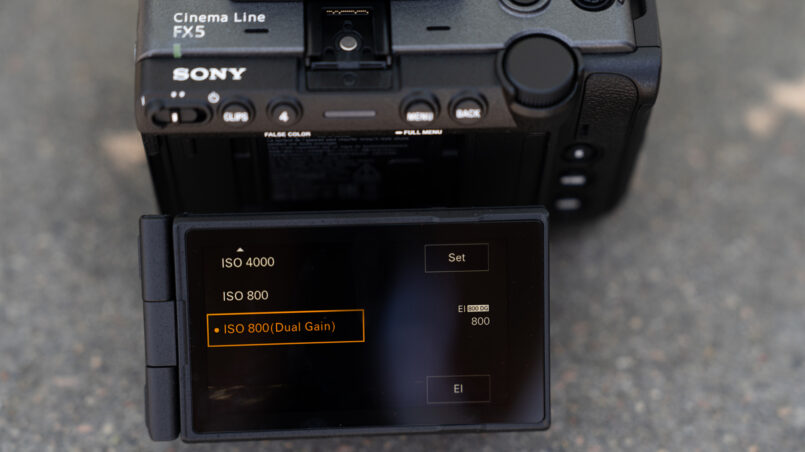
The Sony FX5 camera looks like the cinema body many FX3 owners have wanted for years. Announced on July 22, 2026, it combines a newly developed 16.6MP stacked full-frame sensor, the BIONZ XR2 processor with a dedicated AI unit, three base ISO settings, and internal 16-bit X-OCN RAW recording. It also brings open gate capture to Sony’s FX series for the first time.
On paper, the package is impressive. The FX5 records 5K open gate at up to 60p in X-OCN, supports 4K recording at up to 120p, and offers more advanced autofocus and monitoring options. Sony has positioned it as a compact cinema camera for filmmakers who need professional recording tools without moving to a much larger production body.
Then comes the important detail. Some of the most attention-grabbing high-frame-rate features are not available at launch. Sony says 5K 120p and 4K 240p will arrive through firmware version 2.0, planned for August 2027 or later. Other functions, including open gate recording in XAVC S-I, a vertical-shooting interface, and frame grabbing, are also scheduled for that update.
That creates a strange buying decision. The FX5 is a powerful camera today, but some of the features that make its announcement exciting are still part of a future software promise.
What You Actually Get On Day One
Strip away the features scheduled for later firmware and the Sony FX5 still has a substantial launch specification. Its 16.6MP full-frame stacked Exmor RS CMOS sensor is designed for high-speed readout and video production. Sony pairs it with the BIONZ XR2 processing engine and a dedicated AI processing unit.
The camera offers three base ISO settings: 800, 4000, and 12800. Sony also introduces Dual Gain Shooting to the FX series, aiming to improve tonal latitude and reduce noise while retaining shadow detail. In S-Log3, Sony claims more than 15 stops of dynamic range. Actual results will depend on recording settings, exposure, and the way footage is measured.
Open gate is another major addition. The sensor’s full 3:2 area can be used when recording X-OCN RAW internally. This gives editors more flexibility when reframing footage for different delivery formats, including widescreen and vertical content. It can also help when a production needs room for stabilization or alternative crops.
The key limitation is format support. At launch, open gate recording is available in X-OCN, not XAVC S-I. Sony has scheduled open gate support in XAVC S-I for firmware version 2.0. For productions built around that codec, this difference matters.
Autofocus also receives an upgrade. The FX5 uses AI-based subject recognition and tracking for people, animals, and birds. Sony lists up to 759 phase-detection autofocus points. These tools can help solo operators and small crews maintain focus when subjects move through a scene.
The official Sony FX5 product page provides the complete feature overview, while the official specifications page details recording modes and firmware-dependent features.
Sony FX5 launch and firmware feature status
| Feature | Status | Availability |
| 5K60 Open Gate, X-OCN RAW | Launch | August 2026 |
| Triple-Base ISO, Dual Gain (15 Stops) | Launch | August 2026 |
| 5K120 Open Gate, X-OCN RAW | Firmware 2.0 | August 2027 |
| Open Gate Recording in XAVC S-I | Firmware 2.0 | August 2027 |
| 4K240p (cropped full-frame) | Firmware 2.0 | August 2027 |
| Vertical-shooting optimized AI | Firmware 2.0 | August 2027 |
| Frame-grab from video clips | Firmware 2.0 | August 2027 |
There is an important distinction between the 4K 120p mode available at launch and the 4K 240p mode planned for later. The latter is not a launch feature. Likewise, 5K open gate at 60p is available in X-OCN from day one, while 5K open gate at 120p is part of the future firmware plan.
For an independent breakdown of the camera’s recording formats and launch capabilities, see DPReview’s Sony FX5 review.
Why This Feels So Familiar
Sony has a history of expanding camera capabilities through firmware. That approach can be positive. A well-supported camera may gain useful tools long after purchase, and manufacturers can respond to feedback without requiring customers to buy new hardware.
The frustration starts when important features are announced alongside a new camera but arrive much later. Buyers have to distinguish between what the product can do on the day they receive it and what the company expects it to do in the future.
Sony’s earlier camera updates show how much software can influence a camera’s working life. The company has delivered major firmware improvements across several Alpha and Cinema Line models. Those updates have added workflow tools, recording options, and refinements that were not available when some cameras first launched.
However, the FX5 situation feels more significant because the delayed features are central to its headline appeal. A year-long wait for a menu refinement is one thing. Waiting for 5K 120p open gate and 4K 240p is a different proposition for filmmakers who plan projects around high-frame-rate recording.
CineD explored the reasoning behind the schedule in its interview about the FX5 firmware timing and Cinema Line strategy. Sony’s stated schedule is August 2027 or later, rather than a guaranteed arrival on a fixed day.
- November 2023
- Sony used its a9 III announcement period to discuss upcoming firmware improvements for existing cameras, including workflow and connectivity features. These updates showed that Sony was willing to extend functionality after launch, although customers still had to wait for the promised software.
- March 2024
- Sony delivered a collection of firmware updates across multiple camera models. The changes included workflow improvements and content-authentication support. This demonstrated the value of ongoing software development, but it also reinforced how much camera functionality can depend on a manufacturer’s update schedule. Ongoing
- Firmware updates are not unique to Sony. Nikon and Canon also add features after launch, and professional cameras often receive improvements throughout their product life. The real question is not whether a manufacturer uses firmware. It is whether the launch product offers enough value before those updates arrive.
- August 2026
- The FX5 brings that question into sharper focus. Sony is selling a camera with impressive launch capabilities while publicly listing several additional high-frame-rate and workflow features for a firmware update planned roughly a year later.
- For more context on how manufacturers approach camera updates, compare the FX5’s roadmap with our coverage of the Nikon ZR firmware 2.0 update.
The Annoying Part
Delayed firmware for a secondary workflow feature is easier to accept. A camera can still be useful while waiting for a new menu option or an improved file-management tool. But 5K 120p open gate and 4K 240p are not minor additions for filmmakers who shoot slow motion, action, music videos, or high-end commercial work.
Those modes help define the FX5’s position in Sony’s Cinema Line. They are also the features that make the camera sound like a major step beyond the FX3. If a buyer needs them immediately, the planned firmware schedule changes the value of the camera today.
There is also a practical production issue. Filmmakers cannot always wait for a future update. A camera bought for a project needs to support the required frame rates and recording formats when production begins. A promised feature is not a substitute for an available recording mode.
The open gate situation needs similar care. The FX5 already records open gate in X-OCN at launch, which is a meaningful capability. But buyers who specifically need open gate in XAVC S-I must wait for firmware version 2.0. The distinction between recording formats can affect storage planning, post-production workflows, and compatibility with an existing production pipeline.
The camera’s price makes the delay harder to ignore. Sony’s US product listing has shown a body price around $4,899.99, although regional prices and retailer offers can differ. At this level, buyers are entitled to evaluate the camera based on the functions available now, not only on its future potential.
Sony’s own cinema range also creates a positioning challenge. The FX5 brings features associated with more advanced production cameras into a compact body. That is exciting, but buyers should compare its launch capabilities with the needs of their actual productions rather than assume every announced mode is ready.
The independent CineD FX5 lab test offers further insight into image quality, dynamic range, and sensor performance. Those measurements help show what the camera can deliver now, separate from its future firmware roadmap.
None of this makes the FX5 a bad camera. Its sensor, internal RAW recording, open gate support, autofocus, and dual-gain tools make it a serious cinema camera. The issue is the gap between the launch feature set and the full list of features Sony has announced.
If 5K 60p open gate, 4K 120p, and internal X-OCN meet your current needs, the FX5 may already make sense. If your purchase depends on 5K 120p or 4K 240p, waiting for firmware 2.0—or choosing a camera that offers the required mode now—is the safer decision.
Sony FX5 vs FX3 and FX6: Who Should Upgrade?
The FX5 sits in an interesting position for existing Sony Cinema Line users. FX3 owners may see it as a major upgrade because it adds internal X-OCN RAW, open gate capture, triple base ISO, and a newer processing platform. Those features can make a real difference in professional workflows.
However, the FX3 remains relevant for productions that do not need the FX5’s additional recording formats. If a filmmaker mainly records conventional 4K content and already has a reliable FX3 setup, the upgrade decision depends on whether the new sensor, RAW workflow, and expanded recording options justify the cost.
The FX6 comparison is different. The FX6 is built around a more traditional cinema-camera workflow, with its own professional handling and production features. The FX5’s compact form and internal RAW recording may appeal to creators who want a smaller body with advanced image capture. But the right choice depends on rigging, audio, monitoring, power, and the demands of a particular production.
For readers comparing Sony’s broader camera lineup, our Sony A7R VI vs Alpha 1 II comparison explores the differences between two other high-end Sony camera approaches. You can also browse our camera coverage for more reviews and buying advice.
Frequently Asked Questions
What is the Sony FX5 release date?
Sony announced the FX5 on July 22, 2026. Availability and delivery timing can vary by region and retailer, so buyers should check their local Sony store for current stock information.
What is the Sony FX5 price?
Sony’s US product listing has shown a body price around $4,899.99. The final price may vary by market, taxes, retailer, and optional accessories.
Does the Sony FX5 have open gate recording?
Yes. The FX5 supports 3:2 open gate recording in X-OCN RAW at launch, up to 5K 60p. Open gate recording in XAVC S-I is planned for firmware version 2.0.
Does the Sony FX5 support 5K 120p at launch?
No. The camera supports 5K open gate up to 60p at launch. Sony plans to add 5K 120p through firmware version 2.0, scheduled for August 2027 or later.
Does the Sony FX5 record 4K 240p?
Not at launch. The camera supports 4K up to 120p initially. Sony has listed 4K 240p as a planned firmware version 2.0 feature for August 2027 or later.
What are the Sony FX5 base ISO settings?
The FX5 has three base ISO settings: 800, 4000, and 12800. It also includes Dual Gain Shooting, designed to improve latitude and reduce noise under supported recording conditions.
Is the Sony FX5 worth buying instead of the FX3?
The FX5 offers internal X-OCN RAW, open gate recording, a newer stacked sensor, and additional professional features. The FX3 may remain a better fit for creators who do not need those capabilities or who prioritize their existing workflow and budget.
Conclusion
The Sony FX5 camera is a substantial addition to the Cinema Line. Its stacked full-frame sensor, internal 16-bit X-OCN RAW, 5K open gate recording, three base ISO settings, and AI-assisted autofocus give filmmakers a powerful compact production tool.
But the buying decision comes with an important condition. Some of the most ambitious headline features—including 5K 120p open gate and 4K 240p—are planned for firmware version 2.0 in August 2027 or later. Open gate in XAVC S-I, vertical-shooting interface improvements, and frame grabbing are also scheduled for that update.
For filmmakers who can work with the launch feature set, the FX5 already offers plenty of capability. For those who need the delayed modes now, the roadmap is a reason to wait rather than buy on promises.
Sony has built an impressive camera. The question is whether its launch capabilities match the production needs of the people being asked to pay for it today.
Featured Photo Credit : B&H eXplora








I conceive you have remarked some very interesting points, thankyou for the post.
243564 46082hey there i stumbled upon your internet site looking about the internet. I wanted to let you know I enjoy the appear of items about here. Maintain it up will bookmark for confident. 896460
glad to be one of many visitors on this amazing website : D.