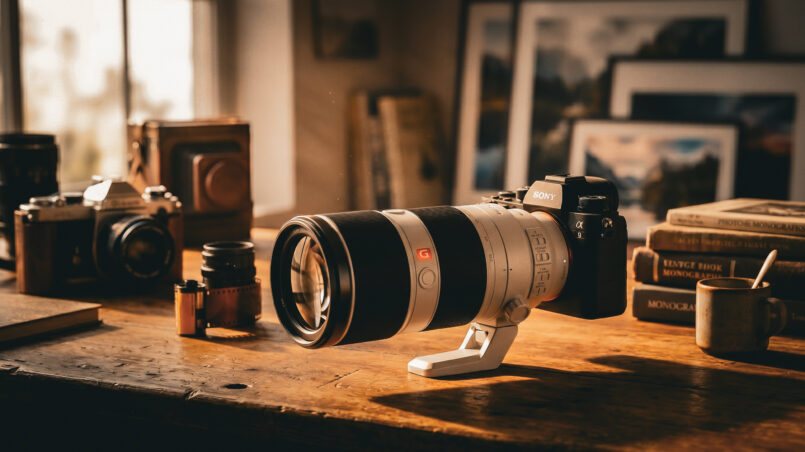
The Sony 100 400mm telephoto zoom range has become more compelling with the introduction of the FE 100-400mm F4.5 GM OSS on May 13, 2026, alongside the Alpha 7R VI. This updated Sony G Master telephoto lens brings three major changes compared with the earlier FE 100-400mm F4.5-5.6 GM OSS: a constant f/4.5 maximum aperture, an internal zoom mechanism, and compatibility with Sony’s 1.4x and 2x teleconverters.
These upgrades target photographers who need reliable autofocus, consistent exposure, and flexible reach for wildlife, birds, motorsports, and other fast-moving subjects. The US launch price was approximately $4,299, a substantial increase over the older model’s stated $2,698 price. That makes the central question straightforward: does the improved performance justify the additional cost?
For photographers considering a Sony 100 400 GM lens, the answer depends on how often they work in challenging light, track unpredictable subjects, or need to change focal length quickly. The newer lens offers meaningful improvements, but its weight, price, and reduced maximum magnification compared with the older model deserve attention.
The Three Upgrades That Actually Matter
Constant f/4.5 aperture
The constant maximum aperture is one of the most important changes. The previous Sony FE 100-400mm f/4.5-5.6 GM OSS becomes slower as you zoom toward 400mm, reaching a maximum aperture of f/5.6 at the long end. The newer lens maintains f/4.5 throughout its zoom range.
That difference is approximately two-thirds of a stop at 400mm. In practical terms, the lens can maintain a brighter exposure at the long end than the older model, helping photographers use faster shutter speeds or lower ISO settings in comparable conditions.
A constant aperture also makes exposure more predictable while zooming during a sporting event or wildlife shoot. Photographers using manual exposure settings can frame a subject at 100mm and zoom toward 400mm without the maximum aperture changing along the way.-E10 II or A6700, those numbers become 840mm and 1,200mm equivalent. For bird photographers, that last figure is significant.
Internal zoom design
The new lens uses an internal zoom mechanism, so its barrel does not extend as the focal length changes. Its stated length is approximately 328mm, and its weight distribution remains more consistent during zooming.
This design can be useful for handheld photography, video recording, and shooting with a gimbal. When the lens extends, the balance of a camera setup can change, requiring adjustments to grip or support. Keeping the lens length fixed helps reduce that shift.
The internal design does not make the lens small or light, however. At approximately 1,840g, it remains a substantial piece of equipment. Its main handling advantage is consistent balance rather than effortless portability.
Teleconverter compatibility
The updated Sony FE 100-400mm lens supports Sony’s 1.4x SEL14TC and 2x SEL20TC teleconverters. These accessories increase the effective focal length, allowing photographers to fill more of the frame with distant subjects without changing lenses.
- With a 1.4x teleconverter: the 100-400mm range becomes 140-560mm.
- With a 2x teleconverter: the range becomes 200-800mm.
On an APS-C camera, the crop factor produces a narrower field of view equivalent to approximately 210-840mm with the 1.4x teleconverter or 300-1,200mm with the 2x teleconverter. These are field-of-view equivalents, not changes to the lens’s actual focal length.
Teleconverters also reduce the amount of light reaching the sensor. With the 2x converter, the maximum aperture becomes f/9 from the lens’s native f/4.5. Photographers should account for that loss when choosing shutter speed, ISO, and autofocus settings.
For bird and wildlife photography, extra reach can be valuable, particularly when approaching an animal is impossible or undesirable. The practical results will still depend on light, subject movement, atmospheric conditions, and the camera body’s autofocus capabilities.
Optics and Autofocus
Sony redesigned the optical system for the new lens. Its specification includes 28 elements in 20 groups, with specialized ED XA, XA, Super ED, and ED elements intended to control chromatic and spherical aberrations. Nano AR Coating II is designed to reduce reflections, flare, and ghosting in difficult lighting.
These features matter when photographing subjects against bright skies, shooting toward the sun, or capturing high-contrast details. Optical design and coatings cannot eliminate every artifact, but they help maintain contrast and image quality across a demanding zoom range.
Independent coverage from PetaPixel’s Sony 100-400mm review discusses sharpness, autofocus, bokeh, and the lens’s practical limitations. Park Cameras’ review and comparison also compares the updated design with the earlier model.
Autofocus for action and wildlife
The lens uses four XD Linear Motors. Sony states that autofocus can be up to approximately three times faster than on the previous FE 100-400mm F4.5-5.6 GM OSS, under its stated comparison conditions. The updated autofocus system is intended to improve the lens’s ability to acquire and track moving subjects.
That can be useful when photographing birds in flight, athletes changing direction, or motorsport vehicles moving quickly through the frame. Fast autofocus is especially valuable when a subject appears briefly or changes direction without warning.
Sony also states that the lens can maintain autofocus and autoexposure tracking during high-speed shooting with compatible camera bodies, including the Alpha 9 III at up to 120 frames per second. Actual performance depends on the camera body, settings, subject, and shooting conditions.
The aperture also helps with subject separation. At 400mm and f/4.5, photographers can create a shallow depth of field and soften distracting backgrounds, depending on subject distance and the distance between the subject and background. Bokeh quality is not determined by aperture alone, but the combination of focal length and a wide maximum aperture gives wildlife and sports photographers useful creative control.
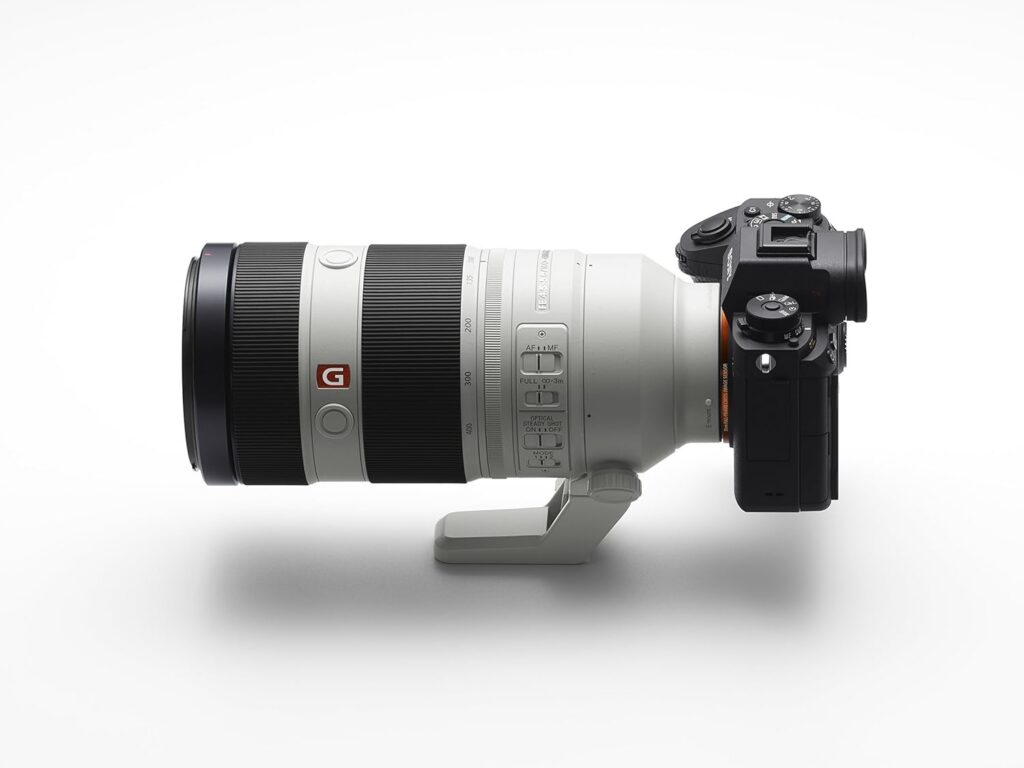
Image quality across the zoom range
A good Sony telephoto zoom lens must deliver more than reach. It needs sufficient detail, contrast, and consistency across different focal lengths. The updated lens is designed for professional use, with its optical construction aimed at maintaining high resolution from 100mm to 400mm.
Independent testing is useful when judging whether those design goals translate into real-world results. The Digital Picture lens review examines sharpness, compatibility, and image quality in detail.
For practical shooting, use a suitable shutter speed for moving subjects, enable stabilization when appropriate, and check focus accuracy at the focal lengths you use most often. A premium lens can help capture detail, but technique, lighting, and camera settings remain important.
At f/4.5 at 400mm, subject separation is genuinely impressive. Backgrounds dissolve cleanly at distances where most variable-aperture zooms are still fighting their own optics.
The Trade-offs Worth Knowing
Weight and handling
The new lens weighs approximately 1,840g, compared with about 1,395g for the older model. That is an increase of roughly 445g, which becomes noticeable during long handheld sessions.
Photographers who spend hours walking through forests, tracking birds, or covering outdoor sporting events should consider the extra load alongside the camera body and any teleconverter. A monopod or other support may help during extended sessions, although it can reduce the freedom to move quickly.
The internal zoom keeps the lens’s length and balance consistent, but it does not remove the physical demands of carrying a heavy telephoto setup.
Filters and accessories
The new lens has a 95mm front filter thread, making compatible front filters larger and potentially more expensive than those used with the previous model. Sony also includes a drop-in rear filter slot that accepts 40.5mm filters, providing another option for photographers who want to use compatible glass.
Before buying filters, confirm the required size and compatibility for the specific lens and filter type. Existing 77mm filters from the older model will not directly fit the new lens’s 95mm front thread without an appropriate adapter, and adapters may not be suitable for every filter setup.
Maximum magnification and close-up photography
Maximum magnification decreases from 0.35x on the older model to 0.25x on the newer lens. That difference matters for photographers who frequently capture flowers, insects, and other small subjects from relatively close distances.
The new lens can still be useful for close-up work, but it will not fill the frame in exactly the same way at its closest focusing distance as the previous model. If close-up photography is a major part of your work, compare minimum focusing distance, magnification, and working distance before choosing between them.
The lens’s strongest selling points are its constant f/4.5 aperture, updated autofocus, and internal zoom design. They may be more important to action photographers than maximum magnification, but close-up shooters should weigh the trade-off carefully.
Price and value
At a stated US launch price of approximately $4,299, the updated lens is a major investment. The older model’s stated price of $2,698 makes it an appealing alternative for photographers who do not need every new feature.
The price difference is easiest to justify when the improved aperture and autofocus can directly help capture images that would otherwise be missed. For occasional wildlife photography or general travel use, the older lens may offer better value.
Photographers should also compare the cost of compatible teleconverters, filters, support equipment, and a camera body capable of taking advantage of high-speed autofocus. The lens is only one part of the complete shooting system.
Who Should Really Buy This
Yes: wildlife and bird photographers. The constant f/4.5 aperture, long focal range, and teleconverter compatibility make the lens worth considering for photographers who regularly work at 300-400mm or need more reach.
Yes: sports and photojournalism professionals. Faster autofocus and a consistent aperture can help when tracking action through changing compositions. The internal zoom may also be useful when filming or working with a gimbal.
Maybe: APS-C camera owners. Cameras such as the Sony A6700 can provide a narrower field of view, and teleconverters extend that reach further. However, the resulting setup can become demanding in low light, especially with a 2x teleconverter.
Maybe: close-up and general-purpose photographers. The lens can handle more than distant action, but its weight, cost, and lower maximum magnification than the older model may make it an unnecessarily specialized choice.
No: budget-conscious buyers who rarely need 400mm. If you mostly photograph portraits, everyday subjects, or scenes at shorter focal lengths, the premium may be better spent on a camera body or another lens that suits your usual work.
For readers comparing camera systems, our Sony A7R VI vs Alpha 1 II comparison offers additional context on Sony’s high-end camera options. You can also explore our best cameras of 2026 guide and camera coverage when planning a wider equipment upgrade.
Frequently Asked Questions
Is the Sony 100-400mm f/4.5 GM OSS worth buying?
It can be worth buying for photographers who regularly shoot wildlife, birds, sports, or other fast-moving subjects. Its constant f/4.5 aperture, internal zoom, and updated autofocus are meaningful advantages, but the high price and weight make it less compelling for casual use.
What is the difference between the new Sony 100-400mm GM and the older version?
The newer FE 100-400mm F4.5 GM OSS maintains a constant f/4.5 maximum aperture, uses an internal zoom mechanism, and features four XD Linear Motors. The older FE 100-400mm F4.5-5.6 GM OSS is lighter and offers greater maximum magnification, making it a practical alternative for some photographers.
Does the Sony FE 100-400mm lens support teleconverters?
Yes. The updated lens supports Sony’s 1.4x SEL14TC and 2x SEL20TC teleconverters. They extend the maximum focal length to 560mm and 800mm respectively, while reducing the amount of light reaching the sensor.
How much does the Sony 100-400 weight?
The updated lens weighs approximately 1,840g, while the earlier model weighs about 1,395g. The difference is significant for photographers who carry their equipment or shoot handheld for extended periods.
Is the Sony 100-400mm suitable for bird photography?
Yes, especially when autofocus speed, a constant aperture, and flexible focal length matter. Teleconverters can extend its reach, but the 2x option reduces the maximum aperture to f/9, which may be challenging in dim conditions or with fast-moving birds.
Can I use this Sony telephoto lens on an APS-C camera?
The FE lens is designed for Sony E-mount cameras and can be used on compatible full-frame and APS-C bodies. APS-C cameras provide a narrower field of view, but actual results depend on the camera, lighting, lens settings, and whether a teleconverter is attached.
Conclusion
The Sony 100 400mm lens receives meaningful upgrades with the FE 100-400mm F4.5 GM OSS. Its constant aperture, internal zoom design, and updated autofocus make it a compelling Sony G Master telephoto zoom lens for demanding wildlife, bird, sports, and photojournalism work.
The main drawbacks are its price, increased weight, larger front filter size, and reduced maximum magnification compared with the older model. At approximately $4,299, it makes the most sense for photographers who will regularly use its improved performance. If you mainly shoot casually or rarely need the long end of the zoom range, the older FE 100-400mm f/4.5-5.6 GM OSS remains a sensible alternative.
Ultimately, the right Sony 100 400mm choice depends on the subjects you photograph, the conditions you work in, and whether the new features solve real problems in your shooting workflow.