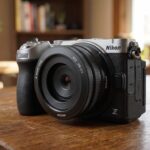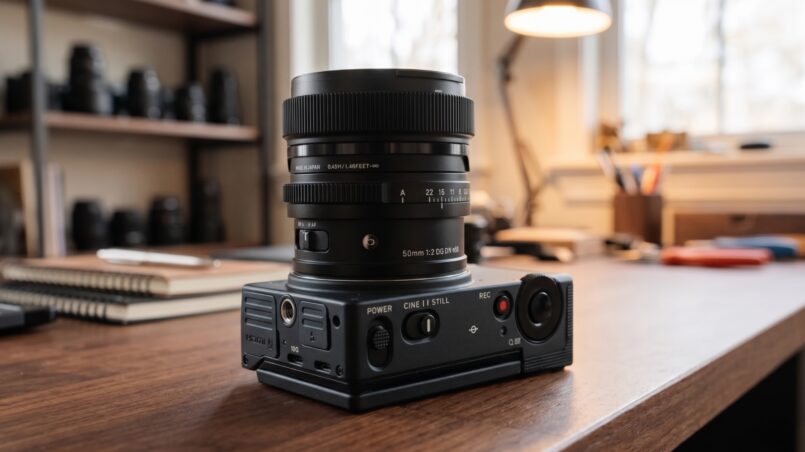
The Sigma fp 2 is one of the most ambitious cameras Sigma has introduced in its compact full-frame lineup. It combines a 24.5MP partially stacked sensor, 6K open gate video, and ProRes RAW recording in a 376g body. With a body-only price of $2,199 and a release date of November 11, 2026, it is designed for filmmakers and hybrid creators who want powerful imaging capabilities in a remarkably small camera.
Sigma has always taken a different approach to camera design. Rather than building an all-in-one body with every feature included, the company emphasizes modularity and adaptability. The Sigma fp 2 continues that philosophy, but it also brings important upgrades such as a faster sensor, improved autofocus, a tilting screen, and expanded recording options.
The idea is compelling, but the compromises matter. There is no in-body image stabilization, no built-in viewfinder, and several accessories may be needed to create a complete shooting setup. This Sigma fp 2 camera review explores its specifications, price, video features, mount, strengths, and limitations.
Sigma fp2 Specs at a Glance
| Spec | Sigma fp2 |
|---|---|
| Sensor | 24.5MP partially stacked full-frame CMOS |
| Mount | L-Mount |
| Shutter | Electronic only, 1/25,600 to 30 sec |
| Burst | Up to 20 fps (200 JPEG or 180 DNG) |
| ISO | 100 to 102,400 (expandable to ISO 6) |
| Video | 6K open gate, ProRes RAW up to 6K at 29.97p, 4K up to 60p, L-Log |
| Dynamic range | Up to 14.1 stops, Sigma’s claim |
| Autofocus | Phase and contrast detection, people, dogs, cats and birds |
| Stabilization | None in body, electronic for video only |
| Screen | 3.15-inch tilting touchscreen, 2.1M dots |
| Storage | About 70GB internal, UHS-II SD, external SSD over USB |
| Battery | About 370 shots or 130 minutes of video |
| Size and weight | 112.8 x 69.9 x 41.8mm, 376g body only, about 460g with battery and card |
| Build | Dust and splash resistant |
These Sigma fp 2 specs are based on the manufacturer announcement and published launch coverage. Sigma’s 14.1-stop dynamic range figure is a company claim, not an independent lab measurement. For further details, check the Sigma fp 2 announcement and CineD’s coverage of the 6K open gate and ProRes RAW features.
Sigma fp 2 Price and Release Date
The Sigma fp 2 price is $2,199 for the body only in the United States. In the UK, the listed price is £1,899. Buyers can also choose kits with accessories.
The kit with the EVF-21 electronic viewfinder costs $2,749. A kit with the 50mm F2 DG Contemporary lens is also listed at $2,749. Sales begin on November 11, 2026, following the camera’s announcement on October 22 and 23.
Compared with the original Sigma fp, the price is a noticeable increase. The first-generation fp launched at $1,899. The fp 2 adds a partially stacked sensor, 6K video, improved autofocus, a tilting screen, and a larger-capacity battery.
However, the body-only price is not the full cost of ownership. Filmmakers may need a viewfinder, hot shoe unit, SSD, cage, or other accessories. Those extras can make the final setup considerably more expensive.
For another perspective on camera pricing and feature trade-offs, explore our Sigma 50-120mm f/2.8 review.
Sigma fp 2 Mount: L-Mount Explained
The Sigma fp 2 mount is the L-Mount, a lens system also used by Leica and Panasonic. This gives buyers access to lenses from Sigma, Panasonic, Leica, and other L-Mount manufacturers.
That compatibility is particularly valuable for a compact camera body. A small prime lens can keep the setup lightweight, while larger lenses can be used when a production needs a different focal length or optical performance.
The 50mm F2 DG Contemporary kit illustrates Sigma’s compact-system approach. Instead of making the camera larger to accommodate a fixed lens, Sigma lets users choose a lens according to the project.
L-Mount compatibility also gives the fp 2 a path into a wider photography and filmmaking ecosystem. Still, lens size matters. A large lens can reduce the portability advantage of the small body.
Sigma’s Vision: Small, Powerful, Adaptable
Sigma describes the fp 2 using three words: small, powerful, and adaptable. The company presents it as an exceptionally compact full-frame camera body, built to combine full-frame imaging with a modular design.
A dedicated switch changes the camera between STILL and CINE modes. Each mode has its own interface and controls, allowing photographers and filmmakers to work in a layout suited to their needs.
The rest of the system is modular. Users can add a viewfinder, hot shoe unit, base plate, external SSD, or other accessories when a particular project requires them.
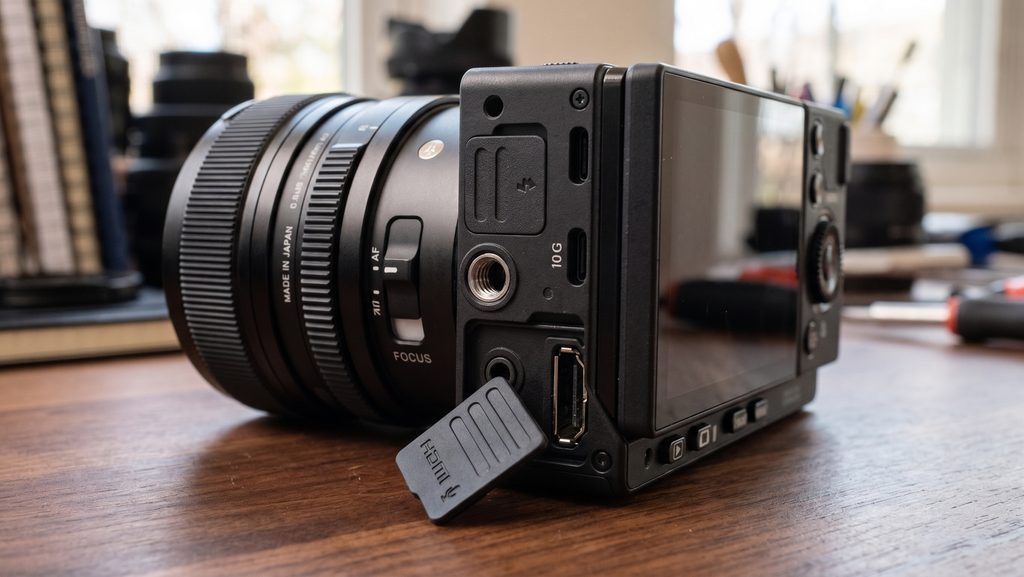
This approach differs from traditional camera designs that aim to include everything in the body. Sigma instead offers a camera that can be configured around a shooting style. For a simple photography setup, the body can remain minimal. For video production, it can be expanded into a rig.
The benefit is flexibility. The drawback is that essential features may require extra spending. For more camera-system comparisons, read our OM System PEN camera review.
What it Does Brilliantly
The Sigma fp 2’s most impressive feature is how much recording capability it places in a small body. Its 6K open gate recording and ProRes RAW support make it particularly interesting to independent filmmakers and production teams looking for a compact camera.
The partially stacked sensor also improves readout speed compared with the original fp. Burst shooting reaches up to 20 fps, with a reported buffer of up to 200 JPEG or 180 DNG frames.
Internal storage is another practical advantage. The camera includes approximately 70GB of storage alongside an SD card slot and external SSD recording over USB. Multiple recording options can make it easier to adapt to different workflows.
The L-Mount ecosystem offers lens flexibility, while the dust- and splash-resistant construction adds reassurance for everyday production use. Sigma also claims around 30% better battery life than the original fp.
Taken together, these upgrades make the fp 2 a meaningful evolution rather than a minor refresh. Readers interested in video production workflows can also explore our DaVinci Resolve AI MCP coverage.
The Cons That Could Hurt Sigma
The biggest limitation is the lack of in-body image stabilization. In 2026, this may disappoint photographers and filmmakers who expect stabilization in a full-frame camera at this price. Electronic stabilization is available for video, but it does not work in 6K according to the supplied specifications.
Handheld footage may therefore depend on lens stabilization, a gimbal, or careful camera handling. For run-and-gun filmmaking, that can be a significant consideration.
The electronic-only shutter is another trade-off. The partially stacked sensor is designed for faster readout, but rolling shutter performance still needs independent testing. Flash use is also limited: the stated flash sync speed is 1/50 second, and flash operation requires the optional HU-21 hot shoe unit. Camera Decision’s fp 2 coverage discusses the camera’s major feature trade-offs.
The viewfinder is optional, too. The EVF-21 is a 5.76M-dot OLED unit, but it increases the price. Stills photographers who prefer composing through a viewfinder may find the accessory cost hard to ignore.
Audio follows the same modular philosophy. Headphone connection is through USB, and 32-bit float audio requires the HU-21 and Panasonic XLR accessories. The 119.88 fps slow-motion mode is available only in crop.
The central challenge is perception. Sigma needs to convince buyers that modularity is a benefit, not a way of making important features optional.
Who Should Buy this camera?
Video-first creators are the clearest audience for the Sigma fp 2. Independent filmmakers may find it useful as a compact B-camera alongside a cinema camera setup. Gimbal operators can also benefit from its lightweight full-frame body and RAW recording options.
Filmmakers who build their own rigs may appreciate the modular design. They can add only the accessories required for a specific shoot, rather than carrying a larger all-in-one camera.
The fp 2 may also appeal to hybrid creators who want full-frame still photography and serious video features in one compact body. Its STILL and CINE modes help separate those workflows.
However, stills photographers who rely on an EVF should carefully consider the extra cost of the EVF-21. Buyers who need stabilization and a viewfinder integrated into the camera may find the fp 2 less convenient.
For another compact imaging option, read our Panasonic Lumix S 20mm f/2.5 review. You can also compare other camera systems in our Sony 400mm f/4.5 GM and 600mm f/6.3 GM review.
Is This Sigma New Camera Worth It?
The Sigma fp 2 is worth considering, but primarily for the right type of user. Its 24.5MP partially stacked sensor, 6K open gate video, ProRes RAW, and compact body are an attractive combination. Few cameras offer this particular balance of full-frame imaging and modular cinema features in such a small chassis.
It is less compelling for buyers who expect a complete camera straight out of the box. A viewfinder, hot shoe unit, SSD, and cage can increase the overall budget. The lack of IBIS and the electronic-only shutter are also compromises that should not be overlooked.
Sigma’s claims, including up to 14.1 stops of dynamic range, need to be assessed alongside independent testing. Until real-world testing confirms performance, buyers should treat those figures as manufacturer specifications.
The Sigma fp 2 is a thrilling compact filmmaking camera with clear strengths and real trade-offs. If you value modularity and video features above convenience, it could be a strong fit. If you want a fully equipped camera for photography and handheld shooting, another model may be more practical.
Sigma fp 2 FAQ
What is the Sigma fp 2 price?
The Sigma fp 2 costs $2,199 body only in the US and £1,899 in the UK. Kits with the EVF-21 viewfinder or 50mm F2 DG Contemporary lens are listed at $2,749 in the US.
What mount does the Sigma fp 2 use?
The Sigma fp 2 uses the L-Mount. It supports lenses from Sigma, Panasonic, Leica, and other L-Mount manufacturers.
When does the Sigma fp 2 go on sale?
Sigma announced the fp 2 on October 22 and 23, 2026. Its release date is November 11, 2026.
Does the Sigma fp 2 have image stabilization?
No. The Sigma fp 2 has no in-body image stabilization. Electronic stabilization is available for video only, and it is not available in 6K according to the supplied specifications.
Does the Sigma fp 2 have a viewfinder?
No built-in viewfinder is included. The EVF-21 is an optional 5.76M-dot OLED electronic viewfinder. Sigma also offers the LVF-21 loupe for viewing the rear screen.
Sigma fp 2 Links and Reviews
For additional specifications and launch coverage, consult Sigma’s official announcement, CineD’s camera report, and Newsshooter’s fp 2 coverage. Further information is available from Camera Decision, Digital Camera World, and B&H.
Explore more camera reviews on CircuitVerdict, including our DJI Osmo 360 II vs Insta360 X6 comparison and Nikon ZR firmware update coverage.
Check out more camera reviews here.