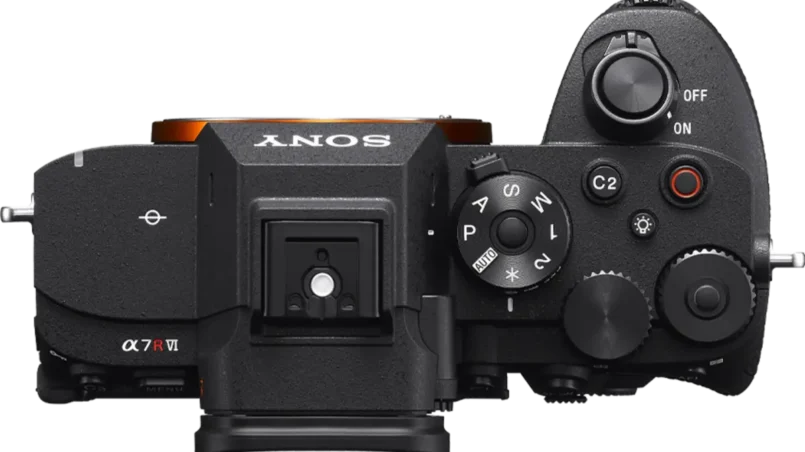
The Sony a7R VI is a major step forward for photographers who want high resolution without giving up shooting speed. Its 66.8-megapixel fully stacked sensor, continuous shooting at up to 30 frames per second, and advanced video capabilities make it a compelling option in Sony’s full-frame mirrorless lineup. With a listed price of $4,499, it also costs $2,000 less than the Sony Alpha 1 II.
However, similar headline specifications do not make these cameras interchangeable. The Sony a7R VI prioritizes resolution and versatility, while the Alpha 1 II retains important advantages for demanding professional workflows, including sustained burst shooting, faster electronic shutter speeds, higher flash synchronization, and dedicated physical controls.
This Sony a7R VI review compares the cameras’ specifications, sensor performance, autofocus, video features, handling, and price to explain which photographers are most likely to benefit from each model.
Sony a7R VI Specifications at a Glance
The Sony a7R VI combines a 66.8MP back-illuminated, fully stacked Exmor RS sensor with the BIONZ XR2 image-processing engine. According to the supplied specifications, it can shoot at up to 30fps with 14-bit RAW files and provides AF/AE tracking calculations at up to 60 times per second.
Its key specifications include:
- Sensor: 66.8MP fully stacked Exmor RS CMOS
- Processor: BIONZ XR2
- Continuous shooting: Up to 30fps with 14-bit RAW
- Autofocus and exposure tracking: Up to 60 calculations per second
- Dynamic range: Up to 16 stops, as specified by Sony
- Video: Up to 8K/30p and 4K/120p
- In-body image stabilization: Up to 8.5 stops at the center
- Audio: 32-bit float recording with the XLR-A4 adapter
- Listed US price: $4,499
- Announced availability: June 2026
For the official product specifications, consult Sony’s a7R VI specifications.
These features make the camera relevant to landscape, architecture, studio, commercial, travel, and hybrid photographers who need detailed images alongside modern performance.
Sony a7R VI vs Alpha 1 II: What Are the Main Differences?
The Sony Alpha 1 II uses a 50.1MP stacked Exmor RS sensor and the BIONZ XR2 processor. Both cameras support shooting at up to 30fps with 14-bit RAW and offer 8K/30p and 4K/120p video recording.
The distinction becomes clearer when considering how the cameras perform during demanding assignments.
📋 AT A GLANCE
Resolution: The a7R VI offers 66.8MP, compared with 50.1MP on the Alpha 1 II. The extra resolution gives photographers more flexibility for cropping and producing large prints.
Burst shooting: Both cameras are rated for up to 30fps, but their sustained shooting capabilities differ. The supplied comparison reports approximately 70 frames for the a7R VI and around 240 frames for the Alpha 1 II.
Electronic shutter: The Alpha 1 II reaches up to 1/32,000 second, while the a7R VI reaches 1/8,000 second.
Flash synchronization: The Alpha 1 II supports flash synchronization up to 1/400 second, compared with 1/250 second on the a7R VI.
Connectivity and controls: The Alpha 1 II includes Ethernet and dedicated locking dials for drive mode and autofocus mode. The a7R VI relies more on menu-based access for the corresponding controls described in the original comparison.
Price: The a7R VI is listed at $4,499, while the Alpha 1 II is listed at $6,499.
For a deeper look at the practical differences, read DPReview’s comparison of the Sony a7R VI and Alpha 1 II.
Sony a7R VI Sensor and Resolution: Why 66.8MP Matters
Let’s sit with that for a second, because it genuinely deserves the reaction it gets. The a7R V, the camera this replaces, maxed out at 10fps in electronic shutter mode with its non-stacked 61MP sensor. Its predecessor was a landscape and studio tool that you pointed at things that weren’t moving very fast. The a7R VI has a new back-illuminated fully-stacked Exmor RS sensor with a readout speed Sony claims is 5.6x faster than the previous model. The result is 30fps continuous shooting in 14-bit RAW, with full AF/AE tracking at 60 calculationSony a7R VI Sensor and Resolution: Why 66.8MP Matters
Resolution is the defining feature of the Sony a7R VI. Its 66.8MP sensor records a high level of detail, giving photographers additional flexibility when an image needs significant cropping or must be printed at a large size.
This can be particularly useful in landscape and architectural photography. Fine textures, distant details, building surfaces, and complex natural scenes can benefit from a high-resolution capture when the lens, lighting, focus, and shooting technique are also appropriate.
Commercial and studio photographers may appreciate the extra room to crop an image into different aspect ratios without immediately sacrificing as much resolution. Travel photographers can also benefit when they want one photograph to support multiple layouts or output sizes.
However, megapixel count alone does not determine image quality. Lens sharpness, exposure, subject movement, noise, color processing, and the photographer’s technique all influence the final result.
The Alpha 1 II’s 50.1MP sensor still provides substantial resolution for professional photography. Its lower megapixel count does not automatically mean inferior images in every situation. Instead, the choice comes down to whether additional image detail or other performance characteristics matter more for the work being done.s per second, and up to 16 stops of dynamic range. It also shoots 8K/30p and 4K/120p video, supports 32-bit float audio with the new XLR-A4 adapter, and packs 8.5 stops of IBIS.
This is a meaningful generational leap, not an incremental update. The R-series has never had a stacked sensor before. Sony effectively took the processing muscle of their flagship tier and handed it to the resolution flagship. For photographers who’ve been waiting for the R-series to gain serious speed without sacrificing image quality, this is the camera they were describing.
Continuous Shooting and Buffer Performance
One of the most significant changes in the a7R VI is its ability to combine high resolution with continuous shooting at up to 30fps. The earlier a7R V used a 61MP non-stacked sensor and offered electronic-shutter shooting at up to 10fps, according to the supplied article.
The new sensor architecture makes the a7R VI more versatile when photographing moving subjects. Wildlife behavior, changing expressions, and fast-moving scenes can all benefit from a higher shooting rate.
However, maximum frame rate is only part of the story. The camera must also sustain bursts long enough to capture the moment.
The supplied comparison reports a buffer of approximately 70 frames for the a7R VI and around 240 frames for the Alpha 1 II. These figures indicate why the flagship can remain more suitable for photographers who regularly shoot long sequences of action.
For example, a wildlife photographer tracking a bird in flight may want to maintain a burst as the subject changes direction. A sports photographer may need to capture an entire sequence rather than a few isolated moments.
The larger reported buffer gives the Alpha 1 II an advantage for these workloads. The a7R VI still delivers impressive speed, but photographers should consider burst duration alongside megapixels and maximum frames per second.
Electronic Shutter and Flash Photography
The Alpha 1 II also offers a higher maximum electronic shutter speed: 1/32,000 second compared with 1/8,000 second on the a7R VI.
A fast shutter speed can help control exposure in bright conditions or freeze movement, depending on the shooting situation. The difference can matter when photographers need to work with wide apertures in strong light.
Flash synchronization is another important distinction. The Alpha 1 II supports synchronization up to 1/400 second, while the a7R VI supports up to 1/250 second, according to the supplied specifications.
For studio and commercial photographers, synchronization speed can influence how they balance flash output against ambient light. Outdoor portrait photographers using fill flash may also find the difference useful.
These specifications do not mean that one camera is automatically better for every flash setup. Compatibility with the flash system, triggering method, and specific shooting mode should also be considered before making a purchase.
Autofocus and Subject Tracking
The a7R VI combines its stacked sensor with the BIONZ XR2 processor and AF/AE tracking calculations at up to 60 times per second. This combination is intended to support responsive tracking while retaining high-resolution image capture.
That makes the camera more versatile than a resolution-focused body designed primarily for stationary subjects. Photographers can use it for wildlife, events, travel, and other situations where subjects may move unpredictably.
The Alpha 1 II, however, is designed around professional speed and action-oriented workflows. The differences between the cameras cannot be judged from frame rate alone; sensor readout, burst depth, autofocus behavior, and handling can all affect the experience.
For buyers, the most useful question is how often they photograph fast-moving subjects and how long they need to maintain continuous shooting. A landscape photographer may rarely need the Alpha 1 II’s full action-oriented capabilities, while a professional sports photographer may value them every day.
Video Features for Hybrid Creators
The Sony a7R VI supports 8K recording at up to 30p and 4K recording at up to 120p, according to the supplied specifications. These options give hybrid creators flexibility when producing high-resolution footage, slow-motion sequences, and projects that combine still photography with video.
The camera also supports 32-bit float audio when used with the XLR-A4 adapter. This expands its usefulness for productions that require a more flexible audio workflow.
Nevertheless, headline video resolution is not the only factor to consider. Recording crop, rolling shutter, compression, noise reduction, storage capacity, and editing requirements can affect the finished result.
Creators should also check the exact recording modes they intend to use. Sony’s official a7R VI help guide is a useful reference for supported features and operating details.
For photographers who also produce video, the a7R VI’s combination of resolution and high-frame-rate recording may be attractive. Buyers who prioritize fast action capture should still evaluate its performance in their specific shooting conditions rather than relying only on the maximum frame-rate figures.
Handling, Connectivity, and Professional Workflow
A camera’s physical design matters when photographers need to make quick adjustments without interrupting their work.
The Alpha 1 II includes dedicated locking dials for drive mode and autofocus mode. These controls can make it easier to switch settings quickly during an assignment. The a7R VI routes the corresponding controls through menus, according to the original comparison.
During a calm portrait session, this difference may have little impact. During a wildlife or sports assignment, direct access to important settings can save time when a subject suddenly changes behavior.
Ethernet is another practical distinction. The Alpha 1 II includes a wired Ethernet connection, which can be useful in professional environments where dependable wired transfer is part of the workflow. This may matter to photographers working with live news delivery or established studio infrastructure.
Photographers should also consider their lenses, memory cards, accessories, computer setup, and delivery requirements. A camera that fits an existing workflow can be more valuable than one that looks superior on a specification sheet.
For more camera-related coverage, explore our camera reviews and best cameras of 2026 guide. Readers interested in lens choices can also see our Sony super-telephoto lens review.
Sony a7R VI Price vs Alpha 1 II Price
The supplied prices put the Sony a7R VI at $4,499 and the Alpha 1 II at $6,499, a difference of $2,000.
That gap may be important for photographers who need high resolution but do not regularly depend on the Alpha 1 II’s additional action-focused features. The savings could also contribute toward a compatible lens, lighting equipment, storage, or other accessories.
The Alpha 1 II’s higher price may be easier to justify for professionals who need its larger reported buffer, faster maximum electronic shutter speed, higher flash synchronization, Ethernet connectivity, and dedicated controls.
Neither price should be considered universal across all markets. Regional pricing, retailer discounts, taxes, and availability can change the final cost. Confirm the current price and availability with Sony or an authorized retailer before purchasing.
Who Should Buy the Sony a7R VI?
The a7R VI is best suited to photographers who want high-resolution files without giving up modern shooting speed.
It is worth considering for:
- Landscape photographers who need fine detail and cropping flexibility.
- Architecture photographers producing large images.
- Studio and commercial photographers who prioritize resolution.
- Product photographers who need flexibility for different output sizes.
- Travel photographers looking for a versatile high-resolution body.
- Hybrid creators who need advanced still-image and video capabilities.
The camera’s main appeal is the combination of a 66.8MP sensor and shooting speeds of up to 30fps. Photographers who previously felt limited by the slower electronic-shutter performance of earlier high-resolution models may find this combination particularly relevant.
Who Should Choose the Sony Alpha 1 II?
The Alpha 1 II remains relevant for photographers whose assignments demand sustained bursts and fast, direct control.
It may be a better fit for:
- Sports photographers who capture long action sequences.
- Wildlife photographers who need a larger reported buffer.
- Commercial photographers who regularly use flash.
- Photojournalists who depend on wired connectivity.
- Professionals who prefer dedicated physical controls.
- Photographers who prioritize an action-oriented workflow over maximum resolution.
Its 50.1MP sensor still offers substantial detail, while its workflow-oriented features can matter more than the additional megapixels of the a7R VI for certain professional assignments.
Frequently Asked Questions
Is the Sony a7R VI better than the Alpha 1 II?
The a7R VI offers higher resolution at 66.8MP, while the Alpha 1 II has advantages in reported buffer capacity, maximum electronic shutter speed, flash synchronization, Ethernet connectivity, and dedicated controls. The right choice depends on your photography needs.
How many megapixels does the Sony a7R VI have?
The Sony a7R VI has approximately 66.8 effective megapixels from its full-frame, fully stacked Exmor RS sensor.
What is the Sony a7R VI price?
The supplied US price is $4,499. Prices can vary by region and retailer, so confirm current pricing and availability before buying.
Does the Sony a7R VI shoot at 30fps?
Yes. The supplied specifications list continuous shooting at up to 30 frames per second with 14-bit RAW and AF/AE tracking.
Is the Sony Alpha 1 II better for sports and wildlife?
It may be more suitable for sustained action sequences because the supplied comparison reports a buffer of approximately 240 frames, compared with around 70 frames for the a7R VI. Actual results depend on shooting settings and conditions.
Is the Sony a7R VI suitable for video?
Yes. Its listed capabilities include 8K/30p and 4K/120p recording, plus 32-bit float audio support with the XLR-A4 adapter. Check the supported recording modes and limitations before planning a production.
Should a Sony a7R V owner upgrade to the a7R VI?
The a7R VI adds a higher-resolution stacked sensor and much faster electronic-shutter shooting compared with the a7R V specifications provided in the original article. An upgrade is most worthwhile for photographers who will benefit from those improvements rather than those already satisfied with their current camera.
Final Verdict
The Sony a7R VI is a high-resolution camera that combines a 66.8MP stacked sensor with fast continuous shooting, advanced autofocus, and versatile video features. At the supplied price of $4,499, it provides a different balance of resolution, performance, and cost from the Alpha 1 II.
However, the Sony Alpha 1 II remains a compelling option for professionals who need longer bursts, a faster electronic shutter, higher flash synchronization, Ethernet connectivity, and dedicated physical controls.
Choose the a7R VI if resolution and flexibility are your main priorities. Consider the Alpha 1 II if sustained action shooting and professional workflow features are more important.
The Sony a7R VI does not make the Alpha 1 II irrelevant. Instead, it gives photographers another option: high resolution with significantly improved speed, without necessarily paying for every feature of Sony’s flagship camera.
Check out more camera reviews here.