Google spent its keynote on Magic Capture and Gemini. Everywhere else, the Pixel 11 asks you to pay $100 more for a chip that loses to Samsung by up to 40 percent and a camera stack that still trails the competition on paper.
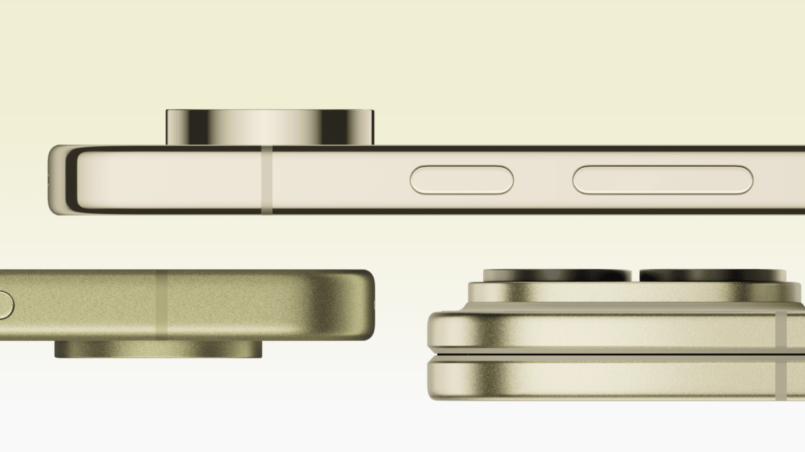
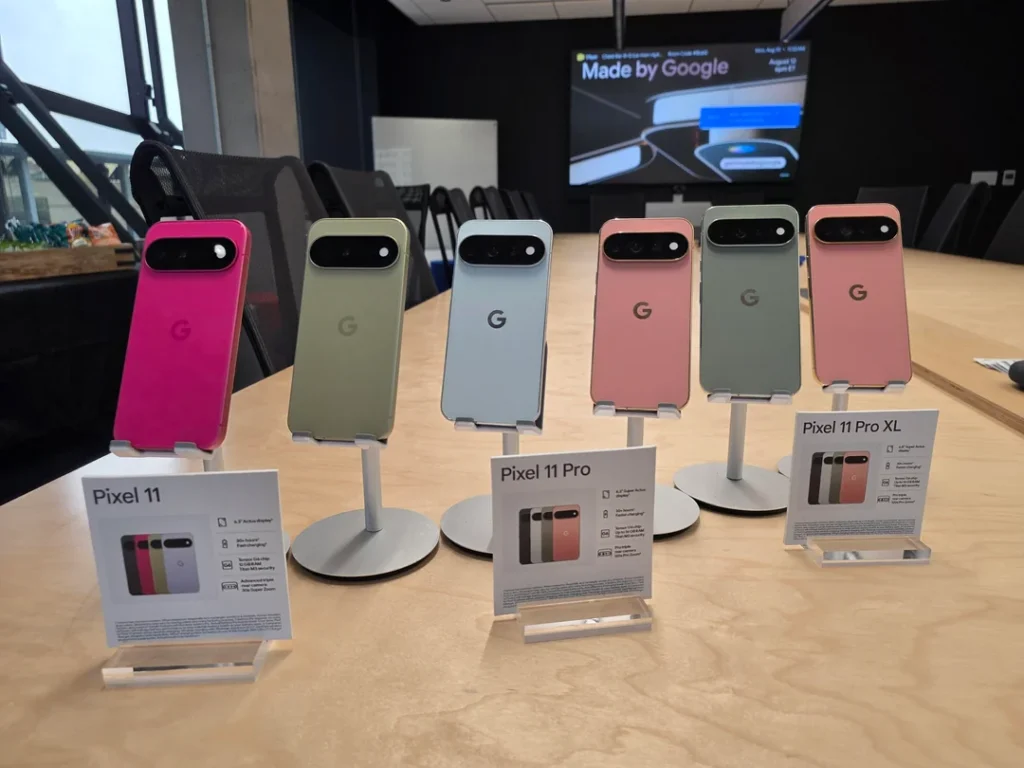
Four phones, one familiar shape. The Pixel 11, 11 Pro, 11 Pro XL and 11 Pro Fold repeat the exact structure Google has used since the Pixel 9 generation. This year’s pitch leans almost entirely on software. Magic Capture, Camera Looks, Creator Suite, a glowing notification LED called HiLight, and a version of Gemini that can book a table for you. It’s a genuinely interesting AI story. But it isn’t, on its own, a reason to pay more. The hardware underneath still loses the same benchmark fights it has lost since the first Tensor chip.
Magic Capture Isn’t As New As The Keynote Made It Sound
Magic Capture is the headline feature. Reviewers who’ve tested it call it one of the best camera tools Google has shipped in years. You hold the shutter and the phone records video in the background. Gemini then scans roughly 400 frames from that clip. It hands you a handful of highlight stills at 12 megapixels, already edited and cropped. Well, it genuinely works, and solves a real problem: missing the moment because you pressed the button a half-second late.
It is also not a new idea. Honor shipped something similar more than two years earlier. That feature captured photos automatically based on facial expression and motion. Google’s version is more polished. It’s also better integrated into a single camera mode, and that execution counts for something. But calling it a paradigm shift overstates how original the concept is. Google took a feature the competition had already normalized. Then it gave that feature a Gemini coat of paint.
The Performance Gap Hasn’t Closed
Tensor G6 moves to a 2nm process. On paper, that should close the gap with Qualcomm and Apple. Early Geekbench listings for the Pixel 11 Pro XL say otherwise. The chip drops from eight CPU cores to seven. It also skips Arm’s Premium core tier entirely. And it pairs with a GPU architecture that traces back to a 2021 design.
| Chip | GeekBench Single Core | GeekBench Multi- core |
| Tensor G6 (Pixel 11 Pro XL) | 2293 | 7108 |
| Snapdragon 8 Elite Gen 5 (Galaxy S26 Ultra) | 3082 | 10381 |
| Tensor G5 (Pixel 10 Pro XL) | 1876 | 5102 |
That puts the Tensor G6 roughly a generation behind current flagship silicon, sitting closer to a Snapdragon 8 Gen 3 than an 8 Elite. Reviewers testing retail units also flagged a GPU that still doesn’t support the latest Vulkan APIs, a display with a poor PWM rate, and Pro models that ship with 12GB of RAM at the entry storage tier, down from 16GB last year. Google’s explanation leans on zRAM compression and INT4 quantization of the on-device Gemini Nano model to make up the difference. That may be true for everyday multitasking. It does nothing for the demanding games and sustained workloads where the raw core-count cut and the aging GPU architecture show up first.
Pixel has never won the spec sheet. The question this year is whether AI software is enough to make that gap not matter, at a price that’s gone up for the fourth straight generation.
“Reduced Cloud Dependency” Is True, With An Asterisk
Google is right that more happens on the phone this year. Gemini Nano runs on Tensor G6’s expanded TPU. It powers call screening, scam detection, Recorder transcription and summarization, and Live Translate. All of that happens entirely on-device. No data leaves the phone, and no internet connection is required. That’s a real and useful privacy story. It’s also been quietly true on Pixels since the Nano model debuted on the Pixel 8 Pro.
Where it gets murkier is the feature Google spent the most keynote time on. That’s the agentic side of Gemini. It books rides, orders groceries, and calls restaurants on your behalf. To do any of that, it needs an internet connection and a Google account. In several cases it also needs a Google AI Pro subscription once the included six-month trial runs out. Google’s own documentation sets a 12GB RAM floor just to run “Gemini Intelligence” at all. That’s an odd requirement, given Google is shipping 12GB as the new baseline on the same phone. The offline story is real for the small, quiet features. The flashy ones still phone home.
Why Pay More For Less Hardware?
Every model in the lineup costs $100 more than its direct predecessor. The Pixel 11 starts at $899. The 11 Pro starts at $1,099, the 11 Pro XL at $1,299, and the 11 Pro Fold at $1,899. Google points to rising DRAM and chip costs across the industry. That’s a real pressure every phone maker is facing this cycle. It doesn’t change the buyer’s math, though. A Galaxy S26 Ultra costs about the same as the Pixel 11 Pro XL. It beats that Pixel by close to 40 percent on raw CPU performance. And it pairs that performance with a camera system that doesn’t need a firmware-era AI mode to compensate. That’s for hardware Google itself seems to know is behind.
Then there’s the brand question, which reviewers keep circling back to. Pixel sells well in the United States. It’s been climbing the “premium Android” charts there. Outside the U.S., the picture changes. Across most of Asia, Latin America and large parts of Europe, Samsung, Apple and Oppo dominate this bracket. Google’s own reported plan to shift manufacturing out of China for 2027 adds to the picture. It suggests the company is still working out its global supply story, not just its specs. Buying a Pixel in most of the world carries real trade-offs. Resale value tends to be weaker. The accessory ecosystem is thinner. And carrier support isn’t guaranteed the way it is for a Galaxy or an iPhone.
Is this just-another-Pixel-launch? Mostly, yes. The lineup shape hasn’t changed in three years. The RAM went down instead of up. And the chip is still fighting last generation’s flagship silicon to a draw. What’s different is the AI. Google finally has a feature set cohesive enough to be a reason on its own. It’s not just a footnote under the spec sheet anymore. Whether that’s worth the extra hundred dollars depends on you. It depends on how much you value a phone that’s smart over one that’s simply fast. And it depends on how much patience you have for a brand that still has to prove itself. It’s still proving that in most of the world it sells to.
Image Credit: Reddit, Google